
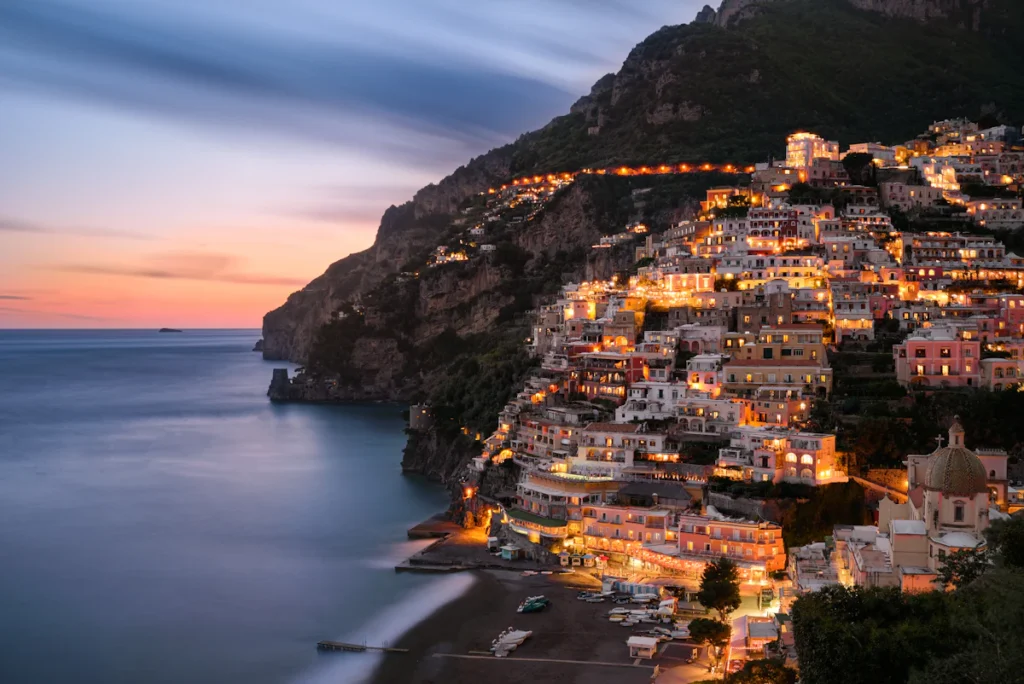
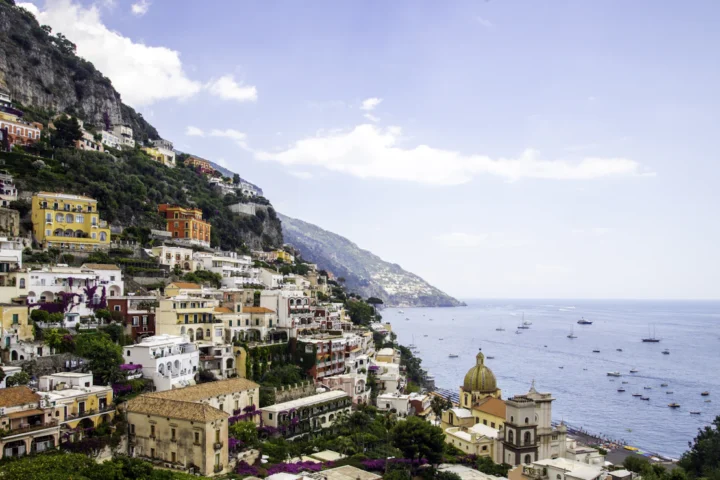
The Amalfi Coast is one of the most beautiful stretches of coastline in the world, with pastel villages stacked on cliffs, lemon groves, clear blue water and a winding road carved into the mountains. It is also a place where a little planning makes a huge difference, because buses fill up, ferries run to timetables and the best viewpoints are reached on foot.
This Amalfi Coast itinerary shows you how to spend 3 days on the Amalfi Coast, covering Positano, Amalfi, Atrani and Ravello, with the Path of the Gods or a boat trip to Capri on the final day. It includes 2026 prices in euros, transport tips and advice on where to base yourself. For an overview of the region, read our Amalfi Coast travel guide.
How Many Days Do You Need on the Amalfi Coast?
Three days is the ideal amount of time for a first visit to the Amalfi Coast. It gives you one day for Positano, one for Amalfi and Ravello, and one for a hike or a boat trip, without rushing. With two days you can see the highlights, but you will spend much of your time on buses and ferries. With four or five days, add Capri, Sorrento or the ruins of Pompeii.
Where Should You Base Yourself for This Itinerary?
The best base for this Amalfi Coast itinerary is Positano or Amalfi town. Positano is the most photogenic village, with boutiques, beaches and lively restaurants, but it is steep and expensive. Amalfi town is more central, with the best bus and ferry connections, which makes day trips easier. Praiano is a quieter, cheaper option between the two, and Ravello is perfect if you want peace, gardens and views. If you want to stay in one hotel for all three nights, Amalfi town is the most practical choice.
How Do You Get to the Amalfi Coast?
Most visitors begin their Amalfi Coast itinerary in Naples, which has the nearest major airport and a high-speed railway station. From Naples Airport, the Curreri bus runs to Sorrento in about 75 to 90 minutes for around €13, and from Sorrento the SITA bus continues to Positano for €2.40. In the warmer months, from about April to October, ferries also run from Naples to Positano and Amalfi.
If you are coming from Rome, take the high-speed train to Naples or Salerno. From Salerno, ferries reach Amalfi in about 35 minutes for around €12, and SITA buses also run along the coast. A private transfer from Naples Airport to Positano costs from about €150 per car and takes around 90 minutes, which is a good option for families or groups with luggage. See our Rome travel guide if you are combining the two.
Day 1: Positano
Start your Amalfi Coast itinerary in Positano, the most famous village on the coast. Start early, before the day-trippers arrive, and walk down through the narrow lanes to Spiaggia Grande, the main beach. Visit the Church of Santa Maria Assunta, whose green and yellow majolica dome is the symbol of the village, and browse the small shops selling linen clothes, handmade sandals and ceramics.
In the afternoon, follow the cliffside path to Fornillo Beach, a quieter beach about ten minutes’ walk away. Sunbeds and umbrellas usually cost around €20 to €40 per day in summer, but there are also small free areas. Before sunset, climb back up to Via Cristoforo Colombo or the viewpoint near the top of the village for the classic view of Positano tumbling down to the sea. Book dinner in advance in summer, as the best terraces fill up quickly.
Day 2: Amalfi, Atrani and Ravello
On day two, travel from Positano to Amalfi by ferry or bus, then visit Atrani and Ravello. The ferry takes about 25 minutes and costs around €10, and it gives you wonderful views of the villages from the sea. The SITA bus takes about 40 to 50 minutes and costs €2.40.
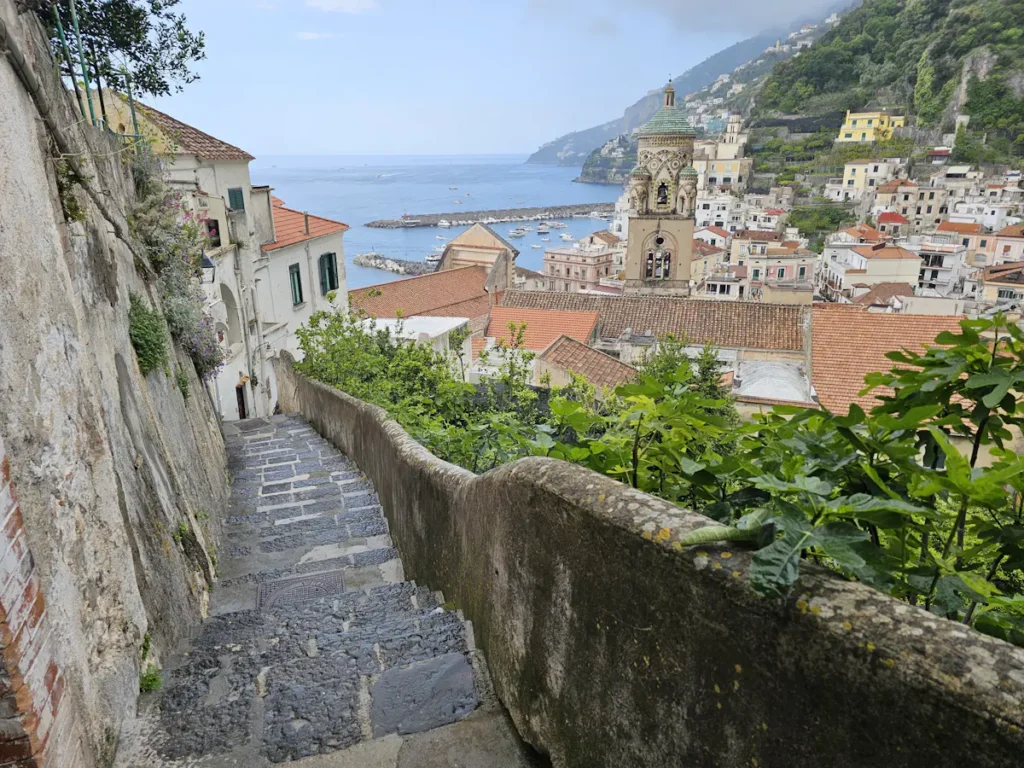
In Amalfi, climb the 62 steps to the Cathedral of Sant’Andrea, with its striped facade and bronze doors. A ticket of around €5 covers the Cloister of Paradise, a peaceful 13th-century courtyard with Arab-style arches, and the cathedral museum. Wander up the main street past lemon shops and pastry shops, and try a slice of delizia al limone, a soft lemon cream cake. The Paper Museum explains Amalfi’s long history of handmade paper.
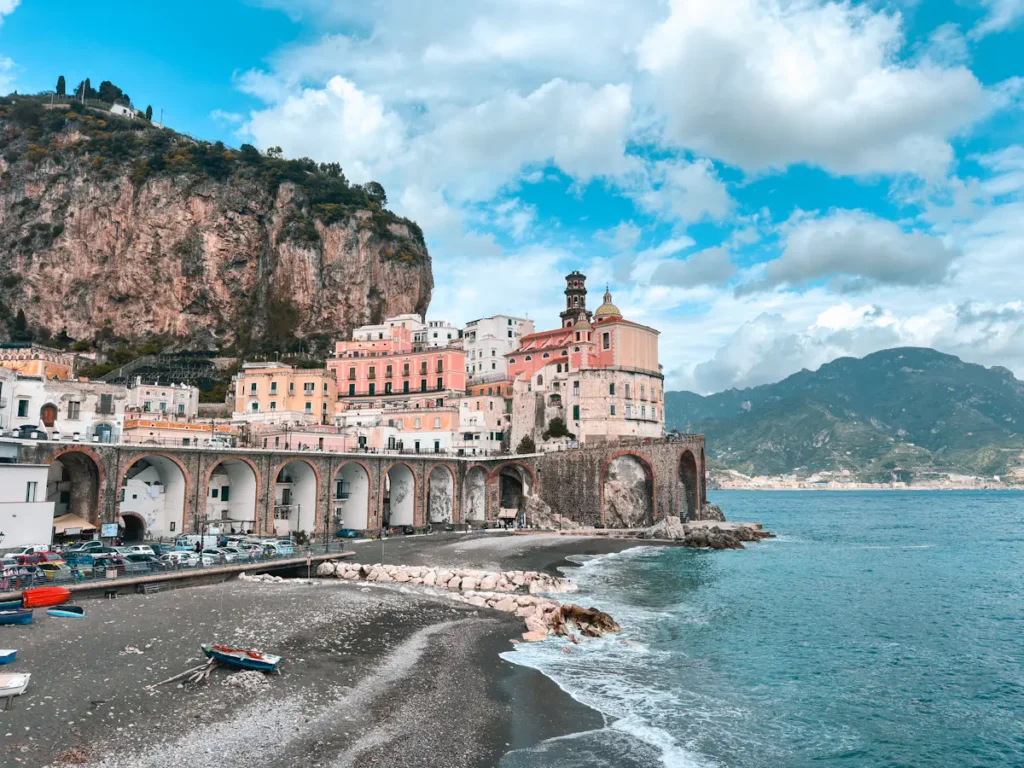
From Amalfi, it is a ten-minute walk through a tunnel or along the coast to Atrani, one of the smallest towns in Italy, with a tiny square, a beach and almost no crowds. It is a lovely place for a coffee or lunch.
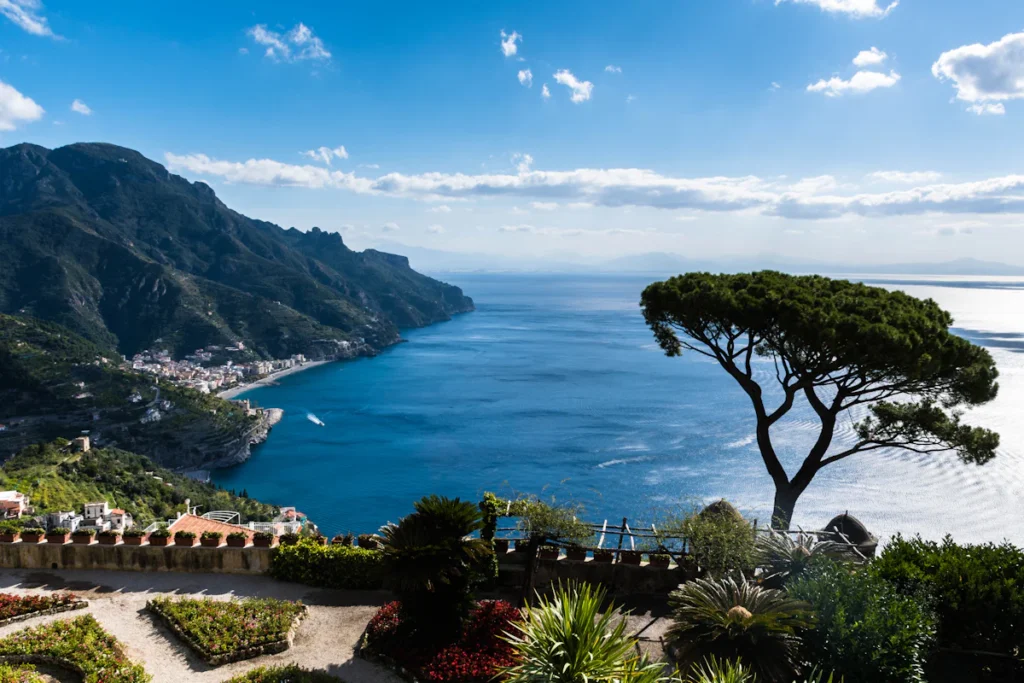
In the afternoon, take the bus from Amalfi up to Ravello, which costs €1.50 and takes about 25 minutes. Ravello sits on a ridge above the sea and is famous for its gardens. Villa Rufolo, with its terraced gardens and the view that inspired composer Richard Wagner, costs €8 and is open daily, usually from 9:00 to 18:00, with shorter hours in winter. Walk on to Villa Cimbrone, where entry to the gardens costs around €10, to see the Terrace of Infinity, a balcony lined with marble busts high above the sea.
Day 3: The Path of the Gods or a Boat Trip to Capri
For the final day of your Amalfi Coast itinerary, choose between the Path of the Gods hike and a boat trip to Capri. The Path of the Gods, or Sentiero degli Dei, is the most famous hike on the coast. It runs from Bomerano, in the hills of Agerola, to Nocelle above Positano, and is about 7 to 8 kilometres long. Most people take around three hours, with stops for photos. The trail is free, mostly downhill in this direction and offers breathtaking views over the coast and the island of Capri.
Reach Bomerano by SITA bus from Amalfi in about 40 minutes. From Nocelle, either walk down around 1,700 steps to Positano or take the small local bus. Start early in summer, wear good shoes and carry plenty of water, as there is little shade.
If you prefer the sea, join a boat trip to Capri. Small-group boat tours from Positano and Amalfi usually cost around €100 to €150 per person and stop for swimming near the Faraglioni rocks. You can also take a public ferry and explore Capri town and Anacapri on your own. Ferries to Capri run mainly from spring to autumn, and boat trips are cancelled in rough seas.
How Do You Get Around the Amalfi Coast?
Knowing how to get around the Amalfi Coast saves you time and stress. The two main options are SITA buses and ferries. SITA buses run all year along the coast road between Sorrento, Positano, Amalfi and Salerno, with branch lines to Ravello and Agerola. Buy tickets before you board at bars, tobacconists or newsagents, as drivers do not usually sell them, and validate them on the bus. A COSTIERASITA 24-hour pass costs €10.
Ferries from Travelmar and other companies connect Positano, Amalfi, Minori, Maiori and Salerno from about April to October. They are faster, more scenic and less crowded than the buses, but cost more and do not run in bad weather. Driving is not recommended, as the road is narrow, traffic is heavy in summer and parking is very expensive.
| Route | Bus fare | Ferry fare | Approximate time |
|---|---|---|---|
| Positano to Amalfi | €2.40 | €10 to €13 | 25 to 50 minutes |
| Sorrento to Positano | €2.40 | About €20.50 | 40 to 50 minutes |
| Amalfi to Ravello | €1.50 | No ferry | About 25 minutes |
| Amalfi to Salerno | €2.80 | €12 to €13.50 | 35 to 75 minutes |
| Amalfi to Minori or Maiori | €1.50 | About €5 | 10 to 20 minutes |
Is Positano to Amalfi Easier by Bus or Ferry?
The ferry is usually the easier way to travel from Positano to Amalfi, especially in summer. It takes about 25 minutes, avoids the queues for the bus and offers the best views of the coast. The bus is much cheaper and runs all year, but in July and August it is often full, and the winding road can cause travel sickness. If you take the bus from Sorrento towards Positano and Amalfi, sit on the right-hand side for sea views.
How Much Does This Amalfi Coast Itinerary Cost?
The Amalfi Coast is one of the more expensive parts of Italy, especially in Positano. A mid-range traveller should budget around €180 to €300 per person per day, sharing a double room. Plan your spending with our travel budget calculator and check exchange rates with our currency converter.
| Expense | Budget | Mid-range |
|---|---|---|
| Accommodation per room | €80 to €150 | €180 to €350 |
| Food and drink per person | €35 to €50 | €60 to €100 |
| Buses and ferries per person | €10 to €15 | €20 to €40 |
| Sights and gardens per person | €10 to €20 | €20 to €30 |
| Boat trip per person | Public ferry | €100 to €150 |
When Is the Best Time to Visit the Amalfi Coast?
The best time to visit the Amalfi Coast is May, June, September or early October, when the weather is warm, the sea is good for swimming and the crowds are smaller than in high summer. July and August are hot, busy and expensive, and buses can be full for hours. From November to March, many hotels, restaurants and ferries close, although buses still run and Amalfi town stays lively. Spring is a lovely time for hiking the Path of the Gods, and all the ferries in this Amalfi Coast itinerary are usually running from April.
Tips for Your Amalfi Coast Itinerary
- Buy bus tickets in advance: Keep a few spare tickets, as many shops close in the evening.
- Wear comfortable shoes: Every village is built on steep slopes with hundreds of steps.
- Carry cash: Some small cafés, beach clubs and boat operators prefer cash.
- Book ahead in summer: Reserve hotels, popular restaurants and boat trips early.
- Pack light: Carrying big suitcases up steps and onto ferries is hard work. Use our packing list.
- Check the weather: Ferries and boat trips are cancelled in rough seas, so keep day three flexible.
Can You Add Sorrento, Capri or Pompeii?
Yes, if you have four or five days, add Sorrento, Capri or Pompeii to this Amalfi Coast itinerary. Sorrento is a lively town on the cliffs with good transport links, and it is cheaper than Positano. From Sorrento, the Circumvesuviana train reaches the ruins of Pompeii in about 30 minutes, and ferries cross to Capri in around 25 minutes. You could also spend a night in Ravello for a quieter evening after the day-trippers leave. Plan your route with our trip planner, and explore more of the country in our Italy travel guide.
Where Can You Go After the Amalfi Coast?
The Amalfi Coast combines well with other Italian cities. Rome is about three to four hours away by bus or ferry and high-speed train, Florence is around five hours, and Venice and Milan are longer journeys best broken up with a stop. Read our Florence travel guide, Venice travel guide and Milan travel guide for ideas.
FAQs
Is three days enough for the Amalfi Coast?
Yes, three days is enough for a first visit to the Amalfi Coast. This Amalfi Coast itinerary gives you a day in Positano, a day in Amalfi and Ravello, and a day hiking the Path of the Gods or taking a boat to Capri.
Do you need a car on the Amalfi Coast?
No, you do not need a car on the Amalfi Coast. SITA buses and ferries connect all the main villages, while the narrow road, heavy traffic and expensive parking make driving stressful.
Is the Path of the Gods difficult?
The Path of the Gods is a moderate hike of about 7 to 8 kilometres, taking around three hours from Bomerano to Nocelle. It is mostly downhill in this direction but has uneven, rocky sections, so wear good shoes.
Is Positano or Amalfi a better base?
Amalfi is the better base for getting around, because it has the most bus and ferry connections. Positano is the better choice for beaches, shopping and the famous views.
Do ferries run all year on the Amalfi Coast?
No, most ferries run from about April to October and are cancelled in rough seas. SITA buses run all year, with fewer services in winter.
How do you get from Naples to the Amalfi Coast?
From Naples Airport, take the Curreri bus to Sorrento for around €13, then the SITA bus to Positano for €2.40. In summer, ferries also run from Naples to Positano and Amalfi.
Comments