
Australia Travel Guide
Australia is a country the size of a continent, and it feels like several holidays in one. You can climb the Sydney Harbour Bridge, snorkel over the Great Barrier Reef, watch the sun set over Uluru in the red outback and spot kangaroos on a quiet beach, all in a single trip.
This Australia travel guide helps you plan that trip with confidence. Below, you’ll find the best places to visit in Australia, what makes each one special, the best time to travel, and simple tips on visas, driving and money. Whether you’re planning two weeks of highlights or a long road trip, this is a good place to start.
About Australia: The Country That Is Also a Continent
Australia is the sixth-largest country in the world, covering about 7.7 million km², yet it has only around 27 million people. Most of them live along the coast, especially in the south-east, so huge parts of the inland “outback” are almost empty. That gives Australia its special mix of big, modern cities and wide-open wild spaces.
Aboriginal and Torres Strait Islander peoples have lived here for more than 60,000 years, which makes theirs one of the oldest living cultures in the world. You can learn about it at places like Uluru and Kakadu National Park. Australia is also home to animals found nowhere else on Earth, including kangaroos, koalas, wombats and the platypus.
Australia at a glance
| Fact | Detail |
|---|---|
| Size | About 7.7 million km², the sixth-largest country in the world |
| Population | About 27.2 million in 2026 |
| Capital | Canberra (not Sydney, as many people think) |
| Great Barrier Reef | The world’s largest coral reef system, about 2,300 km long |
Australia’s main travel regions
Australia is made up of six states and two main territories. For travellers, they fall into these main areas.
- New South Wales (Sydney, the Blue Mountains, Byron Bay): harbour city life, famous beaches and mountain walks.
- Victoria (Melbourne, the Great Ocean Road): coffee, food, sport and one of the world’s great coastal drives.
- Queensland (Brisbane, the Gold Coast, Cairns, the Whitsundays): sunshine, theme parks, tropical islands and the Great Barrier Reef.
- Northern Territory (Uluru, Kakadu, Darwin): red desert, Aboriginal culture and wild wetlands.
- Western Australia (Perth, Rottnest Island, Ningaloo Reef): empty white beaches, friendly quokkas and swimming with whale sharks.
- South Australia and Tasmania (Adelaide, Kangaroo Island, Hobart, Cradle Mountain): wildlife, wilderness and great local food.
Why visit Australia?
- The wildlife. Kangaroos, koalas, quokkas on Rottnest Island, crocodiles in the tropical north and humpback whales along the coast in winter and spring.
- The beaches. Australia has more than 10,000 beaches, from famous Bondi in Sydney to the pure white sand of Whitehaven Beach.
- The Great Barrier Reef. Snorkel or dive among colourful coral, turtles and tropical fish.
- The outback. Watch Uluru change colour at sunset and see some of the clearest night skies on the planet.
- The cities. Sydney’s harbour, Melbourne’s laneway cafés, Brisbane’s riverside and Perth’s sunny beaches.
- Easy travel. English is spoken everywhere, roads are good and tours are well organised.
Top 10 Places to Visit in Australia
These are the best places to visit in Australia, from world-famous cities to wild natural wonders. Each one is worth a trip on its own, and together they show you the best of the country.
1. Sydney
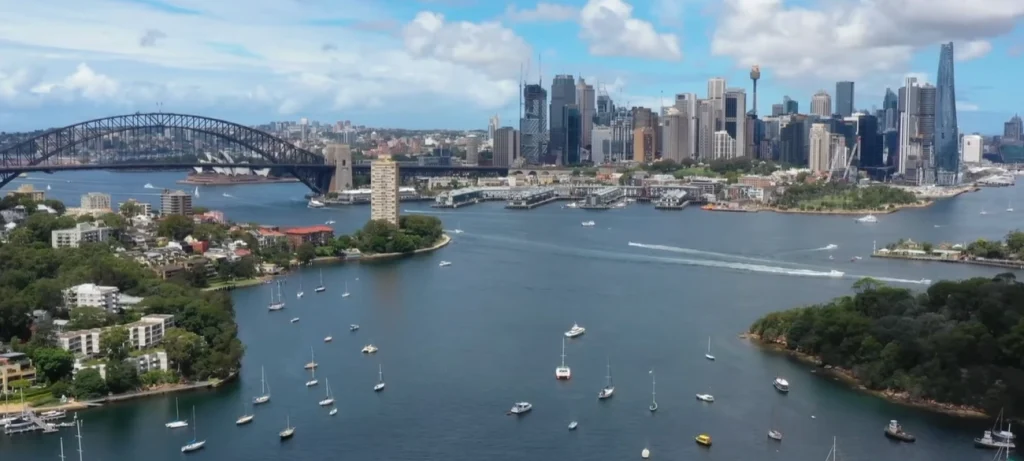
Sydney is Australia’s biggest city and the first stop for many visitors. See the Sydney Opera House and the Harbour Bridge, take the ferry across the harbour to Manly, and walk the coastal path from Bondi to Coogee Beach. The Blue Mountains, with their eucalyptus forests and the Three Sisters rock formation, make an easy day trip.
2. Melbourne
Melbourne is famous for its coffee, hidden laneways, street art and food from every corner of the world. It’s also Australia’s sports capital and hosts the Australian Open tennis every January. Nearby, you can watch little penguins come ashore at sunset on Phillip Island.
3. The Great Barrier Reef
The Great Barrier Reef is the world’s largest coral reef system, stretching about 2,300 km along the Queensland coast. Cairns and Port Douglas are the main bases for snorkelling and diving trips, and just to the north, the ancient Daintree Rainforest runs right down to the sea.
4. Uluru
Uluru is a giant sandstone rock in the heart of the Red Centre and a sacred site for the local Anangu people. Walk around its base, watch it glow red at sunrise and sunset, and visit the domes of Kata Tjuta nearby. Climbing Uluru has been banned since 2019 out of respect for its traditional owners.
5. Gold Coast
The Gold Coast is Australia’s holiday playground, with long surf beaches, high-rise hotels and the country’s best-known theme parks. Inland, the green hinterland has rainforest walks, waterfalls and quiet mountain villages.
6. Great Ocean Road
The Great Ocean Road is one of the world’s most beautiful coastal drives, running about 240 km along the coast of Victoria. Highlights include the limestone stacks of the Twelve Apostles, rainforest walks in the Otways and wild koalas in the trees beside the road.
7. Whitsunday Islands
The Whitsundays are a group of 74 tropical islands in the middle of the Great Barrier Reef. Whitehaven Beach, with its bright white silica sand, is one of the most photographed beaches in Australia. Airlie Beach is the main base for sailing trips and island tours.
8. Tasmania
Tasmania, the island state in the far south, is full of wild mountains, clean air and great food. Hobart has a lively harbour and the famous MONA art museum, Cradle Mountain offers some of Australia’s best hikes, and Wineglass Bay is a perfect curve of white sand. It’s also the place to see Tasmanian devils.
9. Perth and Rottnest Island
Perth is one of the sunniest big cities in Australia, with relaxed beaches and a laid-back feel. Take the ferry to Rottnest Island to cycle between quiet bays and snap a selfie with a smiling quokka. Further north, Ningaloo Reef lets you swim with whale sharks from around March to July.
10. Brisbane
Brisbane is a warm, friendly river city and the gateway to the Gold Coast, the Sunshine Coast and nearby islands. Swim at the free man-made beach in South Bank, walk or cycle along the river, and see koalas up close at a local wildlife sanctuary.
Best Time to Visit Australia
Australia is in the Southern Hemisphere, so its seasons are the opposite of Europe and Asia: summer runs from December to February and winter from June to August. The tropical north has a wet season and a dry season instead. For most trips, the best time to visit Australia is spring (September to November) or autumn (March to May).
| Destination | Best time to visit | Good to know |
|---|---|---|
| Sydney, Melbourne, Brisbane | September to November, March to May | Summer is hot and busy with school holidays. Melbourne’s weather can change quickly, so pack layers. |
| Great Barrier Reef, Cairns, Whitsundays | June to October | Dry, mild weather and calm seas. From about November to May, wear a stinger suit to protect against jellyfish. |
| Uluru and the Red Centre | May to September | Summer days often go above 35°C, while winter nights can drop close to freezing. |
| Tasmania | December to March | The warmest months. Winter brings snow to the mountains. |
| Perth and Western Australia | September to November, March to May | Wildflowers bloom across the state from about August to October. |
| Darwin and Kakadu | May to September | This is the dry season. From about November to April, heavy rain can close roads. |
Australia Travel Tips for a Smooth Trip
Follow these simple tips to travel to Australia with less stress and fewer surprises.
- Get your visa before you fly. Everyone except New Zealand citizens must arrange a visa or travel authority in advance. Some passports can get an Electronic Travel Authority (ETA), many European passports use the free eVisitor, and others need a Visitor visa. Only apply through the official Australian Government website or app.
- Declare food at the airport. Australia has very strict rules to protect its plants and animals. Declare any food, seeds or animal products on your arrival card, or you could face a big fine.
- Fly between big cities. Distances are huge. Sydney to Perth is about a five-hour flight, so plan your route around a few regions instead of trying to see everything.
- Drive on the left, and take care at dusk. Kangaroos often cross roads at dawn and dusk, and in the outback, fuel stations can be hundreds of kilometres apart.
- Protect yourself from the sun. The UV is very strong, even on cloudy days. Wear sunscreen, a hat and sunglasses, and drink plenty of water.
- Swim between the red and yellow flags. On patrolled beaches, the flags show where lifeguards are watching. Rip currents can be strong.
- Respect stinger season. In tropical Queensland, wear a stinger suit or swim in netted areas from about November to May.
- Pay by card. Tap-to-pay works almost everywhere, even for small amounts. Tipping isn’t expected, but it’s welcome for great service.
- Bring the right plug adapter. Australia uses plugs with two flat pins set at an angle (type I).
- Get travel insurance. Medical care for visitors can be expensive, so make sure you’re covered before you go.
Ready to start planning? Bookmark this Australia travel guide, map out your days with our Trip Planner, then use the Travel Budget Calculator to see what your Australia trip will cost.
FAQs
Is Australia a country or a continent?
Both. Australia is a country, and it also sits on its own continent, which is often grouped with New Zealand and the Pacific islands as Oceania.
What is the capital of Australia?
The capital is Canberra, not Sydney. Canberra was chosen as a compromise between Sydney and Melbourne, the country’s two biggest cities.
When is the best time to visit Australia?
For most of the country, the best time to visit Australia is spring (September to November) or autumn (March to May). For the Great Barrier Reef and the tropical north, go from June to October.
Do I need a visa to visit Australia?
Yes. Everyone except New Zealand citizens needs a visa or travel authority before flying, such as an ETA, an eVisitor or a Visitor visa, depending on your passport. Always apply through the official Australian Government website or app.
How many days do you need in Australia?
Plan at least 10 to 14 days to see Sydney, Melbourne and either the Great Barrier Reef or Uluru. With three weeks or more, you can add the Great Ocean Road, Tasmania or Western Australia.
Is Australia expensive to visit?
Yes, Australia is one of the more expensive places to travel, especially for hotels and eating out. You can save by staying in apartments, cooking some meals and enjoying free beaches, walks and national parks.
Can you climb Uluru?
No. Climbing Uluru has been banned since October 2019 out of respect for the Anangu people, its traditional owners. You can still walk around its base and join ranger-guided walks.
What are the best things to do in Australia?
Some of the best things to do in Australia are snorkelling on the Great Barrier Reef, watching the sunset at Uluru, walking from Bondi to Coogee in Sydney, driving the Great Ocean Road and meeting the quokkas on Rottnest Island. Our list of top places above has more ideas for your trip.