
Spain Travel Guide
Spain is one of the most popular holiday countries in the world, welcoming almost 97 million international visitors in 2025, second only to France. It has a bit of everything: lively cities full of art and architecture, sunny beaches and islands, Moorish palaces, and a relaxed way of life built around long lunches and late dinners.
This Spain travel guide helps you plan your trip with confidence. Below, you’ll find the top cities and places to visit in Spain, the best time to travel, and simple tips on visas, trains and local life.
About Spain: Sunshine, History and Fiesta
Spain is home to about 47.9 million people and covers most of the Iberian Peninsula, plus the Balearic Islands in the Mediterranean and the Canary Islands off the coast of Africa. Its regions are very different from each other, and many, like Catalonia, the Basque Country and Galicia, have their own languages and traditions.
For nearly 800 years, much of Spain was ruled by Muslim dynasties known as the Moors, who left behind treasures like the Alhambra in Granada and the Mezquita in Córdoba. Today you can see Islamic, Christian and Jewish history side by side in its old towns.
Spain at a glance
| Fact | Detail |
|---|---|
| Capital | Madrid |
| Population | About 47.9 million in 2026 |
| Languages | Spanish, plus Catalan, Galician and Basque in some regions |
| Currency | Euro (EUR) |
| Highest mountain | Mount Teide, 3,715 m, on Tenerife in the Canary Islands |
Top 5 Places to Visit in Spain
These are the best places to visit in Spain, and the ones we cover in depth. Each one has its own page with highlights, travel tips and our latest blogs.
1. Barcelona
Barcelona is famous for the amazing buildings of Antoni Gaudí, including the Sagrada Família and the colourful Park Güell. Wander the narrow streets of the Gothic Quarter, stroll down La Rambla, and finish the day on the city’s beaches. Read our Barcelona travel guide.
2. Madrid
Madrid, the capital, is a lively city of grand boulevards, world-class art and late nights. See the masterpieces at the Prado Museum, visit the Royal Palace, relax in Retiro Park and enjoy tapas around Plaza Mayor. Read our Madrid travel guide.
3. Palma de Mallorca
Palma is the capital of Mallorca, the largest of the Balearic Islands. Admire its huge Gothic cathedral by the sea, explore the courtyards of the old town, and use the city as a base for crystal-clear coves and mountain villages. Read our Palma de Mallorca travel guide.
4. Seville
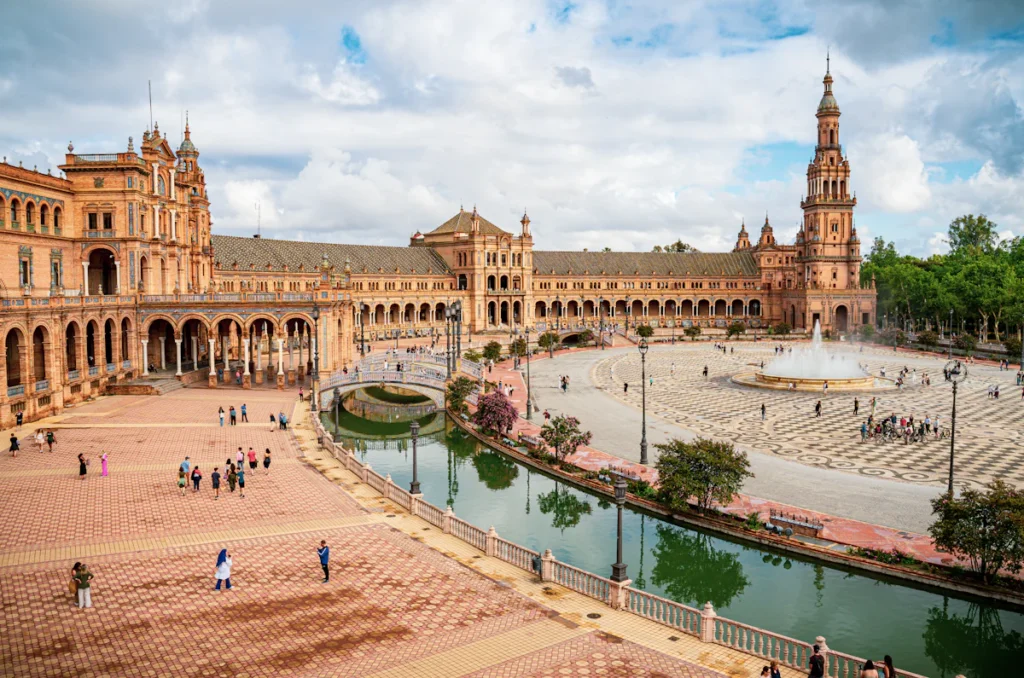
Seville is the home of flamenco and one of the most beautiful cities in Spain. Visit the Real Alcázar palace, climb the cathedral’s Giralda tower, which began life as the minaret of a mosque, and walk around the grand Plaza de España. Read our Seville travel guide.
5. Málaga
Málaga is the sunny gateway to the Costa del Sol. Explore the Alcazaba fortress, visit the museum dedicated to Picasso, who was born here, and relax on the city beaches. It’s also a good base for day trips to Granada and the Alhambra. Read our Málaga travel guide.
More Places Worth Visiting in Spain
- Granada: the Alhambra, a breathtaking Moorish palace with the Sierra Nevada mountains behind it.
- Córdoba: the Mezquita, a former mosque famous for its forest of red-and-white arches.
- Valencia: the futuristic City of Arts and Sciences and the birthplace of paella.
- Toledo: a medieval hilltop city an easy day trip from Madrid.
- San Sebastián: a beautiful beach city in the Basque Country, famous for its food.
- The Canary Islands: volcanic landscapes and warm sunshine all year round.
Best Time to Visit Spain
The best time to visit Spain is spring (April to June) and autumn (September to October), when the weather is warm but not too hot. July and August are very hot inland and busy on the coast, while winter is mild in the south and on the Canary Islands.
| Destination | Best time to visit | Good to know |
|---|---|---|
| Madrid and Barcelona | April to June, September to October | Madrid gets very hot in summer, and many locals leave the city in August. |
| Andalusia (Seville, Málaga, Granada) | March to May, October to November | Seville often goes above 40°C in July and August. |
| Mallorca and the Balearic Islands | May to June, September | July and August are the busiest and most expensive months. |
| Canary Islands | All year | Warm and sunny even in winter, which makes them a great winter escape. |
Spain loves a festival. Look out for Las Fallas in Valencia in March and the colourful April Fair in Seville.
Spain Travel Tips for a Smooth Trip
Follow these simple tips to travel to Spain with less stress and fewer surprises.
- Check the visa rules. Spain is part of the Schengen Area, so one Schengen visa covers 29 countries. If you don’t need a visa, you can usually stay up to 90 days in any 180-day period. UK, US, Canadian and Australian citizens don’t need a visa for short visits, and EU citizens can travel freely.
- Expect fingerprints at the border. Since April 2026, the EU’s Entry/Exit System records a photo and fingerprints of most non-EU visitors instead of stamping passports.
- Ride the high-speed trains. Fast trains link Madrid with Barcelona and Seville in around two and a half hours, often faster than flying once you count airport time.
- Book the big sights early. Tickets for the Alhambra and the Sagrada Família often sell out weeks ahead, especially in spring and summer.
- Eat on Spanish time. Lunch is usually from about 2 pm, and dinner often starts after 9 pm. Some small shops close for a few hours in the afternoon.
- Watch your bags. Pickpockets are common on La Rambla in Barcelona and on busy metros.
- Get travel insurance. It’s required for a Schengen visa, and it’s worth having on every trip.
Ready to start planning? Bookmark this Spain travel guide, map out your days with our Trip Planner, then use the Travel Budget Calculator to see what your trip will cost.
FAQs
Do I need a visa for Spain?
UK, US, Canadian and Australian citizens don’t need a visa for stays of up to 90 days in any 180-day period, and EU citizens can travel freely. Other nationalities may need a Schengen visa.
When is the best time to visit Spain?
The best time to visit Spain is April to June or September to October. For the Canary Islands, any time of year is good.
How many days do you need in Spain?
Plan 7 to 10 days to see Madrid, Barcelona and Seville. With two weeks, you can add Granada, Málaga or an island like Mallorca.
Is Spain expensive to visit?
Spain is good value compared with much of Western Europe, especially for food. Barcelona, Madrid and the islands in summer cost more.
What are the best places to visit in Spain?
Some of the best places to visit in Spain are Barcelona, Madrid, Seville, Granada, Málaga, Córdoba and Mallorca. Our list of top places above links to a full guide for each city.