
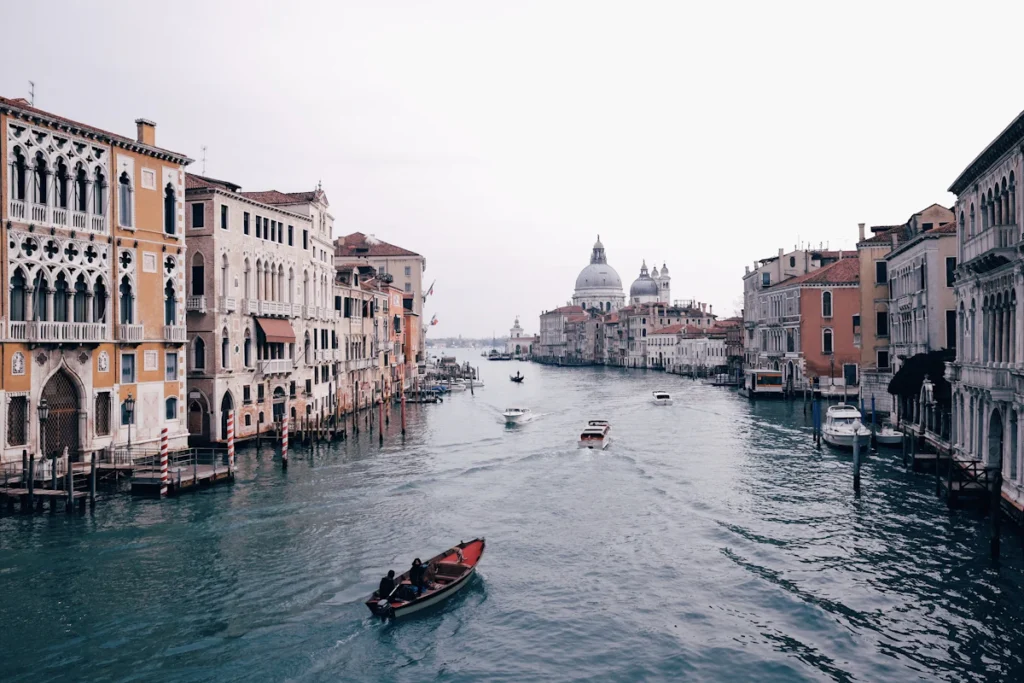
Venice is unlike anywhere else on earth, a city of canals instead of roads, palaces reflected in the water and narrow lanes that open onto quiet squares. It is also busy and easy to get lost in, so a simple plan helps you see more and stress less. This Venice itinerary shows you how to spend three days in Venice, with one day around St Mark’s Square, one exploring the Rialto, Cannaregio and Dorsoduro, and one on the lagoon islands.
It includes 2026 prices in euros, opening days, the access fee and transport tips. For more background, see our Venice travel guide.
How Many Days in Venice Do You Need?
Three days is the ideal amount of time, and it is how many days in Venice most visitors need to see the main sights, explore quieter neighbourhoods and visit the islands of Murano and Burano. Staying overnight also means you can enjoy Venice early in the morning and late in the evening, after the day-trippers leave. Here is this Venice itinerary at a glance.
| Day | Area | Highlights |
|---|---|---|
| Day 1 | San Marco | St Mark’s Basilica, the Doge’s Palace, the Campanile, the piazza at night |
| Day 2 | Rialto, Cannaregio and Dorsoduro | The Rialto Market and bridge, the Jewish Ghetto, the Accademia, the Zattere at sunset |
| Day 3 | The lagoon islands | Murano’s glass workshops, Burano’s colourful houses, Torcello |
What Should You Know Before You Go?
- Check the access fee. Day visitors pay €5 to €10 on about 60 peak days between April and July, but overnight guests are exempt.
- Book the big sights. St Mark’s Basilica, the Doge’s Palace and the Campanile all have timed tickets, and queues are long in summer.
- Travel light. There are no cars, and you will carry your luggage over bridges with steps.
- Get lost on purpose. Some of the best moments in Venice come from wandering away from the main routes.
Day 1: St Mark’s Square and the Doge’s Palace
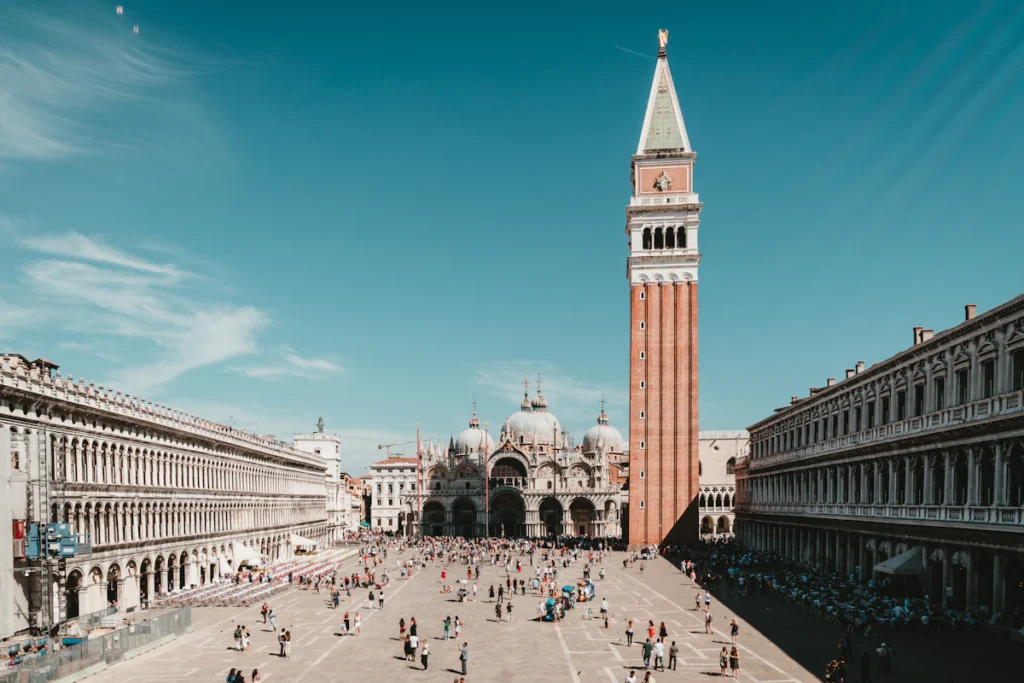
Start your Venice itinerary at Piazza San Marco, the grand square that Napoleon reportedly called the drawing room of Europe.
Morning: St Mark’s Basilica
St Mark’s Basilica is one of the most beautiful churches in Europe, with golden mosaics covering its domes and walls. Since January 2026, entry costs €12, with extra tickets for the museum and terrace or the golden altarpiece called the Pala d’Oro. Book a morning time slot, as queues build quickly. Shoulders and knees must be covered, and large bags are not allowed inside.
Midday: The Doge’s Palace
Next door, the Doge’s Palace was the seat of the Venetian Republic for centuries, with vast halls covered in paintings by Tintoretto and Veronese. The ticket, around €30 to €35, also includes the Correr Museum and other museums on the square. Cross the Bridge of Sighs into the old prisons, where condemned prisoners took their last look at Venice. Allow at least two hours.
Afternoon and Evening: The Campanile and the Piazza at Night
Ride the lift up the Campanile, the bell tower of St Mark’s, for a sweeping view over the domes, the lagoon and the islands, with tickets around €18. In the evening, the square becomes magical, with orchestras playing outside the historic cafés. Sitting down for a drink is expensive, so many visitors simply listen from the edge of the square. Then walk to the waterfront to see the gondolas bobbing in front of San Giorgio Maggiore.
Day 2: The Rialto, Cannaregio and Dorsoduro
Day two of this Venice itinerary explores the everyday life of the city, its markets and its art.
Morning: The Rialto Market and Bridge
Start early at the Rialto Market, where locals buy fruit, vegetables and fish from the lagoon. The fish market is usually open from Tuesday to Saturday mornings. Then cross the Rialto Bridge, the oldest of the four bridges over the Grand Canal, for the classic view of palaces and boats. For a cheap gondola experience, take a traghetto, a ferry gondola that crosses the Grand Canal for about €2.

Midday: Cannaregio and the Jewish Ghetto
Walk north into Cannaregio, a quieter, more local district of long canals and neighbourhood bars. Visit the Jewish Ghetto, which gave the world the word ghetto, with its tall houses and historic synagogues. For lunch, try cicchetti, small Venetian snacks such as creamed cod on bread, in a traditional bacaro wine bar along the Fondamenta della Misericordia.
Afternoon and Evening: Dorsoduro
Cross to Dorsoduro, the artistic quarter on the south side of the Grand Canal. Visit the Gallerie dell’Accademia, home to Venetian masterpieces by Bellini, Titian and Tintoretto, or the Peggy Guggenheim Collection, with modern art by Picasso, Pollock and Magritte, which is closed on Tuesdays. Then visit the domed church of Santa Maria della Salute and end the day watching the sunset with a spritz on the Zattere promenade.
Day 3: Murano, Burano and Torcello
The final day of your Venice itinerary takes you out onto the lagoon to see its colourful islands.
Morning: Murano
Take a vaporetto from Fondamente Nove to Murano, the island famous for glassmaking since the 13th century. Watch a free glassblowing demonstration in one of the furnaces and visit the Glass Museum to see centuries of Venetian craftsmanship. Buy only from shops that show the official Murano glass trademark if you want genuine pieces.
Afternoon: Burano and Torcello
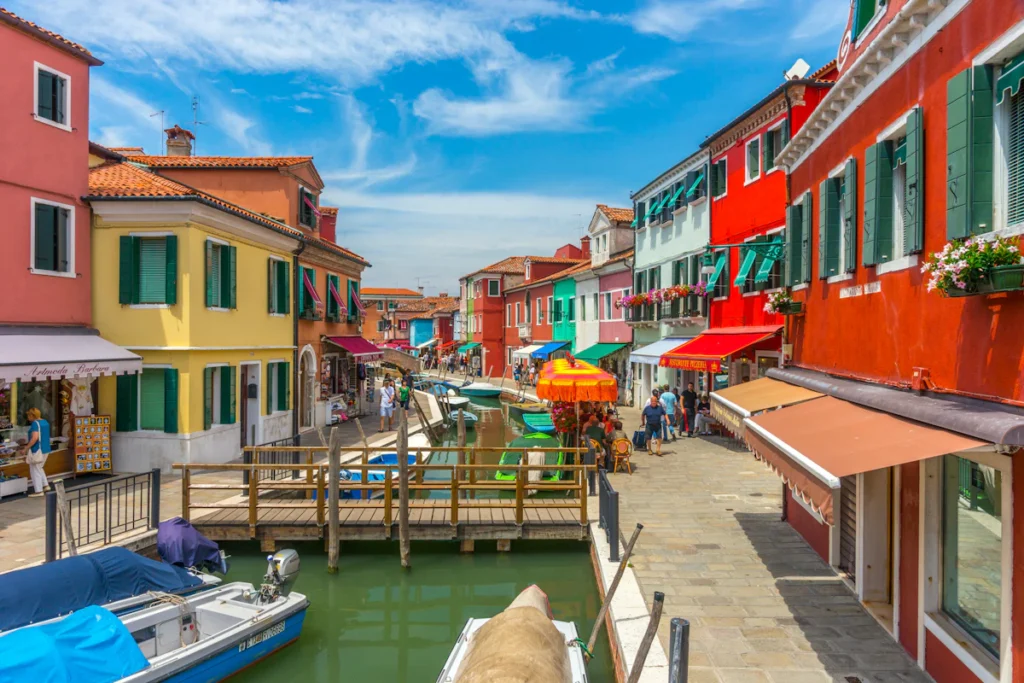
Continue to Burano, about 40 minutes away, where fishermen’s houses are painted in bright pinks, blues and yellows. It is a photographer’s dream and famous for its lace and fresh seafood. From Burano, a short boat ride takes you to Torcello, a peaceful island with an ancient cathedral and stunning Byzantine mosaics. Return to Venice in the evening for a farewell dinner.
Have More Time? Extend Your Venice Itinerary
If you can add a fourth day to your Venice itinerary, visit the Lido for a beach afternoon, explore the quiet island of San Giorgio Maggiore and climb its bell tower for a view without the crowds, or join a cooking class. Art lovers can spend a full day at the Biennale, which runs in the gardens and the old Arsenale from spring to November. Verona and Padua are also easy day trips by train.
How to Get Around Venice
The best way to get around Venice is on foot, as the centre is compact and there are no cars. For longer distances and the islands, use the vaporetto, the city’s water bus. A single ticket costs €9.50 and is valid for 75 minutes, while passes cost €25 for 24 hours, €35 for 48 hours and €45 for 72 hours, which is the best value for this plan.
From Marco Polo Airport, buses reach Piazzale Roma in about 20 minutes, and the Alilaguna water bus sails to several stops in the centre. A shared gondola ride costs €90 for about 30 minutes in the daytime and €110 in the evening, for up to six people.
Do You Need to Pay the Venice Access Fee?
The Venice access fee applies only to day visitors on about 60 peak days between April and July, from 8.30am to 4pm. It costs €5 if you book at least four days ahead and €10 closer to your visit, and children under 14 are exempt. If you stay overnight in Venice, you do not pay the fee, as you already pay the local tourist tax through your hotel, although you may need to register your stay online to get an exemption code.
Where to Stay for Three Days in Venice
For this Venice itinerary, the best areas to stay are San Marco for convenience, Cannaregio for value and a local feel, Dorsoduro for art and quiet evenings, and Castello for a peaceful base near the lagoon. Staying on the main island rather than in Mestre lets you enjoy the city at its most magical times.
A good three-star hotel usually costs €150 to €300 per night, plus a tourist tax of a few euros per person per night. Use our Travel Budget Calculator to plan your total, and the Currency Converter to see it in your own currency.
What Food Should You Try in Venice?
In Venice you should try cicchetti, the small snacks served in bacari, along with sarde in saor, sweet and sour sardines, risotto al nero di seppia, black with cuttlefish ink, and fegato alla veneziana, liver with onions. Drink a spritz, which was born in this region, or an ombra, a small glass of local wine. Avoid restaurants with touts and picture menus near St Mark’s, and look for places where locals eat.
What Is the Best Time to Visit Venice?
The best time to follow this Venice itinerary is from April to June and from September to October, when the weather is pleasant and the light is beautiful. Summer is hot, humid and crowded. From November to January, high tides called acqua alta can flood low-lying areas, although the MOSE barrier now protects the city from the worst floods. Carnival in February is spectacular, but hotels are expensive and busy.
Venice Travel Tips
- Do not sit on monuments or bridges. Picnicking in St Mark’s Square can bring a fine.
- Carry a refillable bottle. Public fountains provide free drinking water.
- Walk early or late. The lanes are quiet before 9am and after 7pm.
- Check the vaporetto direction. Many piers have stops for both directions, so look carefully.
- Respect residents. Keep to the right on narrow lanes and avoid blocking bridges for photos.
Ready to plan your trip? Use our Trip Planner to build your Venice itinerary day by day and our Packing List Generator to pack light for bridges and boats. Explore more of the country in our Italy travel guide, or continue to Florence, Milan or Rome by fast train.
FAQs
Is three days in Venice enough?
Yes, three days is enough to see St Mark’s Square, the Doge’s Palace, the Rialto, Dorsoduro and the islands of Murano and Burano. Two days is possible, but the islands then feel rushed.
How much does a gondola ride cost in Venice?
The official price is €90 for about 30 minutes in the daytime and €110 in the evening, for up to six people. A traghetto crossing of the Grand Canal costs about €2.
Do I have to pay the Venice access fee if I stay overnight?
No, overnight guests are exempt because they pay the local tourist tax through their accommodation. You may need to register your stay online to get an exemption code.
Is the vaporetto pass worth it?
Yes, if you take three or more boat rides in a day. The 72-hour pass at €45 is great value for a three-day visit that includes the islands.
How much is St Mark’s Basilica?
Since January 2026, entry costs €12, with extra tickets for the museum and the Pala d’Oro. Booking a time slot avoids long queues.
How do I get from Venice airport to the city?
Buses run to Piazzale Roma in about 20 minutes, and the Alilaguna water bus sails to stops in the centre. Water taxis are fast but expensive.
Comments