
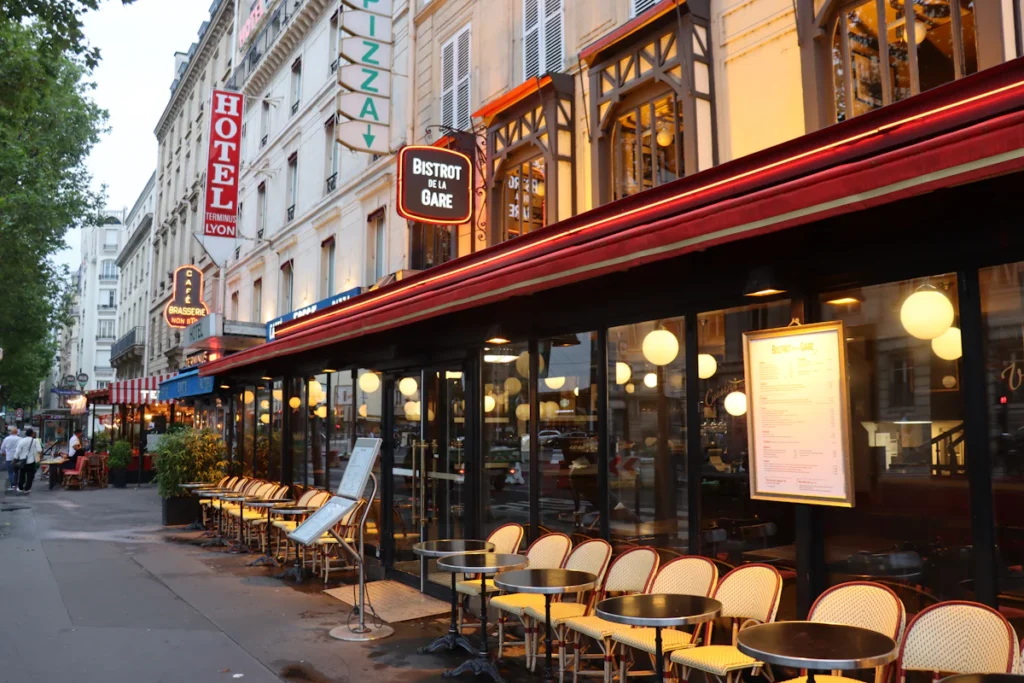
So, how much does a trip to Paris cost? For most visitors in 2026, a realistic daily budget is about €100 to €150 per person on a budget trip, €200 to €300 on a mid-range trip, and €450 or more for a luxury stay, not counting flights. Hotels and dinners take the biggest share, while bakeries, set lunch menus and free sights keep the total under control. This guide breaks down every cost in euros, with real prices for hotels, food, transport and attractions. For help choosing what to see, read our Paris travel guide.
What Is a Realistic Daily Budget for Paris?
A realistic daily budget for Paris is about €100 to €150 per person for budget travellers, €200 to €300 for mid-range travellers and €450 or more for luxury. The figures below assume two people sharing a double room. Solo travellers should add roughly €80 to €120 per night for the room.
| Cost per person, per day | Budget | Mid-range | Luxury |
|---|---|---|---|
| Room (two sharing) | €40–€65 | €85–€140 | €250+ |
| Food and drink | €25–€35 | €55–€80 | €120+ |
| Local transport | €5–€12 | €8–€14 | €15–€40 |
| Sights and tours | €10–€25 | €30–€50 | €60+ |
| Extras and souvenirs | €10–€15 | €15–€25 | €50+ |
| Daily total | About €100–€150 | About €200–€300 | €450+ |
Is Paris Expensive?
Paris is expensive for hotels and dinners, but it is easy to keep costs under control if you plan a little. Rooms and sit-down dinners are the biggest expenses, and the most popular museums raised their prices in 2026. On the other hand, you can eat well on a €15 to €25 lunch menu, walk across the city for free and enjoy many of the best sights without paying a cent.
Visiting in spring or autumn also keeps hotel prices lower than in July and August. The euro price can feel very different depending on your own currency, so a quick conversion before you book helps you judge what is good value.
How Much Does a Trip to Paris Cost for 3, 5 or 7 Days?
How much does a trip to Paris cost for a short break? About €600 to €900 for three days on a mid-range budget, or €1,000 to €1,500 for five days and €1,400 to €2,100 for a week. These totals are per person and do not include flights.
| Length of trip | Budget | Mid-range | Luxury |
|---|---|---|---|
| 3 days | €300–€450 | €600–€900 | €1,350+ |
| 5 days | €500–€750 | €1,000–€1,500 | €2,250+ |
| 7 days | €700–€1,050 | €1,400–€2,100 | €3,150+ |
These are estimates based on the daily budgets above, so use our Travel Budget Calculator to adjust them for your own trip, and the Currency Converter to see the totals in your own currency.
How Much Is a Hotel in Paris?
A simple budget room in Paris costs from about €80 to €130 per night, a comfortable three- or four-star hotel costs €150 to €300, and luxury hotels start at around €450. Prices are highest in summer, at Christmas and during fashion weeks in late February and late September. Staying in Montmartre, the Latin Quarter or near Bastille usually costs less than staying in Le Marais or Saint-Germain-des-Prés. Add the tourist tax, which is charged per adult per night: about €5.50 in a three-star hotel and €8.50 in a four-star hotel in 2026, with children under 18 exempt.
What Is the Cost of Food in Paris?
The cost of food in Paris is about €25 to €35 a day if you eat at bakeries and cafés, and €55 to €80 a day if you enjoy a bistro dinner. Here are typical prices.
- Coffee: €2 to €2.50 standing at the bar, and €3.50 to €5 if you sit at a table.
- Croissant or pastry: €1.30 to €2.80 at a bakery.
- Baguette sandwich: €4 to €6, which makes a cheap and filling lunch.
- Set lunch menu (formule): €15 to €26 for two or three courses on weekdays.
- Dinner at a mid-range bistro: €35 to €55 for three courses, without wine.
- Supermarket picnic: €12 to €22 for a full day of simple meals.
Restaurants beside the Eiffel Tower, the Champs-Élysées and Notre-Dame often charge 30 to 50 percent more than places two streets away, so walk a little before you sit down.

How Much Is the Metro in Paris?
A single metro or RER ticket in Paris costs €2.55 in 2026, and a bus or tram ticket costs €2.05. Paper tickets are being phased out, so load tickets on a Navigo Easy card, which costs €2, or on the transport app on your phone. A one-day Navigo pass costs €12.30 and is worth it if you take five or more rides, while a weekly pass costs €32.40 but only runs from Monday to Sunday.
Airport trips need a separate ticket at €14 for the RER B from Charles de Gaulle or metro line 14 from Orly. Official taxis charge fixed fares of €56 or €65 from Charles de Gaulle, depending on the river bank, and about €45 or €36 from Orly. Paris is very walkable, so many visitors spend less than €10 a day on transport.

How Much Do Paris Attractions Cost?
Most big attractions in Paris cost between €15 and €35, and the Louvre now has two prices. Visitors from outside the European Economic Area, which includes the USA, the UK, Canada and Australia, pay €32 for the Louvre, while EEA visitors pay €22. Here are typical adult prices in 2026.
| Attraction | Adult price | Closed on |
|---|---|---|
| Louvre Museum | €32 (€22 for EEA visitors) | Tuesdays |
| Eiffel Tower, stairs to the second floor | €14.80 | Open daily |
| Eiffel Tower, lift to the second floor | €23.50 | Open daily |
| Eiffel Tower, lift to the summit | €36.70 | Open daily |
| Musée d’Orsay | €16 | Mondays |
| Sainte-Chapelle | €22 (€16 for EEA visitors) | Open daily |
| Arc de Triomphe | €16 | Open daily |
| Palace of Versailles Passport ticket | From €35 in high season | Mondays |
| Seine river cruise (about one hour) | €15–€20 | Open daily |
Book the Louvre and the Eiffel Tower online for a timed slot, because both sell out in busy months. If you only want the view, the second floor costs about €13 less than the summit, and many people find the view from there just as good.
Many of Paris’s best experiences are free, including Notre-Dame Cathedral, Sacré-Cœur, the Luxembourg Gardens and walks along the Seine. The Musée d’Orsay is free on the first Sunday of each month with a reserved slot, and the Louvre is free after 6pm on the first Friday of the month, except in July and August.

Is the Paris Museum Pass Worth It?
The Paris Museum Pass is worth it if you plan to visit four or more paid sights in two days. In 2026 it costs around €85 for two days, €105 for four days and €125 for six days, and it covers the Louvre, the Musée d’Orsay, Sainte-Chapelle, the Arc de Triomphe and the Palace of Versailles. For a visitor from outside the EEA, the Louvre (€32), Sainte-Chapelle (€22), the Musée d’Orsay (€16) and the Arc de Triomphe (€16) already add up to €86, so the pass breaks even on four sights.
It does not include the Eiffel Tower, and you still need to reserve time slots at the busiest places. If you only want one or two museums, buy single tickets instead.
What Does a Typical Mid-Range Day in Paris Cost?
A typical mid-range day in Paris costs about €240 per person, including your share of a hotel room. Here is an example day for a visitor from outside the EEA.
- Breakfast: A croissant and coffee at a café, about €7.
- Morning: The Louvre, €32.
- Lunch: A set lunch menu at a neighbourhood bistro, about €20.
- Afternoon: A coffee break at a terrace, €4, and three metro rides, about €7.65.
- Evening: A one-hour Seine river cruise, about €16, followed by a bistro dinner, about €45.
- Room: Your share of a mid-range double room, about €110.
So, how much does a trip to Paris cost on a typical day? Roughly €240 for the example above. If you swap the Louvre for a free walk through the Luxembourg Gardens and eat a bakery dinner, you can bring the day closer to €150.
What Costs Do Visitors Often Forget?
How much does a trip to Paris cost once you add the extras? More than the daily budget suggests, because visitors often forget costs that sit outside it, so add them to your plan before you go. Flights are the biggest cost, so check prices from your home airport as early as possible. Travel insurance, a local eSIM or roaming plan and the hotel tourist tax are easy to overlook.
Day trips are cheap if you use public transport, because the RER to Versailles only costs the standard €2.55 fare, although the palace ticket is extra. Evening entertainment can also add up, since a cabaret show usually costs well over €90. Finally, keep a small cushion of €20 to €30 a day for tips, snacks and the odd souvenir. You can compare Versailles and other Paris attraction tickets on Tiqets before you go.
How Can You Save Money in Paris?
You can save a lot in Paris by eating your main meal at lunchtime, walking more and booking early. These tips make the biggest difference.
- Eat the set lunch. The same restaurant that charges €40 to €60 for dinner often serves two courses at lunch for €15 to €26.
- Drink coffee at the bar. Standing at the counter is cheaper than sitting at a table.
- Ask for tap water. A carafe d’eau is free in restaurants, while bottled water can cost €3 or more.
- Stay outside the very centre. Montmartre, the Latin Quarter and Bastille offer lower prices and good metro links.
- Travel in the shoulder season. April, May, September and October have milder weather and lower hotel prices than summer.
- Book timed tickets online. The Eiffel Tower, the Louvre and the Musée d’Orsay sell out, and last-minute offers are rarely cheaper.
Ready to plan your trip? Build your days with our Trip Planner, get ready with the Packing List Generator and explore more of the country in our France travel guide. If you want to add the Riviera, our Nice travel guide is a great next stop, and Lyon and Marseille are good city breaks too.
FAQs
How much money do I need for 3 days in Paris?
You need about €600 to €900 per person for three days on a mid-range budget, or €300 to €450 on a tight budget, not counting flights. This covers a hotel, meals, local transport and a few attractions.
How much money do I need for a week in Paris?
You need about €1,400 to €2,100 per person for a week on a mid-range budget, or €700 to €1,050 on a budget trip, not counting flights. A Navigo weekly pass and a museum pass can help you save.
Is Paris cheaper in winter?
Yes, hotel prices are usually lower from November to early December and in January and early February, outside fashion weeks. Museums are also quieter, though some outdoor sights are less pleasant in the cold.
Do I need cash in Paris?
No, cards and contactless payments are accepted almost everywhere, including the metro and most cafés. It is still useful to carry €20 to €50 in cash for market stalls and small bakeries.
Do you have to tip in Paris?
No, service is already included in restaurant prices in France. Many people leave a euro or two for good service in a café, or a few euros after a nice meal, but it is optional.
What is the cheapest month to visit Paris?
January and February are usually the cheapest months, apart from fashion weeks in late February. November is also good value, and it is quieter than the peak summer season.
This page contains affiliate links. If you book through them, we may earn a small commission at no extra cost to you. See our affiliate disclosure.


Comments