
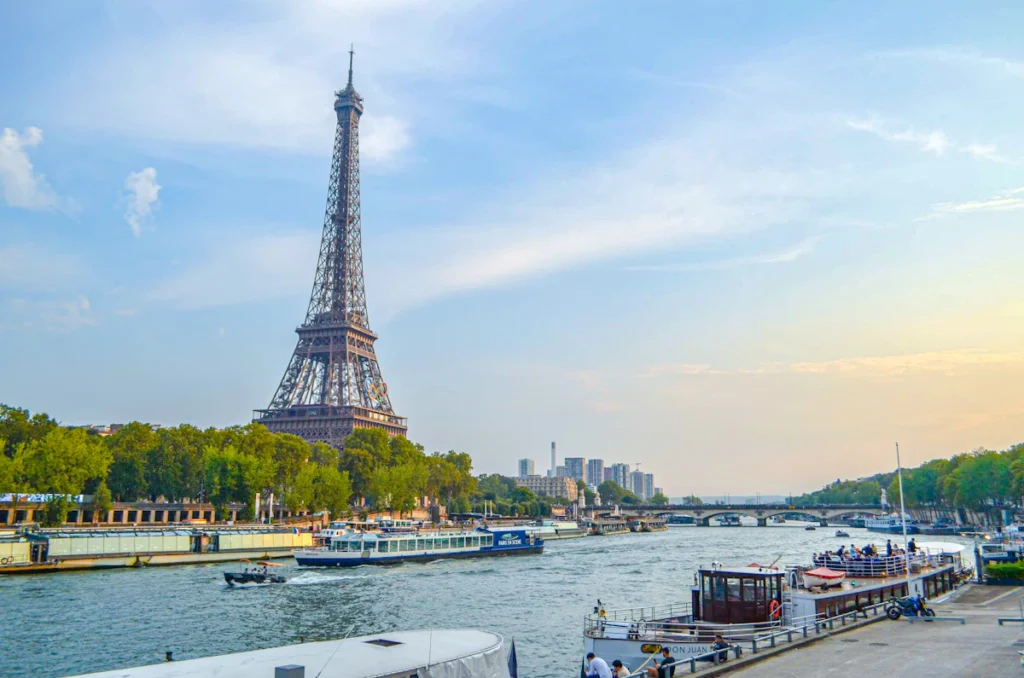
Paris is one of those cities that lives up to the hype. The Eiffel Tower really does sparkle at night, the cafés really are full of people watching the world go by, and almost every street seems to lead to a famous monument, a beautiful bridge or a bakery you can’t walk past.
The hard part is fitting it all in. This Paris itinerary shows you how to spend three days in Paris without rushing, with each day planned around one part of the city so you spend more time exploring and less time on the metro. It’s ideal for a first visit, and you can easily swap things around to suit your interests. For the bigger picture, including when to go and how the city works, see our Paris travel guide.
Is Three Days in Paris Enough?
Yes. Three days in Paris is enough to see the big sights, such as the Eiffel Tower, the Louvre, Notre-Dame and Montmartre, and still have time to sit in a café, walk along the Seine and enjoy a long dinner. If you want to add Versailles or a slower look at the museums, plan four or five days.
Your Three-Day Paris Itinerary at a Glance
| Day | Area | Highlights |
|---|---|---|
| Day 1 | The Eiffel Tower and the Left Bank | Eiffel Tower, Musée d’Orsay, a Seine river cruise, dinner in Saint-Germain |
| Day 2 | The historic centre | The Louvre, the Tuileries Garden, Notre-Dame, Sainte-Chapelle, Le Marais |
| Day 3 | Montmartre and the Right Bank | Sacré-Cœur, Place du Tertre, the Opéra, the Arc de Triomphe and the Champs-Élysées |
Before You Go: Things to Know
- Book the big sights early. The Eiffel Tower, the Louvre and Sainte-Chapelle all use timed tickets, and popular slots sell out days ahead in spring and summer.
- Check the closing days. The Louvre is closed on Tuesdays, while the Musée d’Orsay and the Palace of Versailles are closed on Mondays.
- Know the Louvre prices. Since January 2026, a standard Louvre ticket costs €32 for most visitors from outside the European Economic Area and €22 for EU and EEA residents.
- Think about the Paris Museum Pass. It covers the Louvre, the Musée d’Orsay, Sainte-Chapelle, the Arc de Triomphe and dozens of other sights, and comes in two-, four- and six-day versions. It’s good value if you plan to visit three or more paid sights a day.
- Get a Navigo Easy card. This reusable travel card costs €2, and you load it with single tickets or a day pass. A single metro ticket costs €2.55, and you can’t simply tap a bank card at the barriers.
Day 1: The Eiffel Tower, the Seine and Saint-Germain
Morning: Start at the Eiffel Tower
Start early at Trocadéro, across the river from the tower, for the classic photo before the crowds arrive. Then walk over the Pont d’Iéna to the Eiffel Tower itself. Book a timed ticket on the official website before you go, or compare Eiffel Tower tickets and tours on Klook. You can take the lift to the top for the biggest views, or climb the stairs to the second floor for a cheaper and quicker visit.
Afterwards, stroll through the Champ de Mars, the long lawn behind the tower, and continue to Les Invalides, where Napoleon is buried under a golden dome.
Afternoon: The Musée d’Orsay
Walk along the river to the Musée d’Orsay, a beautiful old railway station filled with Impressionist paintings by Monet, Van Gogh, Renoir and Degas. It’s smaller and easier to enjoy than the Louvre, so two to three hours is plenty. Don’t miss the view through the giant station clock on the top floor.
Evening: A Seine River Cruise and Saint-Germain
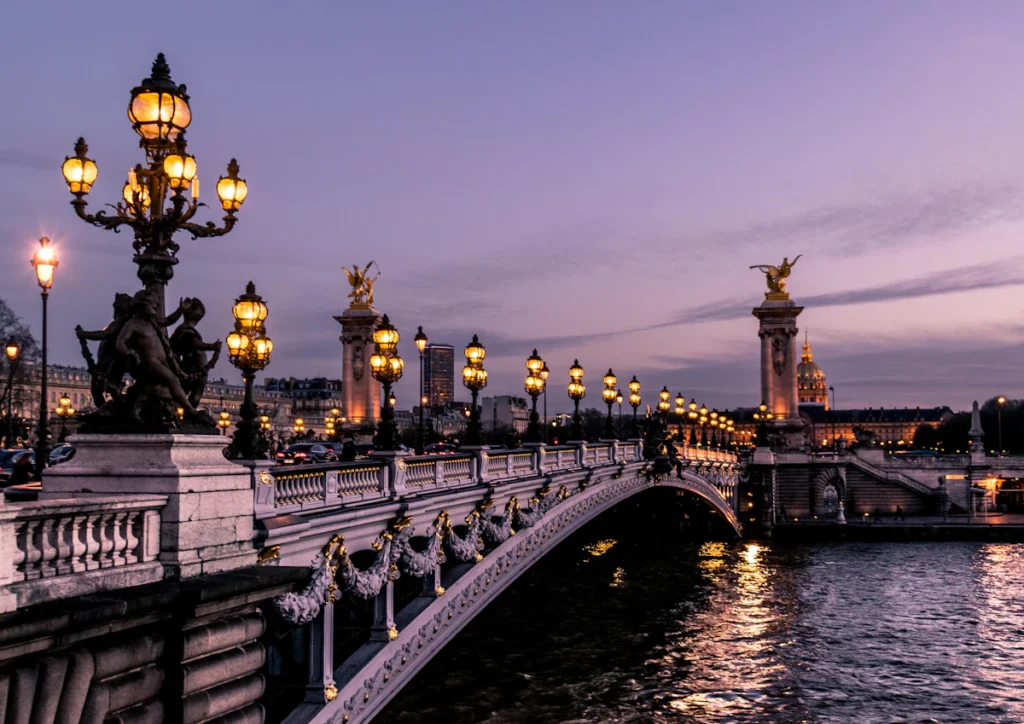
As the light fades, take an hour-long cruise on the Seine. Boats leave from near the Eiffel Tower and the Pont Neuf, and sailing past Notre-Dame, the Louvre and the lit-up Pont Alexandre III is one of the most memorable things to do in Paris. After dark, the Eiffel Tower sparkles with thousands of lights for five minutes every hour.
Finish the day with dinner in Saint-Germain-des-Prés, a lively Left Bank neighbourhood of bistros, wine bars and historic cafés such as Les Deux Magots and Café de Flore.
Day 2: The Louvre, Notre-Dame and Le Marais
Morning: The Louvre
Arrive when the Louvre opens at 9am with a pre-booked ticket, which you can compare on Tiqets. The museum is enormous, so pick a few highlights rather than trying to see everything. Most first-time visitors head for the Mona Lisa, the Venus de Milo and the Winged Victory of Samothrace, then explore the grand rooms of Napoleon III’s apartments. Allow around three hours.
Midday: The Tuileries and Île de la Cité
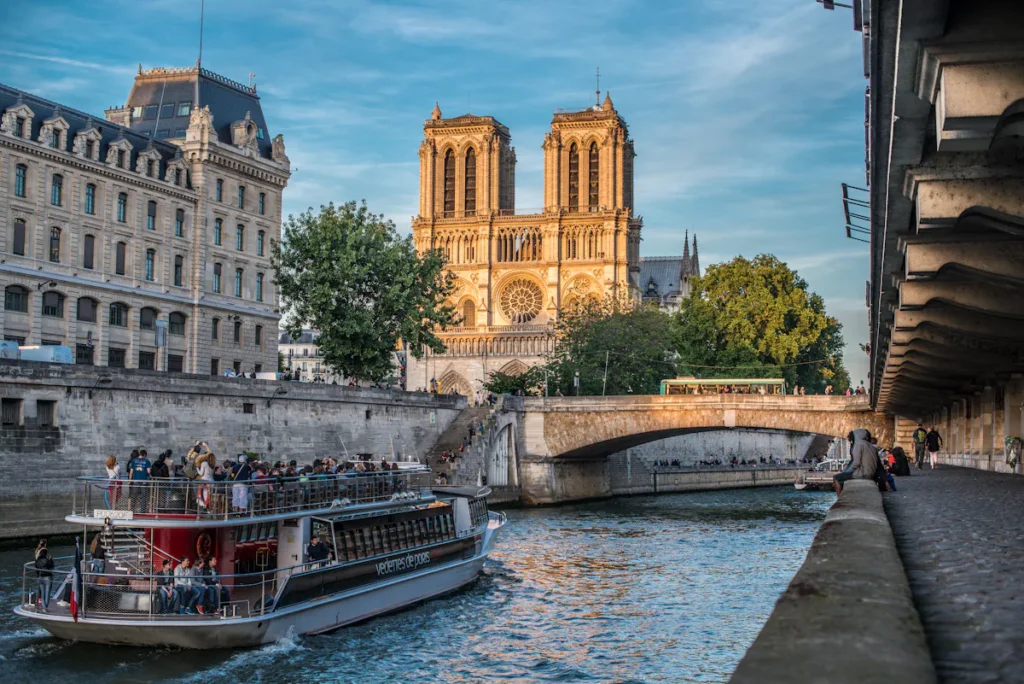
Walk through the Tuileries Garden, then follow the river east to the Île de la Cité, the small island where Paris began. Notre-Dame Cathedral reopened in December 2024 after its restoration, and entry is free. You can book a free time slot online to skip most of the queue, and the towers have a separate paid ticket.
A few minutes away, Sainte-Chapelle has some of the finest stained glass in the world. On a sunny day, its upper chapel glows with colour, so it’s worth booking ahead. A guided Seine cruise or city tour on Klook is another easy way to see the main sights.
Afternoon and Evening: Le Marais and the Latin Quarter
Cross the river to Le Marais, one of the most charming areas in Paris. Wander its narrow streets of boutiques and galleries, sit for a while in the elegant Place des Vosges, and try a famous falafel wrap on Rue des Rosiers. Note that the Centre Pompidou modern art museum on the edge of the district is closed for a major renovation until 2030.
In the evening, head back across the river to the Latin Quarter, where you can browse the books at Shakespeare and Company and find a cosy restaurant for dinner.
Day 3: Montmartre, the Opéra and the Champs-Élysées
Morning: Montmartre and Sacré-Cœur
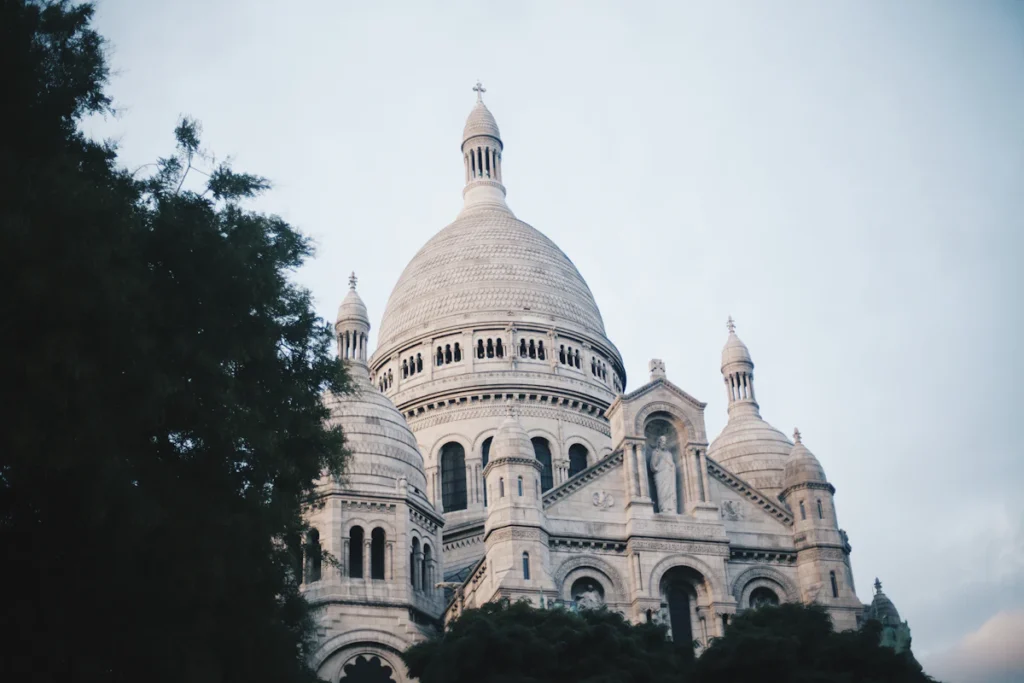
Go early to Montmartre, the hilltop village in the north of the city. Climb the steps, or ride the funicular with a metro ticket, to the white Sacré-Cœur Basilica, which is free to enter and has one of the best views over Paris. Then explore the cobbled lanes, the painters on Place du Tertre and the pretty pink café La Maison Rose.
Afternoon: The Opéra and the Arc de Triomphe
Take the metro to the Palais Garnier, the city’s grand opera house, where you can tour the golden foyer and the red-velvet auditorium. Next door, the free rooftop terrace of the Galeries Lafayette department store has great views of the Opéra and the Eiffel Tower.
Later, head to the Arc de Triomphe and climb to the top for a view down the twelve avenues that meet below it. Then walk down the Champs-Élysées towards Place de la Concorde.
Evening: A Last Look at the Lights
For your final night, return to Trocadéro or the Seine to see the Eiffel Tower sparkle one more time, or book a table in a classic bistro and order a slow, French-style dinner.
Have More Time? Add Versailles
If you can stretch your trip to a fourth day, spend it at the Palace of Versailles, the home of the French kings, with its Hall of Mirrors and huge formal gardens. It’s about 40 minutes from central Paris on the RER C train. Go from Tuesday to Sunday, as the palace is closed on Mondays, and book a timed ticket, or compare Versailles tours on Klook. In spring and summer, Monet’s garden at Giverny is another lovely day trip.
Where to Stay in Paris for Three Days
- Le Marais: central, walkable and full of cafés, perfect for first-time visitors.
- Saint-Germain-des-Prés: elegant and classic Paris, close to the river and the Musée d’Orsay.
- The Latin Quarter: lively, with lots of mid-range hotels near Notre-Dame.
- Near the Eiffel Tower: quieter in the evening, with famous views but fewer restaurants.
- Opéra and South Pigalle: good transport links and often better value.
How to Get Around Paris
The metro is the fastest way to get around, and most central sights are a short walk from a station. Walking is the best way to enjoy neighbourhoods like Le Marais and Saint-Germain. From Charles de Gaulle Airport, the RER B train reaches central Paris in about 35 minutes, and from Orly Airport, metro line 14 runs straight into the city. A special airport ticket costs €14. Official taxis charge a fixed fare between the airports and central Paris. If you want mobile data from the moment you land, an eSIM such as Yesim is usually simpler than roaming.
How Much Do Three Days in Paris Cost?
As a rough guide, budget travellers can spend around €100 to €150 per person per day, staying in hostels or simple hotels and eating at bakeries and cafés. Mid-range travellers usually spend €200 to €300 per day, including a comfortable hotel, a couple of museums and a nice dinner. Prices are higher in summer and around big events. Use our Travel Budget Calculator to plan your own costs, and the Currency Converter to see prices in your currency.
Best Time to Visit Paris
The best time to visit Paris is from April to June and from September to October, when the weather is mild and the parks look their best. July and August are hot and busy, and some small restaurants close for summer holidays. Winter is cold and grey, but it’s quieter, cheaper and festive in December.
Paris Travel Tips
- Watch out for pickpockets on the metro and around busy sights such as the Eiffel Tower and Montmartre.
- Say “bonjour” when you walk into a shop or café. It makes a big difference to how you’re welcomed.
- Ask for tap water. A carafe d’eau is free in restaurants.
- Don’t worry about tipping. Service is included in the bill, although rounding up for good service is appreciated.
- Book popular restaurants a few days ahead, especially for Friday and Saturday dinners.
Ready to plan your trip? Map out each day with our Trip Planner, use the Packing List Generator to get ready, and explore more of the country in our France travel guide. If you’re continuing south, our Nice travel guide is a great next stop.
FAQs
How many days in Paris is enough for a first visit?
Three days is enough to see the main sights on a first visit, including the Eiffel Tower, the Louvre, Notre-Dame and Montmartre. Plan four or five days if you want to add Versailles or spend more time in museums.
Is three days in Paris enough?
Yes. With a good plan, three days in Paris lets you see the famous landmarks, explore a few neighbourhoods and enjoy the food and café culture without rushing too much.
What is the best area to stay in Paris for three days?
Le Marais and Saint-Germain-des-Prés are the best areas for a short first visit. Both are central, safe and full of cafés, and many sights are within walking distance.
Is the Paris Museum Pass worth it for three days?
It’s worth it if you plan to visit three or more paid museums or monuments each day, such as the Louvre, the Musée d’Orsay, Sainte-Chapelle and the Arc de Triomphe. If you only want one or two museums, single tickets are cheaper.
What is the cheapest way to get from the airport to central Paris?
Public transport is cheapest. The RER B train runs from Charles de Gaulle Airport and metro line 14 runs from Orly Airport, and a special airport ticket costs €14.
Do I need to book the Eiffel Tower and the Louvre in advance?
Yes, it’s best to book both. They use timed tickets, and the most popular times often sell out several days ahead, especially in spring and summer.
This page contains affiliate links. If you book through them, we may earn a small commission at no extra cost to you. See our affiliate disclosure.

Comments