

Cappadocia looks like another planet, with soft volcanic rock carved by wind and water into fairy chimneys, deep valleys and whole towns of cave houses. At dawn, the sky fills with hundreds of hot air balloons, and by day you can explore rock-cut churches, underground cities and quiet hiking trails. This Cappadocia itinerary shows you how to spend three days in Cappadocia, with prices in euros, opening times, transport tips and advice on booking a balloon flight. For an overview of the region, read our Cappadocia travel guide.
How Many Days in Cappadocia Do You Need?
Three days is the ideal amount of time, and it is how many days in Cappadocia most visitors need to see the highlights at a relaxed pace. It also gives you a spare morning in case your balloon flight is cancelled because of wind, which happens fairly often. Two days is possible but rushed, while four or five days lets you add more hikes, a cooking class or a day of rest in a cave hotel. Here is this Cappadocia itinerary at a glance.
| Day | Focus | Highlights |
|---|---|---|
| Day 1 | Göreme and the valleys | The Göreme Open Air Museum, a valley hike, sunset at Sunset Point |
| Day 2 | Balloons and the Red Tour | A sunrise balloon flight, Uçhisar Castle, Paşabağ, Devrent Valley, Avanos |
| Day 3 | Underground and the Green Tour | An underground city, the Ihlara Valley, Selime Monastery |
How Do You Get to Cappadocia?
If you are wondering how to get to Cappadocia, the easiest way is to fly from Istanbul to Nevşehir Kapadokya Airport or Kayseri Airport, which takes about 75 minutes. Flights usually cost around €30 to €80 one way if you book early. Nevşehir is the closer airport, about 40 to 50 minutes from Göreme, while Kayseri has more flights and is about 70 to 90 minutes away.
Shared airport shuttles cost roughly €7 to €12 per person and drop you at your hotel, while a private taxi or transfer costs more. Overnight buses from Istanbul take about ten to eleven hours and are cheaper but tiring.
Day 1: Göreme and the Valleys
Start your Cappadocia itinerary in Göreme, the village at the heart of the region, surrounded by fairy chimneys and cave hotels.
Morning: The Göreme Open Air Museum
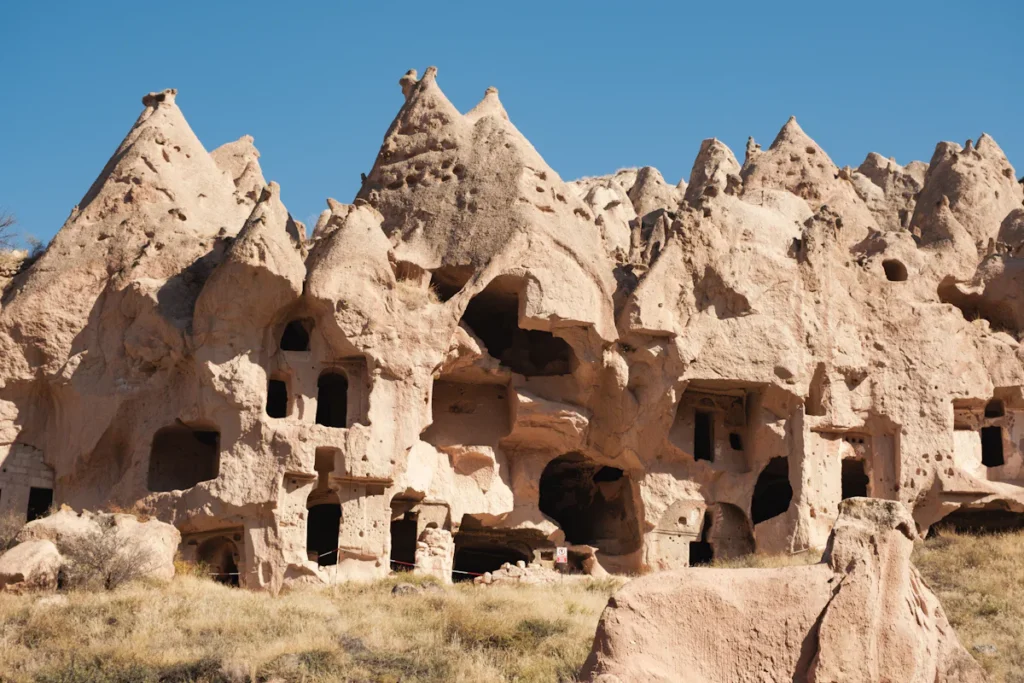
The Göreme Open Air Museum is a UNESCO-listed group of rock-cut churches, chapels and monasteries, many decorated with Byzantine frescoes from the 10th to 12th centuries. Entry costs about €20, and the Dark Church, which has the best-preserved paintings, costs a few euros extra. Arrive at opening time to beat the tour groups, and allow about two hours. It is a 20-minute walk or a short minibus ride from the centre of Göreme. Photography is not allowed inside some of the churches.
Afternoon: Hike a Valley
Cappadocia’s valleys are perfect for easy hikes on marked trails. From Göreme, walk through Love Valley, with its tall rock pillars, or Pigeon Valley, where old dovecotes are carved into the cliffs. The Rose and Red Valleys, near Çavuşin, are the most famous, with hidden cave churches and pink-tinged rock. Wear good shoes, carry plenty of water and download an offline map, as signposts are limited.
Evening: Sunset Point
Finish the day at Sunset Point, a viewpoint above Göreme where the rock glows pink and gold as the sun goes down. A small entry fee is sometimes charged. For dinner, try testi kebab, a slow-cooked meat stew sealed in a clay pot that is cracked open at your table. Many restaurants in Göreme serve it, and it is best shared between two people.
Day 2: Hot Air Balloons and the Red Tour
Day two of this Cappadocia itinerary starts before dawn with the experience that makes the region famous.
Sunrise: A Hot Air Balloon Flight
A hot air balloon in Cappadocia is a once-in-a-lifetime experience, drifting over fairy chimneys and valleys as the sun rises. Standard shared flights usually cost about €150 to €250 per person, depending on the season and the size of the basket, and deluxe flights in smaller baskets cost more.
Hotel pick-up is typically between 4am and 6am, and the flight lasts about an hour. Book with a licensed company two to three months ahead for spring and autumn, and schedule it on your first morning so you have a spare day if it is cancelled because of wind.
If you would rather stay on the ground, the sight of hundreds of balloons rising at sunrise is free from viewpoints above Göreme or from your hotel terrace.
Morning: Uçhisar Castle
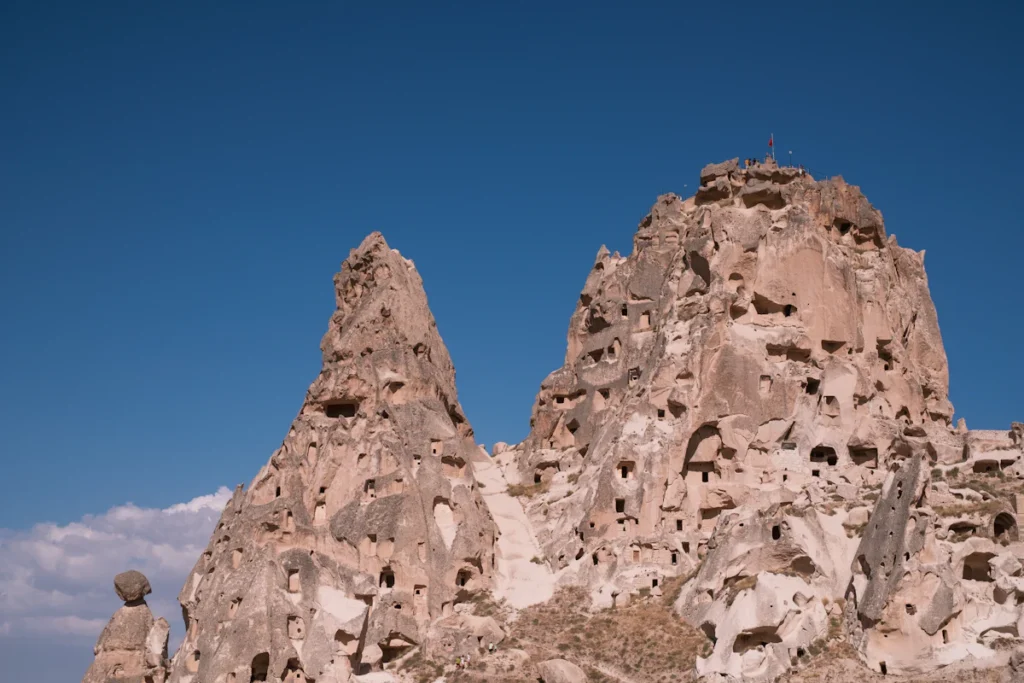
After breakfast, head to Uçhisar Castle, a giant rock pinnacle riddled with old rooms and tunnels, which is the highest point in the area. A small entry fee of a few euros lets you climb to the top for sweeping views over Pigeon Valley and Göreme.
Afternoon: Paşabağ, Devrent and Avanos
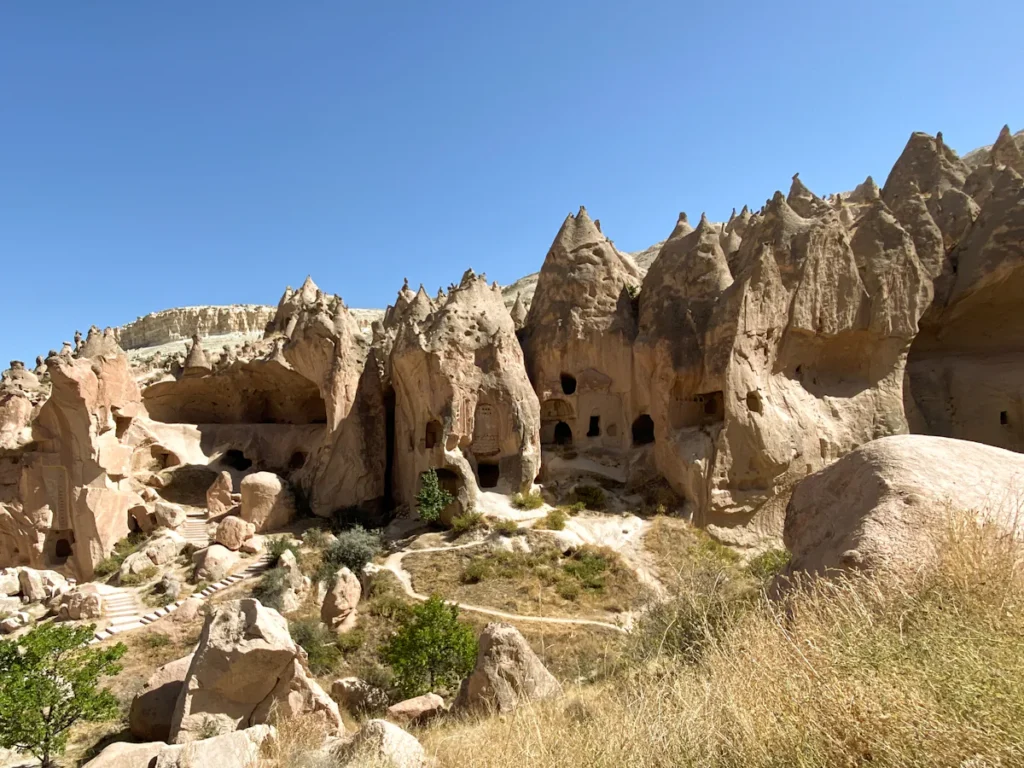
Continue to Paşabağ, also called Monks Valley, where mushroom-shaped fairy chimneys with multiple caps once sheltered hermits. Nearby Devrent Valley, or Imagination Valley, has rock shapes that look like animals, including a famous camel. Then visit Avanos, a riverside town known for its red clay pottery, where you can watch potters at work or try the wheel yourself. The Zelve Open Air Museum, an abandoned cave town, is also on the way. This route is known locally as the Red Tour and is offered by many agencies for about €40 to €60 with lunch.
Day 3: Underground Cities and the Green Tour
The final day of your Cappadocia itinerary takes you beneath the ground and into a deep green canyon.
Morning: An Underground City
Cappadocia has dozens of underground cities, carved over centuries as hiding places from invaders. Derinkuyu, the deepest, descends around 85 metres over at least eight levels, while Kaymaklı is wider and easier to explore. Tickets cost about €13 to €18. Passages are narrow and low, so they are not ideal for anyone who dislikes tight spaces.
Afternoon: The Ihlara Valley and Selime
The Ihlara Valley is a green canyon about an hour south-west of Göreme, with a river, poplar trees and cave churches hidden in the cliffs. The classic walk follows the river for a few kilometres to the village of Belisırma, where you can eat trout at a riverside restaurant. Nearby, Selime Monastery is a vast rock-cut complex that looks like a cathedral carved into a cliff. Together, these sights form the Green Tour, which costs about €40 to €60 with transport, guide and lunch.
Evening: A Hamam or Cooking Class
End your Cappadocia itinerary with a relaxing Turkish bath, which costs about €50 to €80 in Göreme, or a home cooking class to learn how to make local dishes such as mantı, small dumplings with yoghurt.
How Do You Get Around Cappadocia?
For this Cappadocia itinerary, the easiest way to get around is on organised day tours, which include transport, a guide, entry fees and lunch. Local minibuses, called dolmuş, link Göreme with Uçhisar, Avanos, Ürgüp and Nevşehir for one or two euros a ride, but they are less frequent in the evening. Renting a car or scooter gives you the most freedom, and roads are quiet. Quad bike and horse-riding tours through the valleys are also popular, especially at sunset.
Is the Cappadocia Museum Pass Worth It?
If you follow this Cappadocia itinerary independently, the Museum Pass Cappadocia costs about €40 to €45 for three days and covers the Göreme Open Air Museum, the Zelve Open Air Museum, the main underground cities and the Ihlara Valley. It is worth it if you plan to visit three or more of these sites independently. If you join organised tours, entry fees are usually included in the price, so check before you buy.
Where Should You Stay in Cappadocia?
For this Cappadocia itinerary, Göreme is the best base, because it is close to the valleys, the Open Air Museum and the balloon launch fields, and it has the widest choice of cave hotels. Uçhisar is quieter, with spectacular views, and Ürgüp is a bigger town with upmarket hotels and wineries. A comfortable cave hotel usually costs €70 to €150 per night for two, and luxury suites cost much more. Use our Travel Budget Calculator to plan your total and our Currency Converter to see prices in your own currency.
What Is the Best Time to Visit Cappadocia?
The best time to follow this Cappadocia itinerary is from April to June and from September to October, when days are warm, nights are cool and balloon conditions are good. Summer is hot and dry but still pleasant early in the morning. Winter is cold, often below freezing, and snow on the fairy chimneys is magical, but balloon flights are cancelled more often. Whatever the season, pack warm layers for early morning balloon flights.
Cappadocia Travel Tips
- Book the balloon first. Do it for your first morning to leave time for a second attempt.
- Choose a licensed company. Check reviews, safety records and what the price includes.
- Bring good shoes. Valley trails are dusty and uneven.
- Carry cash. Small village cafés and minibuses often prefer lira.
- Respect the sites. Do not climb on fragile fairy chimneys or touch frescoes.
Ready to plan your trip? Use our Trip Planner to build your days and the Packing List Generator to pack layers for cold mornings. Explore more of the country in our Turkey travel guide, or combine Cappadocia with Istanbul, Antalya or Izmir.
FAQs
Is three days in Cappadocia enough?
Yes, three days is enough to see the Open Air Museum, the valleys, an underground city and the Ihlara Valley, and to fly in a hot air balloon. It also leaves a spare morning if your flight is cancelled.
How much is a hot air balloon in Cappadocia?
Standard shared flights usually cost about €150 to €250 per person, depending on the season and the company. Smaller deluxe baskets and private flights cost more.
What is the best way to get to Cappadocia from Istanbul?
Fly from Istanbul to Nevşehir or Kayseri in about 75 minutes, then take a shuttle to your hotel. Overnight buses are cheaper but take around ten to eleven hours.
Do balloon flights get cancelled in Cappadocia?
Yes, flights are cancelled when the wind is too strong or the weather is poor, especially in winter. Book for your first morning so you can try again the next day.
What should I wear for a balloon flight?
Wear warm layers, comfortable shoes and a hat, as early mornings are cold even in summer. Avoid skirts and loose items that could blow away.
Can you visit Cappadocia without a tour?
Yes, you can explore Göreme, the valleys and Uçhisar on foot or by minibus, and rent a car or scooter for further sights. Tours are easier for the underground cities and the Ihlara Valley.

Comments