

Málaga has transformed from a quick stop on the way to the beach into one of Spain’s most rewarding city breaks. It combines a Moorish fortress, a Roman theatre, world-class art museums, a lively old town and city beaches, all under some of the sunniest skies in Europe. This Málaga travel guide covers the best things to do, where to stay, food, transport, day trips and costs, with prices in euros and practical tips. For a quick overview, see our Málaga city guide.
Is Málaga Worth Visiting?
Yes, Málaga is worth visiting for its history, its museums, its food and its beaches, and it is much more than a gateway to the Costa del Sol. The historic centre is compact and walkable, the airport is only 12 minutes away by train, and it makes an excellent base for exploring Andalusia. Any good Málaga travel guide will tell you to give the city at least two full days.
How Many Days in Málaga Do You Need?
Two or three days is the right amount of time in Málaga, with a fourth day for a trip to the Caminito del Rey, Ronda or Granada. Here is a simple plan from this Málaga travel guide.
| Day | Area | Highlights |
|---|---|---|
| Day 1 | The historic centre | The Alcazaba, the Roman Theatre, Gibralfaro, the cathedral, Calle Larios |
| Day 2 | Art and the port | The Picasso Museum, Muelle Uno, the Centre Pompidou, La Malagueta beach |
| Day 3 | Local Málaga | Atarazanas market, Soho street art, sardines on the beach in Pedregalejo |
| Day 4 | Day trip | The Caminito del Rey, Ronda, Nerja or Granada |
What Are the Best Things to Do in Málaga?
Every Málaga travel guide starts with the old fortress. The best things to do in Málaga are exploring the Alcazaba and Gibralfaro Castle, visiting the Picasso Museum and the cathedral, wandering the old town and relaxing on the city beaches.
Explore the Alcazaba and the Roman Theatre
The Alcazaba is an 11th-century Moorish fortress-palace with layered gateways, courtyards, fountains and gardens, built into the hillside above the city. At its foot lies a Roman Theatre from the first century, which is free to see. Tickets for the Alcazaba cost about €7, or about €10 combined with Gibralfaro Castle. Go early in the morning in summer, when the paths are cooler and quieter.
Climb to Gibralfaro Castle
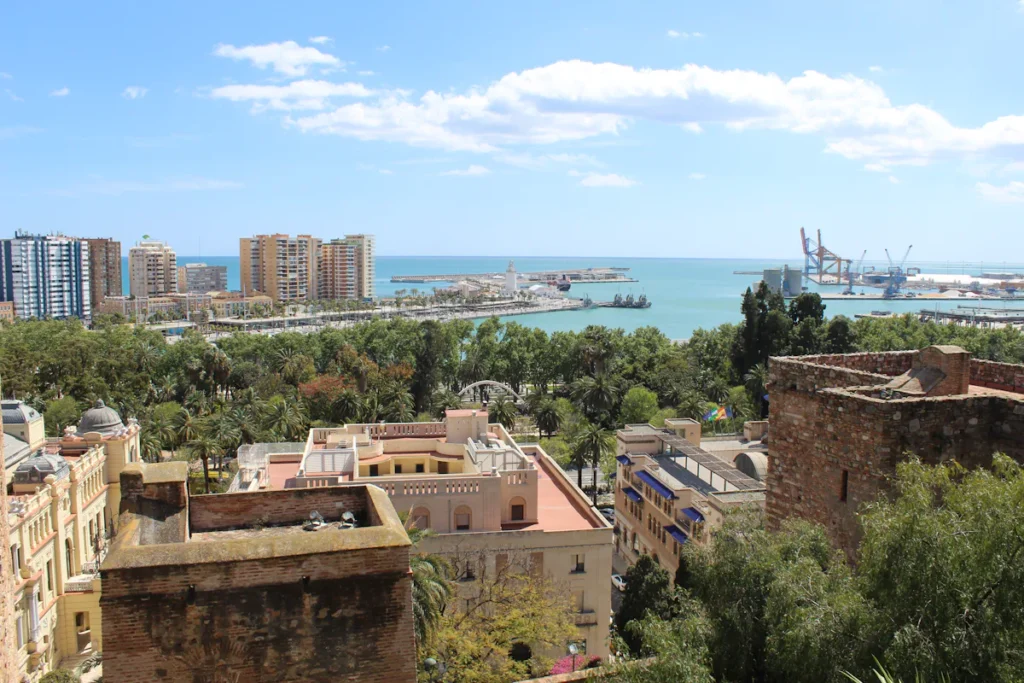
Gibralfaro Castle crowns the hill above the Alcazaba, and its ramparts offer the best view in the city, over the port, the bullring and the bay. Walk up the zigzag path from the Alcazaba in about 20 to 30 minutes, or take city bus 35 to the top and walk down instead. The viewpoint just below the castle walls is free and especially beautiful at sunset.
Visit the Cathedral
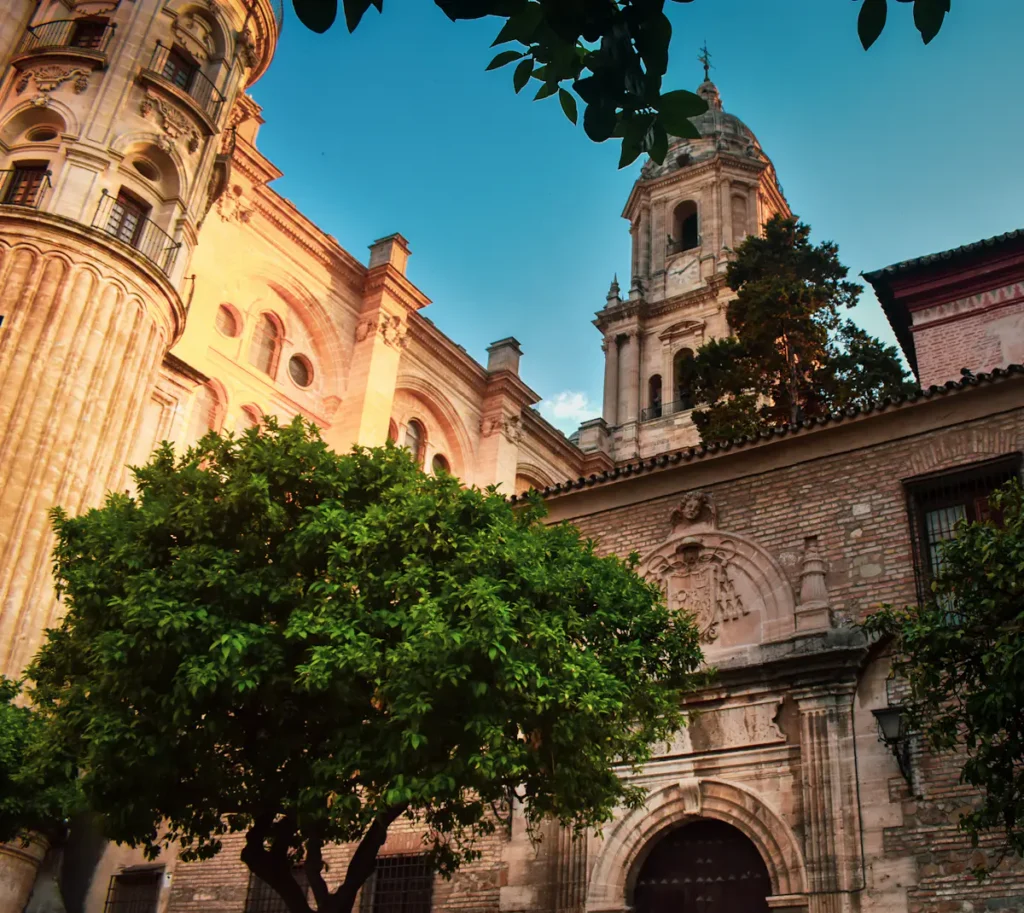
Málaga Cathedral is nicknamed La Manquita, or the one-armed lady, because its second tower was never finished. Inside, it mixes Gothic, Renaissance and Baroque styles, with a grand carved choir. Tickets cost around €10, and a separate guided tour takes you up onto the rooftop for a close view of the domes and the city. Visiting hours are shorter on Sundays because of services.
See Picasso’s Málaga
Pablo Picasso was born in Málaga in 1881, and the Picasso Museum, in a 16th-century palace, holds more than 200 of his works. Tickets cost around €12 to €14, and the museum has free entry for the last two hours on Sundays, which is its busiest time. Nearby on Plaza de la Merced, the Picasso Birthplace Museum shows family objects, drawings and ceramics for about €4. Together they make a lovely half-day for art lovers.
Wander the Old Town and Calle Larios
The old town is a pleasant maze of pedestrian streets, small squares and tapas bars. Calle Larios, the elegant main shopping street, links Plaza de la Constitución with the port and is beautifully lit at Christmas. Stop at the Atarazanas market, a 19th-century iron market hall with a Moorish gate and a huge stained-glass window, for fresh fruit, olives and seafood at the counters. It is closed on Sundays.
Stroll Muelle Uno and the Centre Pompidou
Málaga’s redeveloped port, Muelle Uno, is a palm-lined promenade with shops, cafés and views of the yachts and the lighthouse. At its end sits the Centre Pompidou Málaga, a branch of the famous Paris museum inside a colourful glass cube, with tickets from about €9. Continue along the seafront to the Paseo del Parque, a long botanical garden of tropical trees.
Relax on the City Beaches
La Malagueta is the closest beach to the centre, about ten minutes’ walk from the port, with sunbeds, showers and beach bars. Further east, Pedregalejo and El Palo are old fishermen’s districts with calmer beaches and the city’s best seafood restaurants. In summer, the water is warm enough for swimming from June to October.
What Food Should You Try in Málaga?
No Málaga travel guide is complete without food. In Málaga you should try espetos, sardines grilled on skewers over an open fire in a boat filled with sand, along with fried fish, ajoblanco, a cold almond and garlic soup, and sweet Málaga wine. The best espetos are found in the beach bars, called chiringuitos, of Pedregalejo and El Palo. For breakfast, join the locals for churros and thick hot chocolate, and in the evening, graze through the tapas bars around the cathedral and Soho. Lunch menus cost around €12 to €18 in local restaurants.
Where to Stay in Málaga
The best area to stay in Málaga for a first visit is the historic centre, where the main sights, restaurants and shops are all within walking distance. Here are the main areas recommended in this Málaga travel guide.
| Area | Best for | Typical double room |
|---|---|---|
| Historic centre | First visits, sightseeing | €110–€220 |
| Soho | Street art, value, near the port | €90–€170 |
| La Malagueta | The beach, sea views | €120–€250 |
| Pedregalejo and El Palo | Seafood, a relaxed local feel | €90–€180 |
| Near María Zambrano station | Early trains, budget hotels | €70–€130 |
Prices are typical for a three- or four-star hotel and rise sharply in July, August, Holy Week and the August fair.
How Do You Get to Málaga and Get Around?
Málaga Airport is one of the best connected in Spain, and the C1 local train reaches the city centre at Málaga Centro-Alameda in about 12 minutes for around €1.80. High-speed AVE trains link Málaga with Madrid in under three hours and with Córdoba in about an hour. The historic centre is best explored on foot, while city buses and a metro line serve outer neighbourhoods and the beaches. Taxis are reasonably priced for short trips.
What Are the Best Day Trips From Málaga?
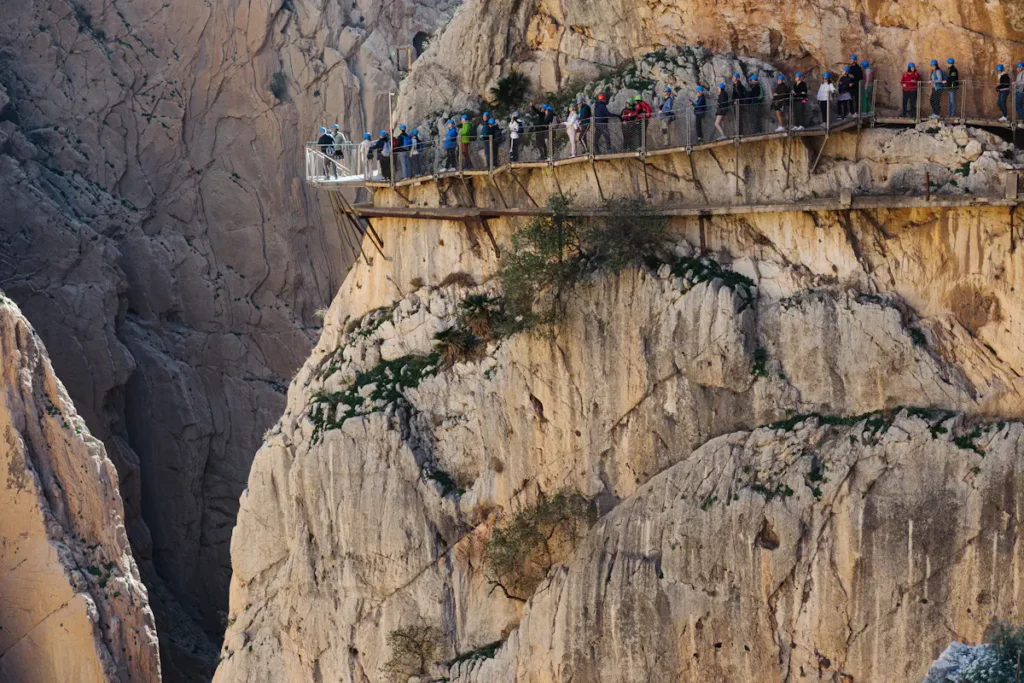
This Málaga travel guide would not be complete without the surroundings. The best day trips from Málaga are the Caminito del Rey, Ronda, Nerja and Frigiliana, and Granada. The Caminito del Rey is a spectacular walkway pinned to the cliffs of a deep gorge, about 45 minutes away by train to El Chorro. Official tickets are cheap but sell out weeks or months ahead, so book early.
Ronda’s bridge over a deep gorge is about two hours away by train or bus, while the whitewashed village of Frigiliana and the beaches and caves of Nerja are about an hour away by bus. Granada and the Alhambra are around 90 minutes by bus, but Alhambra tickets must be booked well in advance.
How Much Does a Trip to Málaga Cost?
Following this Málaga travel guide, a trip costs about €80 to €120 per person per day on a budget and €150 to €220 on a mid-range trip, including your share of a hotel room. Entry fees are low, many sights such as the Roman Theatre and the beaches are free, and food is good value compared with northern Europe. Use our Travel Budget Calculator to plan your own budget, and the Currency Converter to see prices in your own currency.
When Is the Best Time to Visit Málaga?
For readers of this Málaga travel guide, the best time to visit Málaga is from April to June and from September to October, when it is warm, sunny and not too crowded. July and August are hot and busy, but sea breezes make the city more comfortable than inland Andalusia. Winter is mild, with many sunny days, making Málaga one of Europe’s best winter-sun cities. Holy Week processions in spring and the Málaga Fair in August are spectacular, but hotels fill up fast.
Is Málaga Better Than Seville?
Málaga and Seville are both wonderful, but they suit different trips. Seville has grander monuments, more flamenco and a stronger historic atmosphere, while Málaga offers beaches, a sea breeze, excellent modern museums and easy flights. Many travellers combine both, as they are about two hours apart by train or bus. If you want city sights and beach time in the same trip, Málaga is the easier choice.
Is Málaga Safe for Tourists?
Yes, Málaga is generally a safe city for tourists. The usual advice applies: watch for pickpockets on Calle Larios, in markets and on busy beaches, and keep an eye on bags in cafés. The historic centre is lively until late, and most visitors feel comfortable walking around at night.
Málaga Travel Tips
- Book the Caminito del Rey early. It is one of the most popular day trips in Spain.
- Visit sights early in summer. The Alcazaba and Gibralfaro are exposed to the sun.
- Use the airport train. It is cheap, fast and avoids traffic.
- Eat espetos at the beach. Sardines on skewers are a Málaga tradition.
- Check Sunday hours. The cathedral and the Atarazanas market have limited hours or close on Sundays.
Ready to plan your trip? Use our Trip Planner and Packing List Generator alongside this Málaga travel guide. Explore more of the country in our Spain travel guide, or continue to Seville, Madrid or Barcelona.
FAQs
What is Málaga famous for?
Málaga is famous for being Picasso’s birthplace, for its Moorish Alcazaba and for its sunny climate and beaches. It is also known for espetos, sardines grilled on skewers on the beach.
How many days do you need in Málaga?
Two or three days is enough to see the city’s main sights and enjoy the beaches. Add a day for a trip to the Caminito del Rey, Ronda or Granada.
How do I get from Málaga airport to the city centre?
The C1 local train reaches the city centre in about 12 minutes for around €1.80. Trains run frequently from early morning until late evening.
Is Málaga good for a beach holiday?
Yes, Málaga has city beaches such as La Malagueta, Pedregalejo and El Palo, with warm water from June to October. It combines beach time with culture better than most resorts.
Do I need to book the Caminito del Rey in advance?
Yes, official tickets often sell out weeks or months ahead, especially in spring and autumn. Book as early as possible on the official website.
Is Málaga a good winter destination?
Yes, Málaga is one of Europe’s best winter-sun destinations, with mild temperatures and many sunny days. Museums, markets and restaurants stay open all year.
Comments