
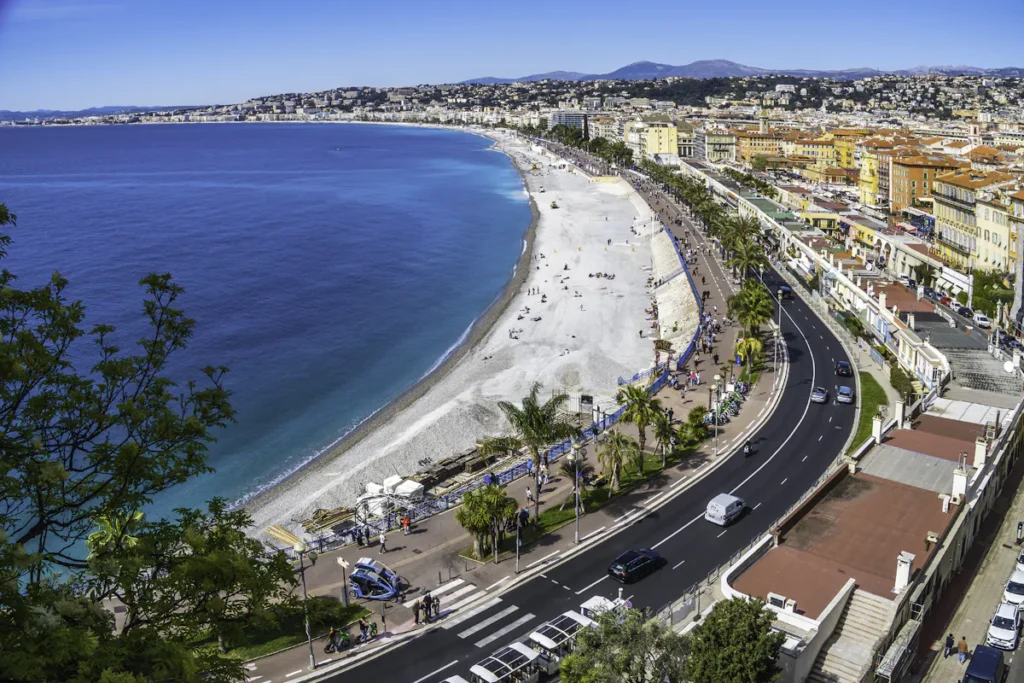
Working out where to stay in Nice is easier than in most big cities, because the centre is compact, flat and well served by trams. Still, each neighbourhood feels very different. The Old Town is lively and full of character, the seafront is all about the beach, the port has a local feel and the area around Avenue Jean Médecin is practical and good value. This guide compares the best areas, with typical hotel prices in euros, transport links and honest pros and cons, so you can pick the right base. For the bigger picture, see our Nice travel guide.
What Is the Best Area to Stay in Nice?
The best area to stay in Nice for most first-time visitors is Vieux Nice, the Old Town, or the Carré d’Or just west of it. Both put you a few minutes’ walk from the beach, the Cours Saleya market, Place Masséna and Castle Hill. Choose the Old Town for atmosphere and restaurants, and the Carré d’Or for quieter streets, bigger hotels and easy beach access.
| Area | Best for | Typical price per night | Tram stops |
|---|---|---|---|
| Vieux Nice (Old Town) | First visits, food, nightlife | €120–€250 | Opéra–Vieille Ville, Cathédrale |
| Carré d’Or and the Promenade | Beach, families, luxury | €140–€300 | Masséna, Jean Médecin |
| Port Lympia | Local feel, restaurants, boat trips | €100–€200 | Port Lympia, Garibaldi |
| Jean Médecin and the station | Shopping, trains, value | €100–€190 | Jean Médecin, Thiers |
| Cimiez | Museums, quiet, families with a car | €90–€170 | Bus 5 and 33 |
| Gambetta and the Musicians’ Quarter | Budget, local life | €80–€150 | Alsace-Lorraine, Gambetta |
Prices are typical for a double room in a three- or four-star hotel in 2026. Expect higher rates in July and August, and during the Nice Carnival in February and the Monaco Grand Prix in May.
Where to Stay in Nice: The Best Neighbourhoods
Each area below suits a different kind of trip, so start with what matters most to you: the beach, the food, the price or a quiet night’s sleep.
Vieux Nice (the Old Town)
Vieux Nice is a tangle of narrow, ochre-painted lanes with Baroque churches, small squares and dozens of restaurants. You can walk to the Cours Saleya market for breakfast, eat socca for lunch and be on the beach at Quai des États-Unis in five minutes. It is the most atmospheric place to stay, and it is ideal for a short break.
The downsides are noise and space. Bars stay open late, rubbish lorries come early, rooms are often small and many buildings have no lift. Look for a room on a quieter side street or a higher floor. Taxis cannot reach most of the lanes, so you will wheel your case the last few minutes from the tram.
Carré d’Or and the Promenade des Anglais
The Carré d’Or, or Golden Square, is the elegant grid of streets between the Old Town and Boulevard Gambetta, right behind the Promenade des Anglais. It has the widest choice of hotels, from simple three-star places to the famous Negresco, as well as boutiques, cafés and the beach on your doorstep. It is the easiest area for families, because pavements are wide, the streets are calm at night and the Jardin Albert I park is close by.
Sea-view rooms on the Promenade are lovely but cost a lot more, so check whether a side-street hotel two minutes from the beach would suit you just as well. Rooms facing the Promenade can also be noisy because of traffic.
Port Lympia
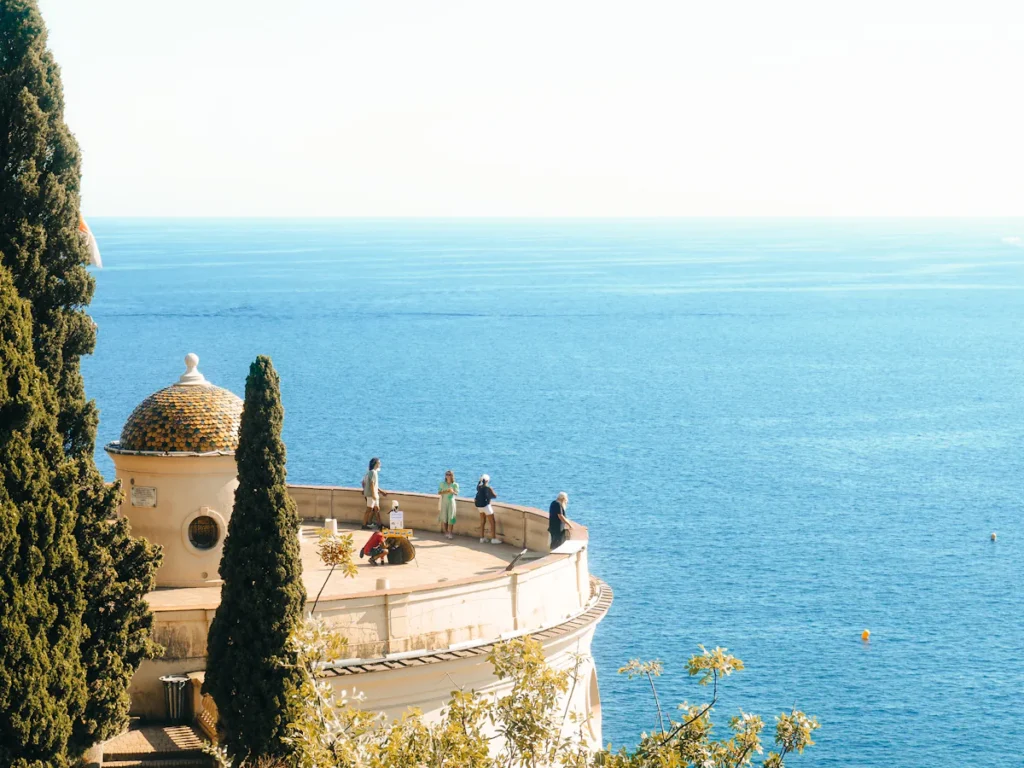
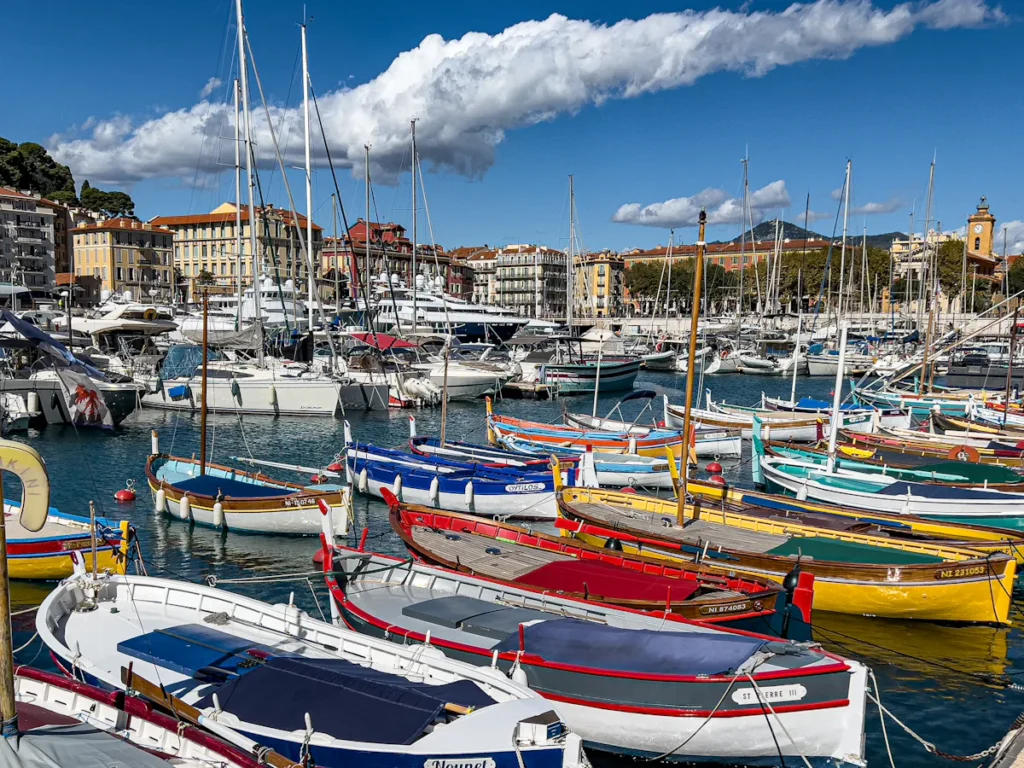
The port, on the other side of Castle Hill, is where many locals eat and drink. You will find colourful fishing boats, seafood restaurants, wine bars and the Les Puces de Nice antiques market. Hotels and apartments here are usually cheaper than in the Carré d’Or, and you can walk round the headland to the Old Town in about ten minutes.
Tram line 2 runs straight from the airport to Port Lympia, which makes arrivals easy. Ferries to Corsica and boats to Saint-Tropez and Monaco in summer also leave from here. The beaches by the port are small, so expect a short walk to the main seafront.
Jean Médecin and the Station Area
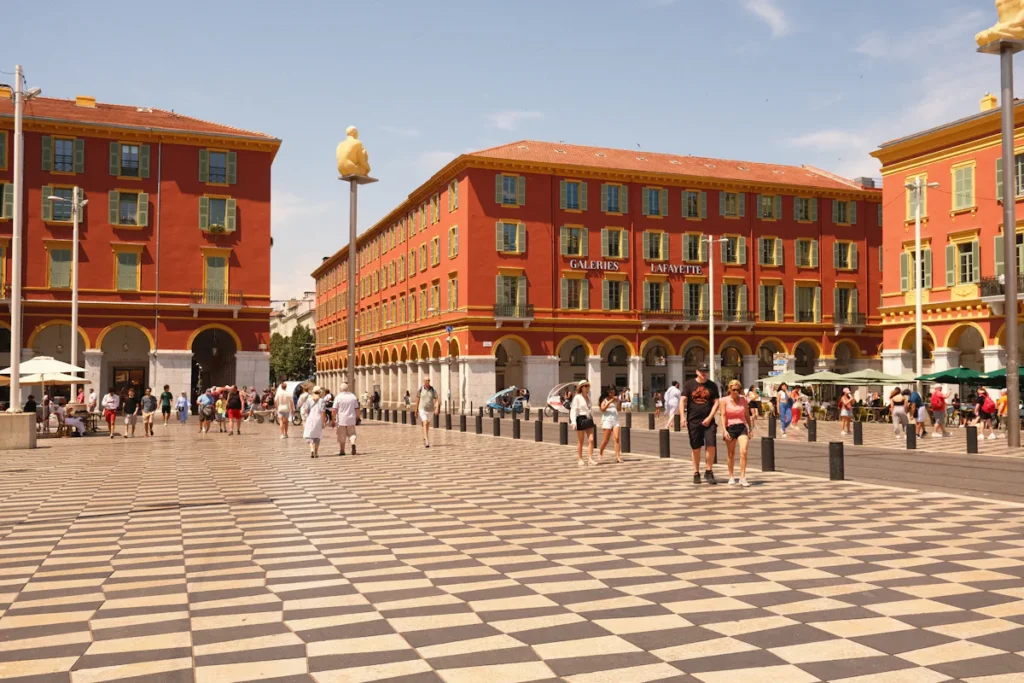
Avenue Jean Médecin is the main shopping street, running north from Place Masséna past the Nice Étoile shopping centre to the train station area. It is the most practical base for day trips, because Nice-Ville station is a short walk away and tram lines 1 and 2 cross nearby. Prices are lower than in the Old Town or on the seafront.
The streets directly behind the station, especially around Rue de Suisse and Rue Paganini, can feel less pleasant at night. Choose a hotel nearer Place Masséna or the Promenade du Paillon park if you can.
Cimiez
Cimiez is a leafy hillside district north of the centre, with grand Belle Époque villas, the Matisse Museum, the Chagall Museum and Roman ruins. It is peaceful and safe, and some hotels have gardens and pools. The catch is distance: the beach and the Old Town are a 15 to 20 minute bus ride away, so it suits slow trips, return visitors and families with a car more than a first short break.
Gambetta and the Musicians’ Quarter
The Musicians’ Quarter, around Rue Rossini and Rue Verdi, and the Gambetta area just west of it are good choices on a budget. You get residential streets, local bakeries and smaller hotels, and you are still only a ten-minute walk from the beach and Nice-Ville station. It lacks the charm of the Old Town, but it is a solid, good-value base.
Is Vieux Nice a Good Place to Stay?
Yes, Vieux Nice is a good place to stay if you want history, food and nightlife on your doorstep. It is the most walkable base in the city and is right next to the beach. It is less ideal if you are a light sleeper, travel with lots of luggage or need a lift, so read recent reviews about noise and stairs before you book.
What Are the Safest Areas in Nice?
The Carré d’Or, Cimiez, the Promenade des Anglais and the port area are among the safest areas in Nice, and the city is generally safe for visitors. The main problem is pickpocketing on busy trams, on the Promenade and in the Old Town in summer, so keep your phone and wallet out of sight. At night, the streets just behind Nice-Ville station feel rougher than the rest of the centre, so stay nearer the sea or Place Masséna if you are travelling alone.
How Much Does a Hotel Cost in Nice?
A comfortable three- or four-star hotel in central Nice usually costs €110 to €250 per night, with simple rooms and guesthouses from about €80 and luxury seafront hotels from €350 or more. Hostel beds start at around €30. Prices can double in July and August and during big events, while autumn, winter and spring offer good deals.
A small tourist tax is added per adult per night, roughly €2.30 in a three-star hotel and €3.50 in a four-star hotel, and children are exempt. Use our Travel Budget Calculator to add up your total, and the Currency Converter to see the cost in your own currency.
How Do You Get From Nice Airport to Your Hotel?
The easiest way is tram line 2, which runs from Terminals 1 and 2 to the city centre and the port in about 25 minutes. A single fare costs €1.70 when it is loaded onto a Lignes d’Azur card, which costs €2, or onto the Lignes d’Azur app. Get off at Jean Médecin for the shops and the station, Alsace-Lorraine for Gambetta, or Port Lympia for the harbour. For the Old Town, change to tram line 1 or walk about ten minutes from Jean Médecin.
Taxis from the airport to central Nice charge a fixed fare of around €32. If you arrive by train, Nice-Ville station is close to Jean Médecin and the Musicians’ Quarter, and the tram links you to every other area.
Where to Stay in Nice Without a Car
You do not need a car in Nice, and parking is expensive, so it makes sense to stay where you can walk or take the tram. The Old Town, the Carré d’Or, Jean Médecin and the port are all within walking distance of each other. If you plan day trips to Monaco, Èze or Antibes, stay near Nice-Ville station or a tram stop, because trains and buses along the coast are cheap and frequent. Cimiez and Mont Boron are the only areas where a car or regular buses become important.
Which Nice Neighbourhood Suits Your Trip?
The right base depends on who you are travelling with and how you like to spend your days. These quick picks will help you decide where to stay in Nice.
- First visit or short break: Vieux Nice, for atmosphere and walking.
- Beach holiday: The Carré d’Or and the Promenade des Anglais.
- Families: The Carré d’Or, for calm streets, parks and the beach.
- Couples: A boutique hotel in the Old Town or a sea-view room on the Promenade.
- Budget: Gambetta, the Musicians’ Quarter or the port.
- Day trips by train: Jean Médecin, near Nice-Ville station.
- Peace and quiet: Cimiez or Mont Boron, if you don’t mind a bus ride.
What Should You Check Before Booking a Hotel in Nice?
- Air conditioning. Summers are hot, and older buildings can be stuffy without it.
- Lifts and stairs. Many Old Town buildings have narrow stairs and no lift.
- Sea view or side street. A sea view costs much more, and Promenade rooms can be noisy.
- Beach access. Some hotels include a sunbed at a partner private beach, which can save €30 or more a day.
- Total price. Check whether the tourist tax and breakfast are included.
- Event dates. Avoid Carnival, the Monaco Grand Prix and the Nice Jazz Festival if you want lower prices.
Now you know where to stay in Nice, start planning the rest of your trip. Build your days with our Trip Planner, pack for the Riviera with the Packing List Generator and explore more of the country in our France travel guide. If you are travelling on, Marseille is two and a half hours away by train, and Paris and Lyon are easy to reach by TGV.
FAQs
Where should I stay in Nice for the first time?
Vieux Nice or the Carré d’Or are the best areas for a first visit. Both are close to the beach, the Cours Saleya market and Place Masséna, and you can walk almost everywhere.
Is it better to stay in Nice or Cannes?
Nice is usually the better base, because it has more hotels, lower prices and quick trains and buses to Monaco, Èze, Antibes and Cannes. Cannes suits a short, glamorous beach break.
What is the cheapest area to stay in Nice?
Gambetta, the Musicians’ Quarter and the port are usually the best value. The streets near Nice-Ville station are cheap too, but choose a hotel on a busy, well-lit road.
Is it noisy to stay in the Old Town in Nice?
It can be, especially on summer weekends near bars and squares. Ask for a room at the back or on a higher floor, and pack earplugs if you are a light sleeper.
How many nights should I stay in Nice?
Three nights is enough to see the city, and four or five nights gives you time for day trips to Èze, Monaco and Villefranche-sur-Mer.
Do hotels in Nice include beach access?
Some do, through a partner private beach that rents sunbeds and parasols. Public beaches along the Promenade des Anglais are free for everyone.

Comments