
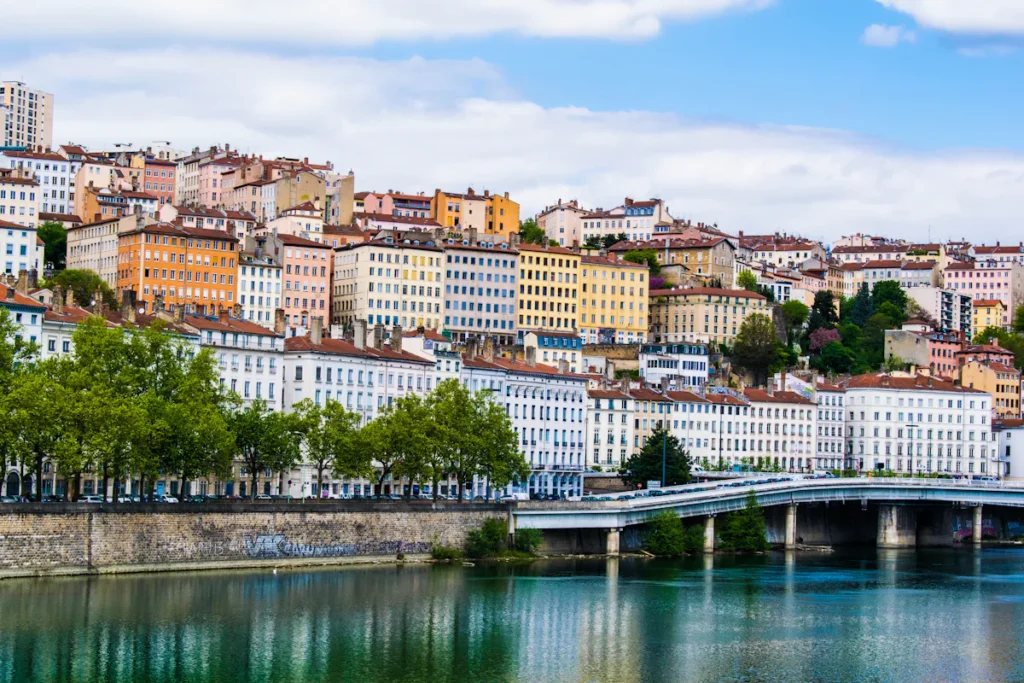
Lyon is France’s food capital and one of its most underrated cities. It sits where the Rhône and Saône rivers meet, with a Renaissance old town, hidden passageways called traboules, a basilica on the hill and more good restaurants per street than almost anywhere in Europe. It is also easy to reach, just two hours from Paris by fast train. This Lyon travel guide covers the best things to do, what to eat, where to stay, how to get around and what it costs, with prices in euros and practical tips. For the basics, see our Lyon city guide.
Is Lyon Worth Visiting?
Yes, and any Lyon travel guide will tell you the city is well worth visiting for its food, its UNESCO-listed old town and its relaxed, local feel. It is much less crowded than Paris, prices are lower, and the centre is compact enough to explore on foot. It also makes a great stop between Paris and the south of France, or a base for trips to the Alps and the Beaujolais vineyards.
How Many Days in Lyon Do You Need?
For most readers of this Lyon travel guide, two days in Lyon is enough to see the main sights, and three days lets you add museums, markets and a slower food crawl. With a day trip to Pérouges or Annecy, plan four days. Here is a simple plan for a first visit.
| Day | Area | Highlights |
|---|---|---|
| Day 1 | Vieux Lyon and Fourvière | Traboules, Saint-Jean Cathedral, the funicular, Notre-Dame de Fourvière, Roman theatres |
| Day 2 | Presqu’île and Croix-Rousse | Place Bellecour, Place des Terreaux, Musée des Beaux-Arts, the silk workers’ district |
| Day 3 | Food and the rivers | Les Halles Paul Bocuse, Parc de la Tête d’Or, Musée des Confluences, a bouchon dinner |

What Are the Best Things to Do in Lyon?
The best things to do in Lyon are exploring Vieux Lyon, riding up to the Fourvière basilica, walking the slopes of Croix-Rousse and eating in a traditional bouchon. Many of the highlights are free.
Explore Vieux Lyon and Its Traboules
Vieux Lyon is one of the largest Renaissance districts in Europe, with cobbled streets, pastel townhouses and Saint-Jean Cathedral at its heart. The real treat is the traboules, covered passageways that cut through buildings and courtyards from one street to the next. Silk workers once used them to carry fabric without getting it wet. Many are open to the public in the daytime, including the long traboule at 54 Rue Saint-Jean. Push the door gently, keep your voice down and remember that people live there.
Visit Notre-Dame de Fourvière
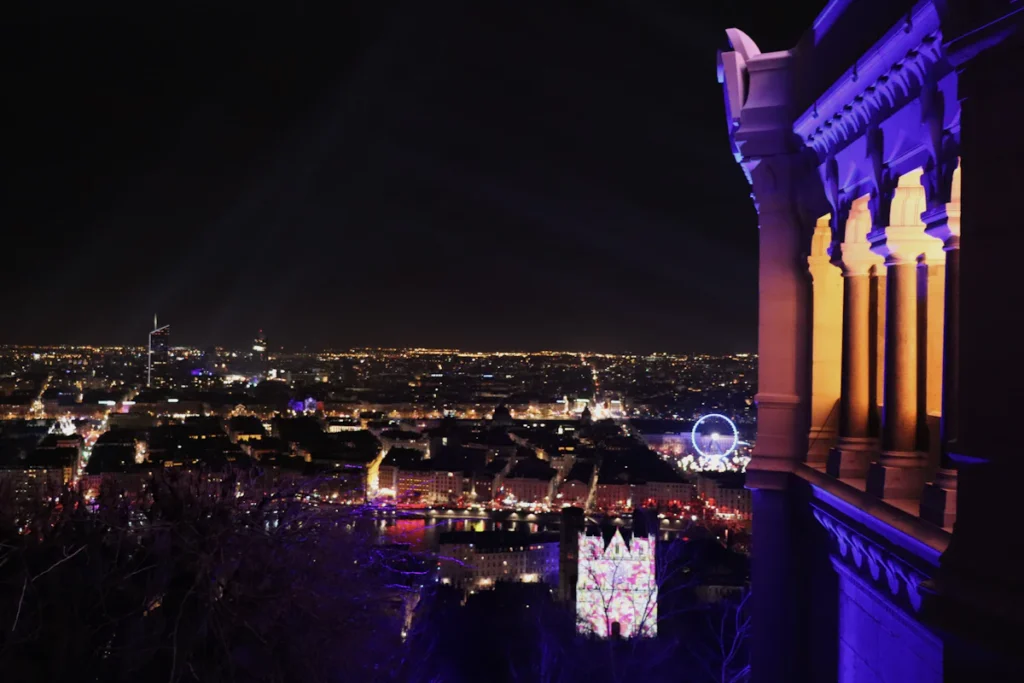
The white Basilica of Notre-Dame de Fourvière watches over the city from its hill, and its interior is covered in gold mosaics. Entry is free, and the terrace beside it has the best view in Lyon, reaching the Alps on a clear day. Take the funicular from Vieux Lyon station for a standard TCL ticket, then walk down through the Rosary Garden. On the way, stop at the Roman theatres of Lugdunum, which are free to visit.
Wander the Presqu’île
The Presqu’île is the long strip of land between the two rivers and the modern heart of the city. Start at Place Bellecour, one of the largest squares in Europe, then walk north along Rue de la République to Place des Terreaux and its grand fountain. The Musée des Beaux-Arts here has a superb collection in a former abbey, and it is closed on Tuesdays. In the evening, the riverbanks along the Rhône fill with locals, bars and moored barges.
Climb the Slopes of Croix-Rousse
Croix-Rousse is the hill where Lyon’s silk workers, the canuts, once lived and worked. Its tall buildings have big windows to let light in for the looms. Climb the steep streets and stairways, see the huge Mur des Canuts painted wall, and visit the morning market on Boulevard de la Croix-Rousse, which runs every day except Monday. The neighbourhood still feels like a village, with independent shops and small cafés.

Relax in Parc de la Tête d’Or
Parc de la Tête d’Or is one of the largest city parks in France, with a lake, rose gardens, glasshouses and a small zoo. Entry to the park and the zoo is free, which makes it a great half-day with children. You can hire a rowing boat in summer or simply bring a picnic from the market.
See the Musée des Confluences
At the southern tip of the Presqu’île, the Musée des Confluences is a striking glass and steel building that covers science, natural history and world cultures. It is open from Tuesday to Sunday, 10.30am to 6.30pm, and is closed on Mondays. Tickets cost around €12 for adults, and it stays open until 10pm on the first Thursday of each month.
What to Eat in Lyon
In Lyon you should eat in a bouchon, the city’s traditional bistro, where hearty local dishes are served with a jug of Beaujolais or Côtes du Rhône. A lunch menu usually costs €20 to €30, and dinner a little more. Look for these classics.
- Quenelles: Light pike dumplings in a creamy crayfish sauce.
- Saucisson brioché: A pork sausage baked inside brioche.
- Salade lyonnaise: Frisée lettuce with bacon, croutons and a poached egg.
- Cervelle de canut: A fresh cheese dip with herbs and shallots.
- Tarte aux pralines: A bright pink sugared-almond tart, the city’s favourite dessert.
For the best produce, visit Les Halles de Lyon Paul Bocuse, the covered market named after the famous chef. It is closed on Mondays, and late morning on Saturday is the liveliest time to go. Stalls sell cheese, oysters, charcuterie and pastries, and several counters serve lunch.
Where to Stay in Lyon
Our Lyon travel guide recommends the Presqu’île as the best area to stay for a first visit, between Bellecour and the Opéra, because it is central, flat and close to both old and new Lyon. Vieux Lyon is more atmospheric, Croix-Rousse is quieter and more local, and Part-Dieu is practical if you arrive by train or need the airport tram.
| Area | Best for | Typical price per night |
|---|---|---|
| Presqu’île (Bellecour to Terreaux) | First visits, shopping, restaurants | €100–€200 |
| Vieux Lyon | Atmosphere, short breaks | €110–€220 |
| Croix-Rousse | Local feel, quiet nights | €80–€160 |
| Part-Dieu | Trains, airport tram, value | €80–€150 |
| Confluence | Modern hotels, riverside walks | €90–€170 |
Prices are typical for a double room in a three- or four-star hotel in 2026, and they rise during the Fête des Lumières in early December. A small tourist tax is added per adult per night.
How Do You Get to Lyon?
The easiest way to reach Lyon from Paris is the TGV, which takes about two hours from Gare de Lyon to Lyon Part-Dieu. Fast trains also link Lyon to Marseille in under two hours and to Geneva in about two hours. Lyon–Saint Exupéry Airport has flights from across Europe, and the Rhônexpress tram runs to Part-Dieu in about 30 minutes for around €17 one way. A taxi into the centre costs about €50 to €60.
How Do You Get Around Lyon?
The short answer in any Lyon travel guide is on foot, because the city is compact, and the TCL network of metros, trams, buses and funiculars covers the rest. A single ticket costs about €2.10, and a 24-hour ticket costs around €7. The Lyon City Card, from about €32 for one day, includes public transport, free entry to more than 20 museums, a river cruise and guided tours, so it pays off if you plan a busy day of sightseeing.
How Much Does a Trip to Lyon Cost?
A trip to Lyon costs about €90 to €130 per person per day on a budget and €150 to €220 on a mid-range trip, including your share of a double room. Lunch menus in bouchons are excellent value, and many sights, such as the basilica, the Roman theatres and the parks, are free. Use our Travel Budget Calculator to plan your own costs, and the Currency Converter to see prices in your currency.
When Is the Best Time to Visit Lyon?
According to this Lyon travel guide, the best time to visit is from April to June and in September and October, when the weather is pleasant and terraces are busy. Summers can be hot, and some family-run restaurants close for part of August. The Fête des Lumières, the festival of lights around 8 December, is spectacular, but book your hotel months ahead.
Is Lyon Safe for Tourists?
Yes, Lyon is generally safe for tourists, and the main areas feel relaxed day and night. As in any big city, watch out for pickpockets on busy metro lines, at Part-Dieu station and in crowds during the Fête des Lumières. The streets around Guillotière and the far end of Part-Dieu can feel less comfortable late at night, so stick to busier streets after dark.
Lyon Travel Tips
- Book bouchons ahead. The best-known restaurants fill up on Friday and Saturday nights, so reserve a table a day or two before.
- Eat the set lunch. Lunch menus are often half the price of dinner for very similar dishes.
- Wear comfortable shoes. The cobbles of Vieux Lyon and the stairways of Croix-Rousse and Fourvière are steep.
- Check closing days. Les Halles and the Musée des Confluences close on Mondays, and the Musée des Beaux-Arts closes on Tuesdays.
- Use the funicular. It saves a hard climb to Fourvière, and you can walk down through the gardens.
What Are the Best Day Trips From Lyon?
The best day trips from Lyon are the medieval village of Pérouges, the Beaujolais wine villages and the lakeside town of Annecy. Pérouges is about 40 minutes away by train and bus or car, and it is famous for its cobbled lanes and sugar-topped galette. The Beaujolais vineyards begin about 40 minutes north of the city and are best visited by car or on a tour. Annecy, with its canals and mountain lake, is about two hours by train, so start early.
Ready to plan your trip? Map out your days with our Trip Planner, pack with the Packing List Generator and explore the rest of the country in our France travel guide. Lyon combines well with Paris, Marseille and Nice by fast train.
FAQs
What is Lyon famous for?
Lyon is famous for its food, its Renaissance old town and its silk-making history. It is also known for the Fête des Lumières, the festival of lights held every December.
Is two days enough in Lyon?
Yes, two days is enough to see Vieux Lyon, Fourvière, the Presqu’île and Croix-Rousse. Add a third day for museums, markets and a slower food tour.
Where should I stay in Lyon for the first time?
The Presqu’île between Place Bellecour and the Opéra is the best choice for a first visit. It is central, flat and close to restaurants, shops and the old town.
How do I get from Lyon airport to the city centre?
The Rhônexpress tram runs from Lyon–Saint Exupéry Airport to Part-Dieu station in about 30 minutes. A one-way ticket costs around €17, and a taxi costs about €50 to €60.
Is the Lyon City Card worth it?
It is worth it if you plan to visit two or three museums in a day and use public transport. It includes free entry to more than 20 museums, the TCL network and a river cruise.
What should I eat in Lyon?
Try quenelles, saucisson brioché, salade lyonnaise and the pink praline tart. The best place to try them is a traditional bouchon, especially for a set lunch.
Comments