
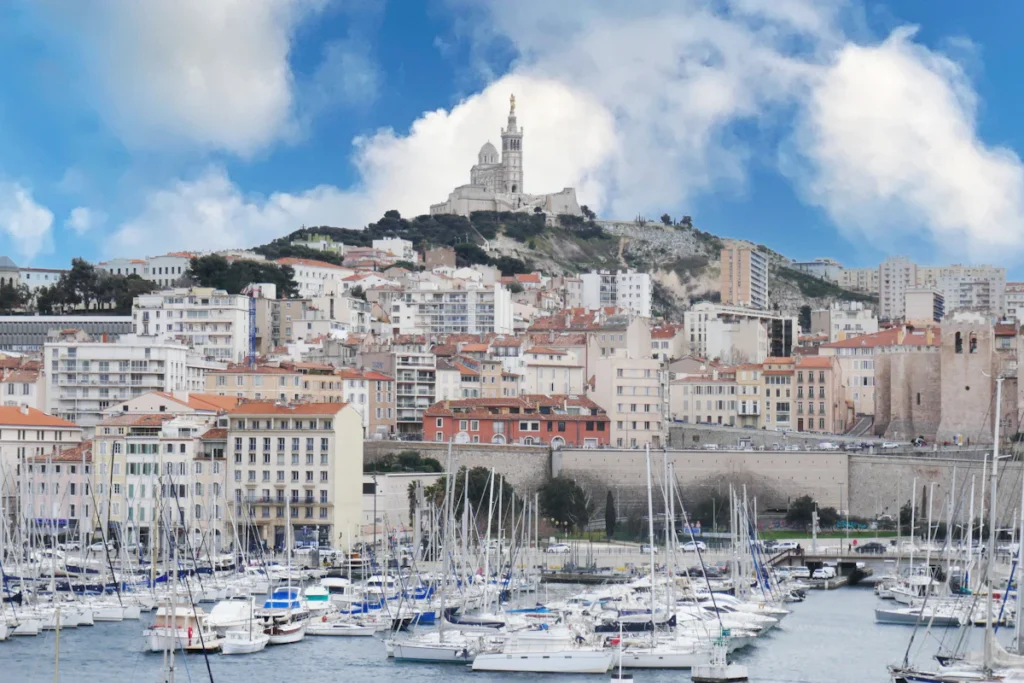
Marseille is France’s oldest city and one of its most exciting. It mixes a busy harbour, a hilltop basilica, an old quarter full of street art and some of the most beautiful coastline in the Mediterranean, the Calanques. It is louder and grittier than the Riviera, but also warmer, cheaper and more real. This Marseille travel guide covers the best things to do, the beaches, where to stay, how to get around and what it costs, with prices in euros and practical tips. For the basics, see our Marseille city guide.
Is Marseille Worth Visiting?
Yes, Marseille is worth visiting for its harbour, its food, its museums and the Calanques National Park on its doorstep. Anyone using a Marseille travel guide for the first time is often surprised by how much there is to see. The city has a strong character of its own, shaped by more than 2,600 years of sailors, traders and migrants from across the Mediterranean.
How Many Days in Marseille Do You Need?
This Marseille travel guide suggests two days for the main sights, and three days lets you add a boat trip or a hike in the Calanques. With four days, you can also visit Cassis or Aix-en-Provence. Here is a simple plan.
| Day | Area | Highlights |
|---|---|---|
| Day 1 | The Vieux-Port and Le Panier | Fish market, MuCEM, Fort Saint-Jean, Le Panier, La Vieille Charité |
| Day 2 | The hill and the coast | Notre-Dame de la Garde, the Corniche, Vallon des Auffes, Château d’If |
| Day 3 | The Calanques | A boat trip or a hike to Sugiton, Sormiou or En-Vau |
What Are the Best Things to Do in Marseille?
The best things to do in Marseille, and the core of any Marseille travel guide, are walking around the Vieux-Port, climbing to Notre-Dame de la Garde, exploring Le Panier, visiting the MuCEM and seeing the Calanques by boat or on foot.
Start at the Vieux-Port
The Old Port has been the heart of the city for 26 centuries. Arrive early to see the small fish market on the Quai des Belges, where fishermen sell the morning catch straight from their boats. Look up at the giant mirrored canopy by Norman Foster, then cross the harbour on the little ferry boat, one of the shortest ferry rides in the world. Cafés and restaurants line the quays, and the harbour is busiest at sunset.
Climb to Notre-Dame de la Garde
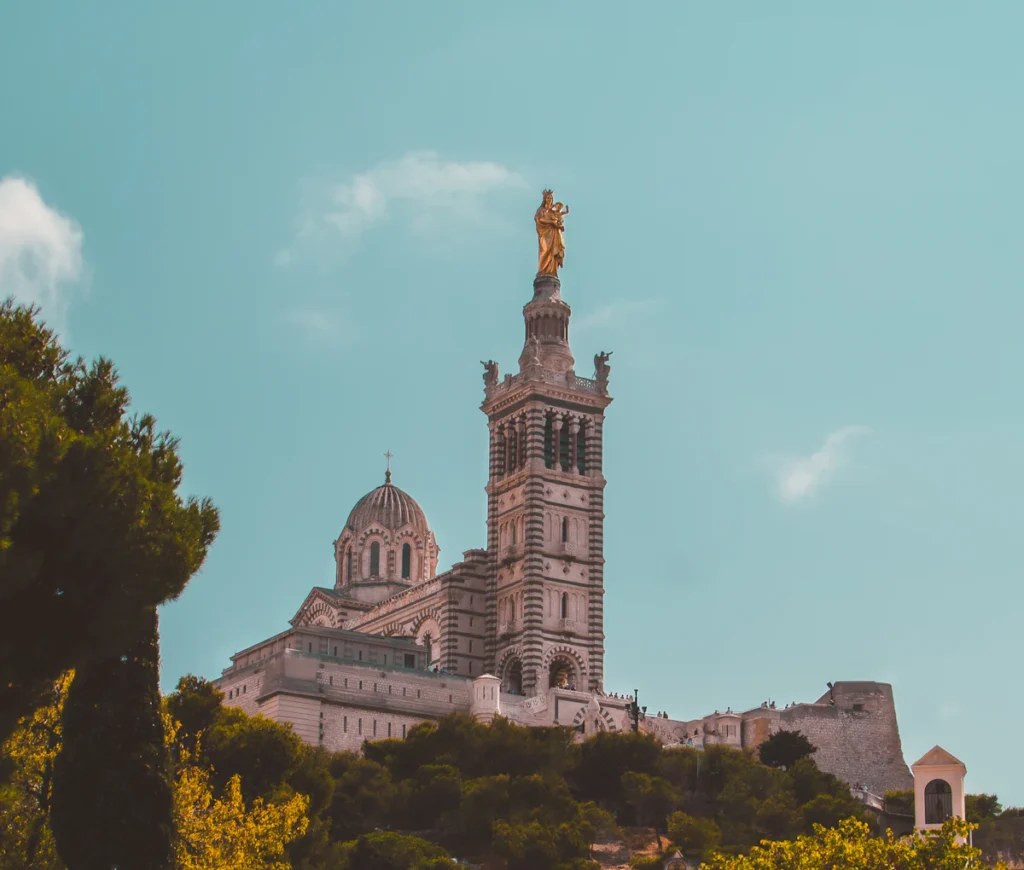
The Basilica of Notre-Dame de la Garde, known locally as La Bonne Mère, sits on the highest hill in the city with a golden statue on top. Entry is free, it is usually open daily from about 7am to 6pm, and the view over the harbour, the islands and the mountains is the best in Marseille. Walk up in about 30 minutes from the Vieux-Port, take bus 60 or ride the little tourist train.
Explore Le Panier
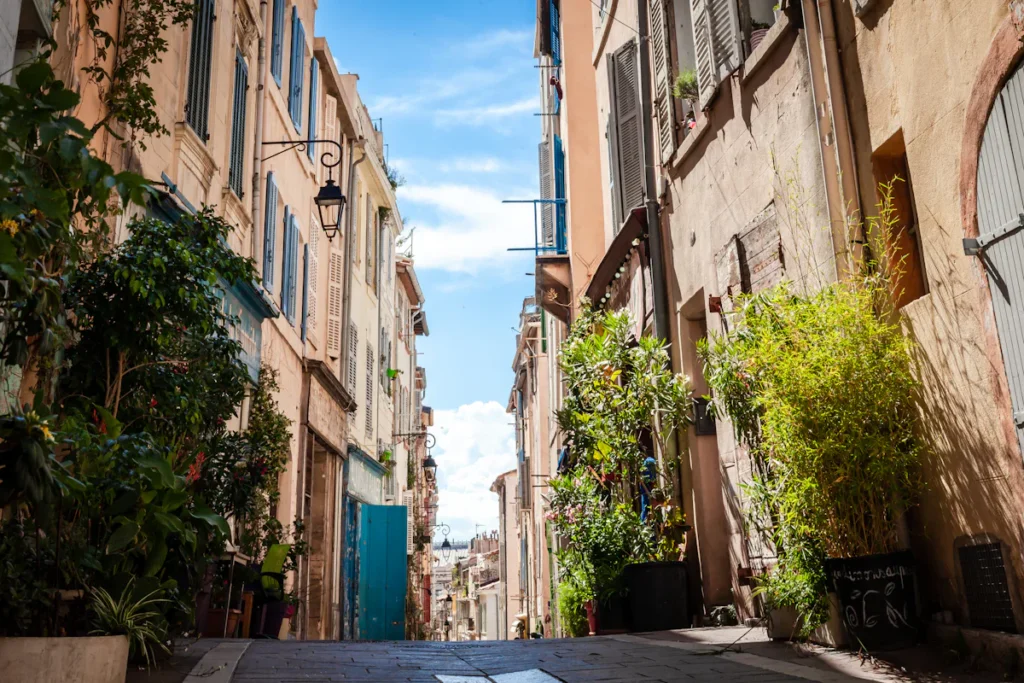
Le Panier is the oldest district, a hilly maze of narrow streets, laundry lines, small squares and colourful street art just above the port. Visit La Vieille Charité, a former almshouse with a lovely arcaded courtyard that now holds museums, and stop at a café on Place de Lenche. The area is best explored slowly, on foot and in the morning, before the tour groups arrive.
Visit the MuCEM and Fort Saint-Jean
The Museum of European and Mediterranean Civilisations, or MuCEM, is a striking building wrapped in a concrete lattice at the entrance to the port. A footbridge links it to Fort Saint-Jean, whose gardens and ramparts are free to walk around. Tickets for the exhibitions cost around €11, and the museum is closed on Tuesdays. The rooftop terrace is a great spot for a drink with harbour views.
Take a Boat to Château d’If
The island fortress of Château d’If was made famous by Alexandre Dumas in The Count of Monte Cristo. Boats leave from the Vieux-Port and take about 20 minutes, costing around €11 return, and entry to the château is about €7. Crossings are cancelled in strong winds, and the château closes on Mondays in winter, so check before you go. Many boats also stop at the Frioul islands, which have quiet coves for swimming.
How Do You Visit the Calanques From Marseille?
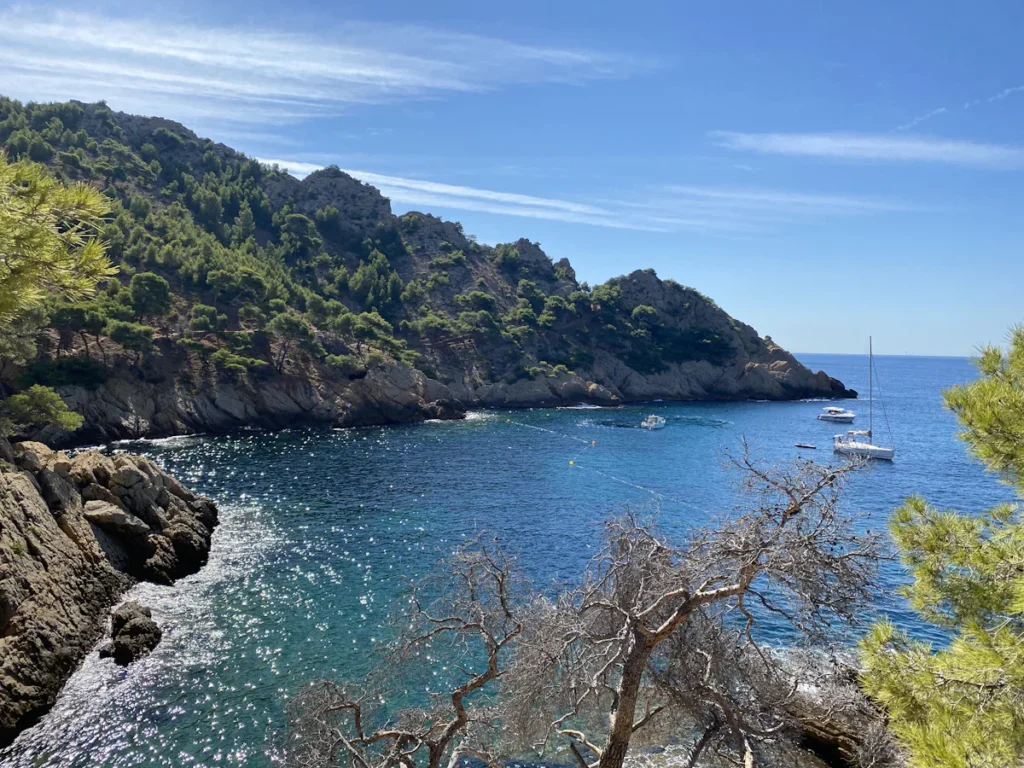
Every Marseille travel guide puts the Calanques near the top of the list, and you can visit them by boat from the Vieux-Port, by bus and on foot, or by kayak in summer. The Calanques National Park is a chain of white limestone cliffs and turquoise inlets between Marseille and Cassis.
- By boat: Tours from the Vieux-Port last two to four hours and cost about €30 to €45. They are the easiest way to see the most famous inlets.
- On foot to Sugiton: Take bus B1 to the Luminy campus, then walk about 45 minutes downhill. Bring plenty of water and good shoes.
- Sormiou and Morgiou: These calanques have small beaches and restaurants, but road access is restricted for cars in summer.
- En-Vau: The most beautiful inlet is a longer, harder hike, best reached from Cassis.
In summer, some trails close on days of high fire risk, and Sugiton may need a free reservation at the busiest times. Check the national park’s access map on the morning of your visit.
What Are the Best Beaches in Marseille?
The best beaches in the city are the Plages du Prado, the small Catalans beach near the centre and the rocky coves along the Corniche Kennedy. The Prado beaches are wide, with lawns, showers and lifeguards in summer, and buses 19 and 83 run there from the centre. For prettier water, head to the Calanques or the Frioul islands. Don’t miss Vallon des Auffes, a tiny fishing harbour under a stone viaduct on the Corniche, which is lovely at sunset.
What to Eat in Marseille
In Marseille you should try bouillabaisse, the famous fish stew served in two courses, broth first and then the fish. A proper one at a traditional restaurant costs €60 to €80 or more per person, so save it for a special meal. For cheaper tastes, try panisse, crispy chickpea fritters; navettes, boat-shaped orange-blossom biscuits; and a pizza from one of the old wood-fired ovens. North African and Lebanese food around Noailles market is excellent value.
Where to Stay in Marseille
The best area to stay in Marseille for a first visit is around the Vieux-Port, because the main sights, restaurants and boats are all within walking distance. Our Marseille travel guide recommends these areas.
| Area | Best for | Typical price per night |
|---|---|---|
| Vieux-Port | First visits, restaurants, boats | €110–€220 |
| Le Panier | Character, short breaks | €90–€180 |
| Cours Julien and Notre-Dame-du-Mont | Street art, bars, value | €80–€150 |
| Prado and the beaches | Families, beach holidays | €100–€200 |
| Joliette | Modern hotels, quieter nights | €90–€170 |
Prices are typical for a double room in a three- or four-star hotel in 2026. A small tourist tax is added per adult per night.
Is Marseille Safe for Tourists?
Our Marseille travel guide’s honest answer is that the city is generally safe for tourists in the main areas, including the Vieux-Port, Le Panier, the Corniche and the beaches. Pickpocketing is the most common problem, especially on the metro, around Saint-Charles station and in busy markets. After dark, avoid quiet streets in Noailles and Belsunce and the area directly around Saint-Charles. Use common sense, keep valuables out of sight and you will be fine.
How Do You Get to Marseille and Get Around?
The fastest way from Paris is the TGV, which takes just over three hours to Marseille Saint-Charles. Trains also run from Lyon in under two hours and from Nice in about two and a half hours. From Marseille Provence Airport, the A1 shuttle bus reaches Saint-Charles station in about 30 minutes and costs €15 one way, while a taxi costs about €60 by day.
In the city, the RTM network of metro, trams and buses costs €1.70 for a single ticket valid for one hour. In summer, sea shuttles link the Vieux-Port with Pointe Rouge, L’Estaque and Les Goudes. The Marseille City Pass includes transport, museums, a boat crossing and Château d’If, so it suits a busy two or three days.
How Much Does a Trip to Marseille Cost?
A trip to Marseille costs about €90 to €130 per person per day on a budget and €150 to €220 on a mid-range trip, including your share of a hotel room. Many highlights, such as the basilica, Le Panier, Fort Saint-Jean and the Calanques hikes, are free. Use our Travel Budget Calculator to plan your own budget, and the Currency Converter to see prices in your currency.
When Is the Best Time to Visit Marseille?
For readers of this Marseille travel guide, the best time to visit is from May to June and in September and October, when the sea is warm and the Calanques are open. July and August are hot and busy, and some trails close because of fire risk. Winters are mild and sunny but can be windy when the mistral blows.
Marseille Travel Tips
- Go early. Visit the fish market, Le Panier and the basilica in the morning, before the heat and the crowds.
- Wear good shoes. The Calanques trails are rocky and steep, so trainers or walking shoes are a must.
- Check the wind. The mistral can cancel boats to Château d’If and the Frioul islands, so have a back-up plan.
- Book bouillabaisse ahead. The best restaurants need a reservation, and some ask you to order the dish a day in advance.
- Carry water in summer. There are no shops or taps in most of the Calanques.
What Are the Best Day Trips From Marseille?
The best day trips in this Marseille travel guide are Cassis, Aix-en-Provence and the Frioul islands. Cassis is a pretty fishing port about 25 minutes away by train, followed by a short shuttle or walk into town, and it is the best base for boat trips to En-Vau. Aix-en-Provence, with its fountains and markets, is about 30 to 40 minutes by bus. The Frioul islands are a 30-minute boat ride from the Vieux-Port.
Ready to plan your trip? Use our Trip Planner to build your days, the Packing List Generator to get ready and our France travel guide for the rest of the country. Marseille pairs well with Nice, Lyon and Paris by fast train.
FAQs
What is Marseille famous for?
Marseille is famous for its Old Port, bouillabaisse, the Notre-Dame de la Garde basilica and the Calanques National Park. It is also France’s oldest city, founded by Greek sailors around 600 BC.
Is two days enough in Marseille?
Two days is enough for the Vieux-Port, Le Panier, the MuCEM and Notre-Dame de la Garde. Add a third day if you want to see the Calanques by boat or on foot.
Can you swim in the Calanques?
Yes, swimming in the Calanques is one of the highlights of a trip, and the water is clear and turquoise. Most inlets have pebble beaches and no facilities, so bring water, food and shade.
How do I get from Marseille airport to the city centre?
The airport shuttle bus runs to Saint-Charles station in about 25 minutes and costs around €10. A taxi costs about €60 during the day.
Is Marseille cheaper than Nice?
Yes, Marseille is generally cheaper than Nice for hotels and food. Public transport is also cheap, at €1.70 for a single ticket.
Where should I stay in Marseille?
The Vieux-Port is the best area for a first visit, because the sights, restaurants and boats are all close by. Le Panier is great for character, and the Prado area suits beach holidays.
Comments