
Bordeaux is one of the most elegant cities in France, with honey-coloured stone buildings, a long riverside promenade and some of the most famous vineyards in the world on its doorstep. It is easy to explore on foot and by tram, the food is excellent, and it makes a perfect base for wine villages and the Atlantic coast. This Bordeaux travel guide covers the best things to do, where to stay, how to get around, day trips and costs, with prices in euros and practical tips. For a quick overview, see our Bordeaux city guide.
Is Bordeaux Worth Visiting?
Every Bordeaux travel guide starts with the same answer: yes, Bordeaux is worth visiting for its UNESCO-listed historic centre, its food and wine, and its relaxed pace compared with Paris. Much of the city centre is pedestrianised, the riverside quays are perfect for walking and cycling, and the wine country starts less than an hour away. Most visitors are surprised by how much there is to see in a city that feels so calm.
How Many Days Do You Need in Bordeaux?
Two days is enough to see the highlights of Bordeaux, and three or four days lets you add a wine day trip and the coast. Here is a simple plan from this Bordeaux travel guide.
| Day | Area | Highlights |
|---|---|---|
| Day 1 | The historic centre | Place de la Bourse, the Miroir d’Eau, Rue Sainte-Catherine, Saint-André Cathedral, the Grosse Cloche |
| Day 2 | Chartrons and the river | The Chartrons district, La Cité du Vin, the Bassins des Lumières, a boat back along the Garonne |
| Day 3 | Wine country | A day trip to Saint-Émilion or a château tour in the Médoc |
| Day 4 | The coast | Arcachon and the Dune du Pilat |
What Are the Best Things to Do in Bordeaux?
According to this Bordeaux travel guide, the best things to do in Bordeaux are walking the riverside quays, seeing Place de la Bourse and the Miroir d’Eau, exploring the old town and visiting La Cité du Vin. Many of these are free, so you can enjoy the city without a big budget.
See Place de la Bourse and the Miroir d’Eau
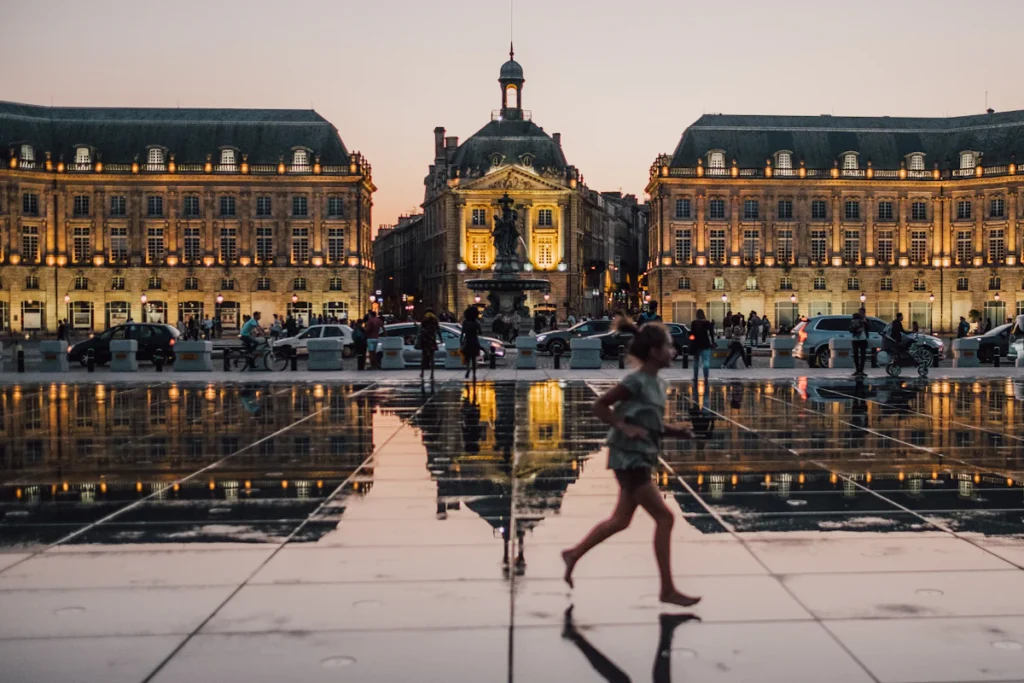
Place de la Bourse is the city’s most famous view, an 18th-century square of grand facades facing the River Garonne. In front of it lies the Miroir d’Eau, the world’s largest reflecting pool, which switches between a thin sheet of water and a cool mist every few minutes. It is free and open all day, and it is at its best at dusk, when the buildings are lit and reflected in the water. The pool is usually drained in the colder months, so visit between spring and autumn for the full effect.
Wander the Old Town
The old town, or Saint-Pierre, is a web of narrow streets, small squares and café terraces between Place de la Bourse and the cathedral. Walk through the Porte Cailhau, a 15th-century gate, and the Grosse Cloche, a medieval bell tower that once marked the city entrance. Rue Sainte-Catherine, one of the longest pedestrian shopping streets in Europe, runs right through the centre. Climb the Pey-Berland Tower beside Saint-André Cathedral for a wide view over the rooftops.

Visit La Cité du Vin
La Cité du Vin is a striking wine museum in a curved, gold-coloured building on the riverbank north of the centre. Its interactive exhibitions cover the history and culture of wine around the world, and the ticket includes a glass of wine with a view from the top-floor bar. Tickets cost around €22 to €26, and it is open daily, usually from 10am to 7pm from April to October and until 6pm on most winter days. Take tram B to the La Cité du Vin stop, two minutes away. You can also compare wine tours and tickets around Bordeaux on Klook.
Explore Chartrons and the Bassins à Flot
Chartrons is the old wine merchants’ quarter, now full of antique shops, wine bars and brunch cafés along Rue Notre-Dame. Further north, the Bassins à Flot docks have the Bassins des Lumières, an immersive digital art show inside a huge former submarine base, with tickets around €15. On the other side of the river, Darwin is a creative eco-space in old army barracks, with a skate park, an organic grocery and street art.
Eat at the Marché des Capucins
The Marché des Capucins is the city’s main covered market, open from Tuesday to Sunday. Come for a late breakfast of oysters and a glass of white wine at the counters, then try canelés, small caramelised cakes flavoured with rum and vanilla that are the city’s signature treat. The surrounding Saint-Michel district has a lively Sunday flea market and some of the best-value restaurants in town.

What Food Should You Try in Bordeaux?
No Bordeaux travel guide is complete without food. In Bordeaux you should try canelés, entrecôte à la bordelaise, oysters from the Arcachon Bay and, of course, the local red wines. Entrecôte bordelaise is a rib steak with a rich red wine and shallot sauce. Many restaurants offer a weekday lunch menu, or formule, for around €15 to €20, which is the best-value way to eat well. Wine bars in Saint-Pierre and Chartrons serve glasses of local wine from about €5 to €8.
Where to Stay in Bordeaux
The best area to stay in Bordeaux for a first visit is the historic centre around Saint-Pierre and the Golden Triangle, close to the river and the main sights. Here are the main options from this Bordeaux travel guide.
| Area | Best for | Typical double room |
|---|---|---|
| Saint-Pierre (old town) | First visits, restaurants, walking | €110–€200 |
| Golden Triangle | Elegant hotels, shopping | €130–€250 |
| Chartrons | Wine bars, a local feel | €100–€180 |
| Saint-Michel | Value, markets, nightlife | €80–€140 |
| Saint-Jean station | Early trains, budget hotels | €75–€130 |
Prices are typical for a three- or four-star hotel in 2026, and a small tourist tax is added per adult per night. The streets right around Saint-Jean station are practical but less attractive at night, so the centre is better for a short stay.
How Do You Get to Bordeaux and Get Around?
The high-speed TGV from Paris Montparnasse reaches Bordeaux Saint-Jean in just over two hours, which makes it easy to combine with a stay in Paris. From Bordeaux-Mérignac Airport, tram A runs to Place Pey-Berland in the centre in about 35 minutes, and tram F links the airport with Saint-Jean station. The 30’Direct shuttle bus to Saint-Jean costs about €9 online or €10 on board.
In the city, the TBM network of trams, buses and Bat³ river shuttles costs about €1.80 for a single journey, and a 24-hour ticket costs about €5. The Bordeaux City Pass, from about €29 for 24 hours, includes public transport, many museums and a guided walking tour. The centre is flat and compact, so you will walk most of the time, and the riverside is great by bike.
What Are the Best Day Trips From Bordeaux?
The best day trips from Bordeaux are Saint-Émilion, Arcachon with the Dune du Pilat, and the châteaux of the Médoc.
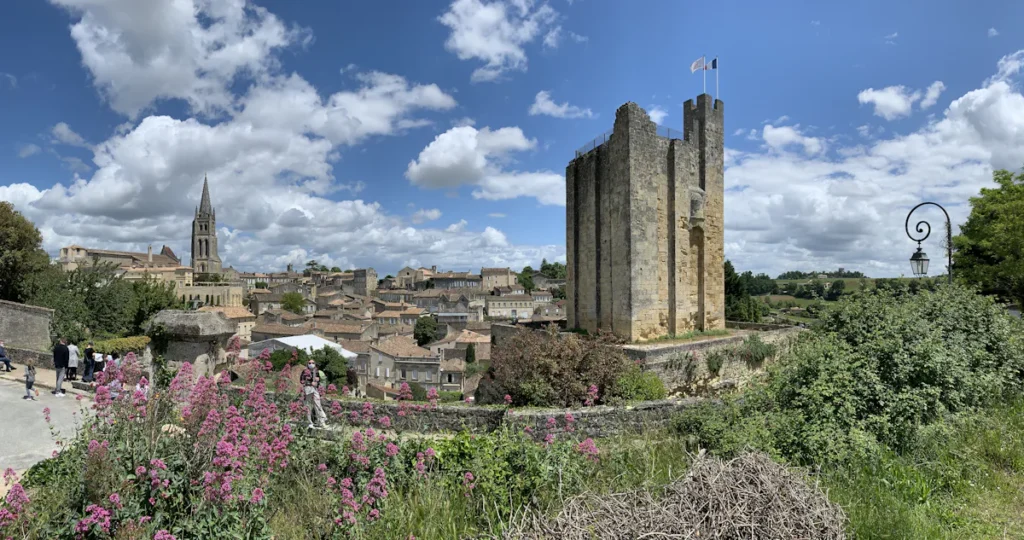
- Saint-Émilion: A medieval wine village on a hill, about 35 minutes by regional train, with a return ticket around €12. Visit the underground monolithic church and taste wine in the cellars.
- Arcachon and the Dune du Pilat: Direct trains take about 50 minutes, then a local bus runs to Europe’s tallest sand dune, which is free to climb. Combine it with oysters by the bay.
- The Médoc: The famous châteaux along the Route des Châteaux are best reached on a guided tour or by car, as public transport is limited. Most visits need to be booked ahead.
How Do You Visit a Wine Château Near Bordeaux?
The easiest way to visit a wine château near Bordeaux is on a half-day or full-day tour from the city, which usually costs €70 to €150 including transport and tastings. Tours run to Saint-Émilion, the Médoc and the Graves region, and most include two or three estates. If you prefer to go alone, book visits directly on the château’s website, as many only open by appointment. The tourist office near the Grand Théâtre also sells wine tours and tasting classes. Remember that tastings are small, but they add up, so never drive yourself afterwards.
How Much Does a Trip to Bordeaux Cost?
Following this Bordeaux travel guide, a trip to Bordeaux costs about €90 to €130 per person per day on a budget and €160 to €230 on a mid-range trip, including your share of a hotel room. Walking the centre, the Miroir d’Eau, the markets and Darwin are free, while a wine tour or a château visit adds €30 to €100 or more. Use our Travel Budget Calculator to plan your own trip, and the Currency Converter to see prices in your own currency.
When Is the Best Time to Visit Bordeaux?
For readers of this Bordeaux travel guide, the best time to visit is from May to June and in September and October, when the weather is warm and the vineyards look their best. September is the grape harvest, which is a lovely time to visit the wine villages. July and August are hot and some restaurants close for holidays, while winter is mild and quiet but often grey and rainy. The Bordeaux Wine Festival is held along the river in some years in June, so check dates if you are visiting then.
Bordeaux Travel Tips
- Book wine tours early. Many châteaux only open for booked visits, especially at weekends.
- Use the river shuttles. The Bat³ boats cost the same as a tram ticket and give lovely views of the quays.
- Eat at lunchtime. The weekday formule menus are much cheaper than dinner.
- Check Monday closures. Several museums and the Capucins market are closed on Mondays.
- Bring comfortable shoes. The old town has smooth stone paving, but you will walk a lot.
Ready to plan your trip? This Bordeaux travel guide pairs well with our Trip Planner and Packing List Generator. Explore more of the country in our France travel guide, or continue to Lyon, Marseille or Nice.
FAQs
What is Bordeaux famous for?
Bordeaux is famous for its wine, its elegant 18th-century architecture and Place de la Bourse with the Miroir d’Eau. Its historic centre is a UNESCO World Heritage Site.
Is two days enough in Bordeaux?
Yes, two days is enough to see the main sights of the city. Add a third day for a wine trip to Saint-Émilion or a visit to the Dune du Pilat.
How do I get from Bordeaux airport to the city centre?
Tram A runs from the airport to Place Pey-Berland in the centre in about 35 minutes on a standard TBM ticket. The 30’Direct shuttle to Saint-Jean station costs about €9 online.
Can you visit Saint-Émilion without a car?
Yes, regional trains run from Bordeaux Saint-Jean to Saint-Émilion in about 35 minutes. The village is a short walk uphill from the station.
Is Bordeaux expensive?
Bordeaux is cheaper than Paris but similar to other large French cities. Hotels and wine tours are the biggest costs, while many sights and markets are free.
Is Bordeaux safe for tourists?
Yes, Bordeaux is generally safe for tourists. Watch for pickpockets in busy areas and on trams, and take care around Saint-Jean station late at night.
This page contains affiliate links. If you book through them, we may earn a small commission at no extra cost to you. See our affiliate disclosure.
Comments