
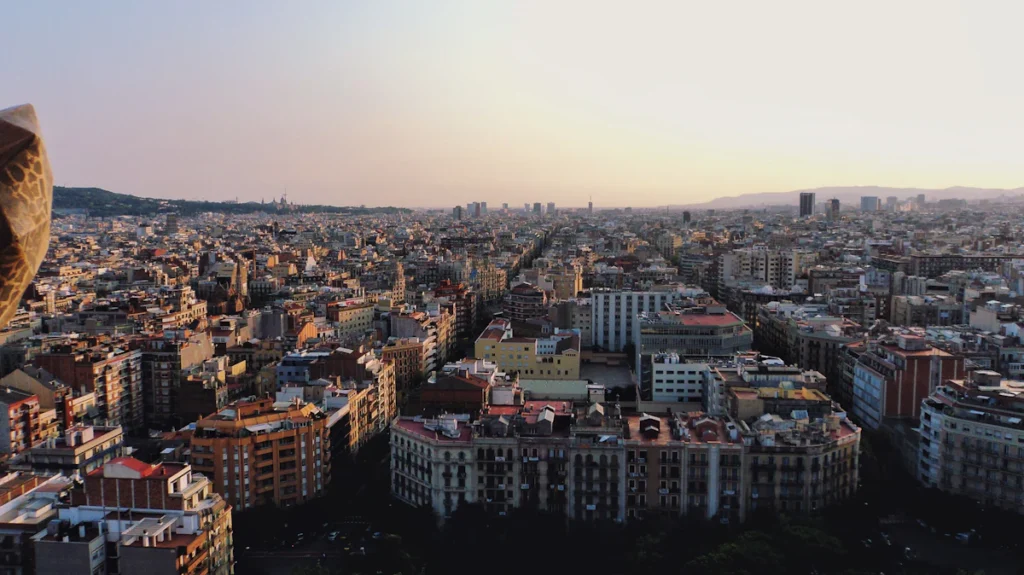
Deciding where to stay in Barcelona shapes your whole trip, because each neighbourhood has a very different feel. You can wake up among medieval lanes, on an elegant boulevard full of Gaudí buildings, in a village-like district of small squares or a short walk from the beach. This guide compares the best areas for a first visit, with typical hotel prices in euros, metro stops and honest pros and cons, so you can choose the right base. For the bigger picture, read our Barcelona travel guide.
What Is the Best Area to Stay in Barcelona?
The best area to stay in Barcelona for most first-time visitors is the Eixample, closely followed by the Gothic Quarter and El Born. The Eixample is central, safe and well connected, with Gaudí’s buildings on Passeig de Gràcia and plenty of restaurants. The Gothic Quarter and El Born put you in the historic heart of the city, a short walk from the cathedral, the Picasso Museum and the beach. Here is how the main areas compare when you are choosing where to stay in Barcelona.
| Area | Best for | Typical double room | Handy metro |
|---|---|---|---|
| Eixample | First visits, Gaudí, shopping | €150–€280 | Passeig de Gràcia (L2, L3, L4) |
| Gothic Quarter | History, walking, nightlife | €130–€250 | Jaume I (L4), Liceu (L3) |
| El Born | Boutiques, tapas, the Picasso Museum | €140–€260 | Jaume I (L4) |
| Gràcia | Local feel, squares, value | €110–€200 | Fontana (L3), Diagonal |
| Barceloneta | The beach, seafood | €140–€300 | Barceloneta (L4) |
| Poble Sec | Tapas bars, Montjuïc, value | €100–€180 | Paral·lel (L2, L3) |
| Poblenou | Quiet beaches, modern hotels | €120–€230 | Poblenou (L4) |
Prices are typical for a three- or four-star hotel in 2026 and rise sharply in summer and during big events such as the Mobile World Congress in late February or early March.
Where to Stay in Barcelona: The Best Neighbourhoods Compared
Where to stay in Barcelona depends on your style of travel, so use the descriptions below to match each area to the kind of trip you have in mind.
Eixample
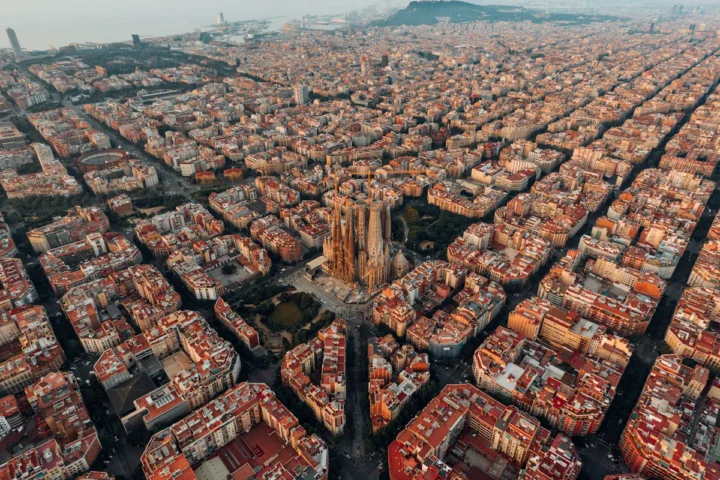
The Eixample is the 19th-century grid of wide streets north of Plaça de Catalunya, famous for its octagonal blocks and Modernist buildings. Passeig de Gràcia, with Casa Batlló and La Pedrera, runs through the middle, and the Sagrada Família sits on its eastern side. Hotels range from stylish boutiques to big international brands, and the area is calm at night. The left side, called the Esquerra de l’Eixample, is more residential and often cheaper than the right side, the Dreta.
The Gothic Quarter (Barri Gòtic)
The Gothic Quarter is the medieval heart of the city, with the cathedral, Roman ruins and narrow lanes that open into small squares. Staying here means you can walk almost everywhere, including La Rambla, the port and the beach. The downsides are noise late at night, small rooms and crowds of tour groups by day. Choose a hotel on a quieter side street rather than right above a bar, and check that the building has a lift.
El Born
El Born, part of the La Ribera district, is the most stylish corner of the old town. It is packed with independent shops, cocktail bars and tapas restaurants, and it is home to the Picasso Museum and the church of Santa Maria del Mar. The Parc de la Ciutadella and the beach are both close by. Like the Gothic Quarter, it can be lively at night, but it feels a little calmer and more local.
Gràcia
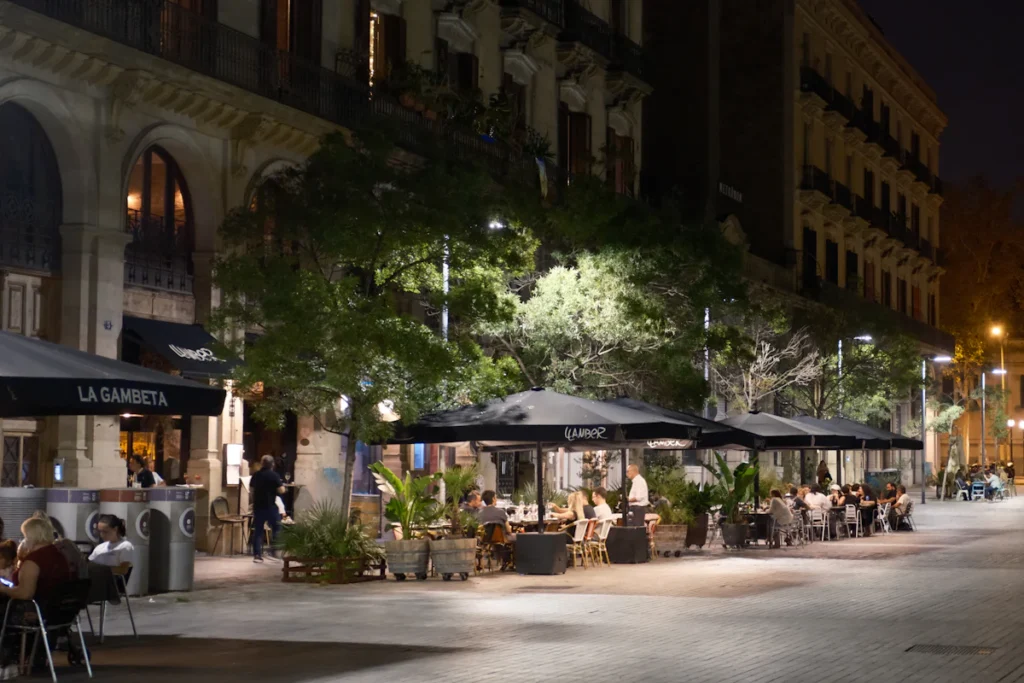
Gràcia was once a separate village, and it still feels like one, with low buildings, leafy squares and a strong local identity. It is a great choice if you prefer neighbourhood bars to big sights, and hotels and apartments are often cheaper than in the centre. Park Güell is a short uphill walk away, and metro line 3 takes you to the old town in about 15 minutes. In mid-August, the Festa Major de Gràcia fills the streets with decorations and music.
Barceloneta and Poblenou
If the beach is your priority, look at Barceloneta, the old fishermen’s quarter beside the city’s busiest beach, or Poblenou, further east, with quieter beaches and modern hotels. Barceloneta has great seafood but can feel crowded and noisy in summer, while Poblenou is calmer and has a lovely pedestrian street, the Rambla del Poblenou. Both are well connected by metro line 4.
Poble Sec and El Raval
Poble Sec, at the foot of Montjuïc, is known for its tapas bars on Carrer de Blai and offers good value close to the centre. El Raval, west of La Rambla, is multicultural and creative, with the MACBA contemporary art museum, but some streets feel rough at night. Choose carefully in El Raval and stay close to the main streets if you book there. Sants, around the main railway station, is another practical choice if you plan several day trips by train, although it has less character.
Which Barcelona Area Is Best for Your Type of Trip?
The best area to stay in Barcelona depends on who you are travelling with. These quick picks help you decide.
- First visit: The Eixample or the Gothic Quarter, for central sights and easy transport.
- Couples: El Born, for romantic streets, wine bars and great restaurants.
- Families: The Eixample or Poblenou, for space, calmer nights and the beach nearby.
- Budget: Gràcia, Poble Sec or the Esquerra de l’Eixample.
- Nightlife: El Born, the Gothic Quarter and Poble Sec.
- Beach holiday: Barceloneta or Poblenou.
What Are the Safest Areas to Stay in Barcelona?
If safety guides where to stay in Barcelona, the safest areas to stay in Barcelona are the Eixample, Gràcia, Sant Gervasi and Poblenou, and the city as a whole is safe for visitors. The main problem is pickpocketing, which is common on La Rambla, on the metro, at the beach and in crowded old-town lanes.
Keep your bag zipped and in front of you, and never leave your phone on a café table. At night, some streets in El Raval and the lower Gothic Quarter feel less comfortable, so choose a hotel on a well-lit main street there.
What Is the Cheapest Area to Stay in Barcelona?
When budget decides where to stay in Barcelona, the cheapest area to stay in Barcelona close to the centre is usually Poble Sec, followed by Gràcia, Sants and the Esquerra de l’Eixample. Simple double rooms here start at around €90 to €130 outside the peak season. Hostels in the old town charge about €30 to €50 for a dorm bed. Staying a little further out, near a metro station, is often the best way to save, because the network is fast and frequent.
How Much Is the Tourist Tax in Barcelona?
The tourist tax in Barcelona is charged per person per night on top of your room rate, and it increased in April 2026. It is about €8.40 in a four-star hotel, €12 in a five-star hotel, €9.50 in a tourist apartment and around €6 in lower-category hotels and hostels, for up to seven nights. Young people under 17 are exempt. Use our Travel Budget Calculator to include it in your costs, and the Currency Converter to see the total in your own currency.
How Do You Get From the Airport to Your Hotel?
The Aerobús is the easiest way from the airport to the centre, running to Plaça de Catalunya in about 35 minutes for around €7 to €8. The R2 Nord train from Terminal 2 reaches Sants and Passeig de Gràcia in about 25 minutes, and metro line 9 Sud serves both terminals but needs a special €5.90 airport ticket. A taxi to the centre costs roughly €35 to €40. The Hola Barcelona card covers the airport metro and unlimited city travel.
Should You Book a Hotel or an Apartment in Barcelona?
When you think about where to stay in Barcelona, a hotel is the simpler choice for a short stay, while an apartment suits families and longer trips. Barcelona has strict rules on holiday rentals, and the city plans to phase out tourist apartment licences by 2028, so only book apartments that show an official registration number. Hotels give you daily cleaning, luggage storage and local tips, which helps when you arrive early or leave late. Whichever you choose, check air conditioning for June to September.
What Should You Check Before Booking?
Before you decide where to stay in Barcelona, check these practical points, as they matter as much as the neighbourhood.
- Air conditioning: Essential from June to September, when nights stay warm.
- Noise: Ask for an interior room in the old town, where bars stay open late.
- A lift: Many older buildings have narrow stairs, which is hard work with luggage.
- The full price: Check whether breakfast and the tourist tax are included.
- Metro distance: Aim for a hotel within five minutes of a station.
- Free cancellation: Useful in a city where prices change quickly with events.
How Many Nights Should You Stay in Barcelona?
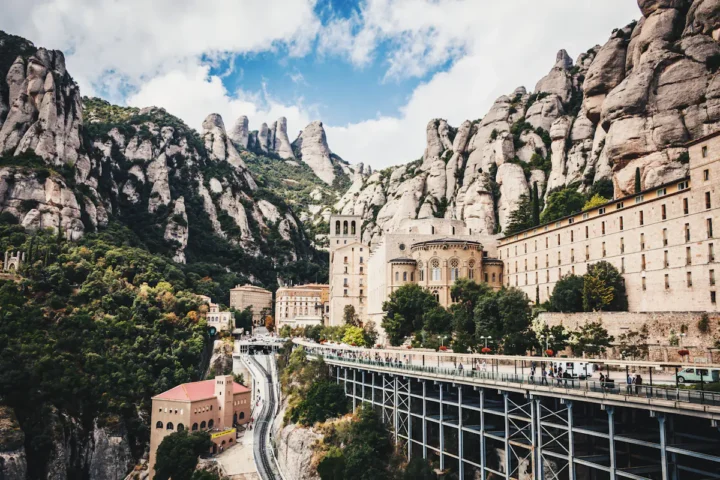
Three or four nights is ideal for a first visit, giving you time for the Gaudí sights, the old town, the beach and a relaxed evening or two. With five nights or more, you can add day trips to Montserrat, Girona or Sitges without rushing. If you are combining the city with a beach holiday, consider splitting your stay between the centre and Poblenou or a coastal town.
Now you know where to stay in Barcelona, plan the rest of your trip with our Trip Planner and Packing List Generator. Explore more of the country in our Spain travel guide, or continue to Madrid, Seville or Málaga.
FAQs
Where should I stay in Barcelona for the first time?
The Eixample is the best choice for most first-time visitors because it is central, safe and well connected. The Gothic Quarter and El Born are great if you want historic streets and nightlife on your doorstep.
Is it better to stay in the Gothic Quarter or the Eixample?
Stay in the Gothic Quarter for atmosphere and walking to the old town and the beach, or in the Eixample for quieter nights, bigger rooms and Gaudí’s buildings. Both are central.
What is the cheapest area to stay in Barcelona?
Poble Sec, Gràcia, Sants and the Esquerra de l’Eixample usually offer the best value near the centre. They all have good metro connections.
Is it safe to stay near La Rambla?
It is generally safe, but La Rambla is busy and a hotspot for pickpockets. Many visitors prefer the quieter streets of El Born or the Eixample.
How far is the beach from the city centre?
Barceloneta beach is about a 20-minute walk from the Gothic Quarter, or a short ride on metro line 4. The beaches in Poblenou are quieter and a little further east.
How much is the tourist tax in Barcelona?
Since April 2026, it is about €8.40 per person per night in a four-star hotel and €12 in a five-star hotel, for up to seven nights. Under-17s are exempt.
Comments