

Barcelona packs a lot into a compact city: Gaudí’s fantasy buildings, a medieval old town, a long city beach and some of the best food in Spain. This Barcelona itinerary shows you how to spend three days in Barcelona, with each day planned around one area so you spend more time exploring and less time on the metro. It includes ticket prices in euros, opening days and transport tips, and it works well for a first visit. For the bigger picture, read our Barcelona travel guide.
Is Three Days in Barcelona Enough?
Yes, three days in Barcelona is enough to see the Sagrada Família, Park Güell, the Gothic Quarter and the beach, with time left for tapas and long evenings. With four or five days, you can add Montserrat, Girona or a slower look at the museums. Here is this Barcelona itinerary at a glance.
| Day | Area | Highlights |
|---|---|---|
| Day 1 | The old town and the sea | Gothic Quarter, El Born, the Picasso Museum, La Boqueria, Barceloneta beach |
| Day 2 | Gaudí and the Eixample | Sagrada Família, Casa Batlló, La Pedrera, an evening in Gràcia |
| Day 3 | Park Güell and Montjuïc | Park Güell, the city views, Montjuïc castle and the art museum |
What Should You Know Before You Go?
- Book the big sights early. The Sagrada Família, Park Güell and Casa Batlló use timed tickets, and good slots sell out days ahead, especially in 2026, the Gaudí centenary year.
- Eat late. Lunch is usually served from about 1.30pm to 4pm and dinner from 8.30pm, so plan your days around Spanish meal times.
- Watch your bag. Pickpocketing is common on La Rambla, on the metro and on the beach.
- Check closing days. La Boqueria market is closed on Sundays, and the Picasso Museum is closed on Mondays.
Day 1: The Gothic Quarter, El Born and the Beach
Start your Barcelona itinerary in the oldest part of the city, where Roman walls, Gothic churches and tiny squares sit side by side.
Morning: The Gothic Quarter
Begin at Barcelona Cathedral, then wander the narrow lanes of the Barri Gòtic. Walk under the carved stone bridge on Carrer del Bisbe, find the peaceful Plaça de Sant Felip Neri, and stop at Plaça Reial, a palm-filled square with lamps designed by a young Gaudí. Most of the quarter is free to explore, and it is quietest before 10am. The cathedral charges an entry fee at most times of day, which includes the rooftop terrace.

Midday: La Boqueria and El Born
Walk to La Boqueria, the famous food market just off La Rambla, for fresh juice, jamón and a counter lunch. It is open Monday to Saturday and closed on Sundays. Afterwards, cross Via Laietana into El Born, a stylish district of boutiques and bars. Visit the Picasso Museum, which holds many of the artist’s early works and costs around €15, or step inside Santa Maria del Mar, a beautiful 14th-century church.
Afternoon and Evening: Barceloneta Beach
Head down to Barceloneta, the old fishermen’s quarter, and walk along the seafront promenade to the beach. Swim in summer, or just watch the sunset from a beach bar. Many seafood restaurants here serve paella, but the best value is a few streets inland rather than right on the sand. End the day with tapas back in El Born.

Day 2: The Sagrada Família and Gaudí’s Eixample
Day two of this Barcelona itinerary is all about Antoni Gaudí, the architect whose buildings define the city.
Morning: The Sagrada Família
Book the first slot of the day at the Sagrada Família (tickets and guided tours are also listed on Klook), Gaudí’s unfinished basilica, which has been under construction since 1882. A basic ticket costs €26 and includes an audio guide, while a ticket with a tower visit costs more. The forest of stone columns and the colourful stained-glass light inside are unforgettable, so allow at least 90 minutes. Take metro line 2 or 5 to Sagrada Família station.
Afternoon: Passeig de Gràcia
Walk or take the metro to Passeig de Gràcia, the grand boulevard of the Eixample district. Here you will find Casa Batlló, with its wavy balconies and dragon-scale roof, and La Pedrera, also called Casa Milà, with its famous chimney rooftop. Both use dynamic pricing, with tickets from about €29 to €35 at Casa Batlló and around €25 to €30 at La Pedrera, so choose one if you are on a budget and admire the other from the street.
Evening: Gràcia
Spend the evening in Gràcia, a former village with leafy squares such as Plaça del Sol and Plaça de la Virreina. It has a relaxed local feel, small bars and good restaurants at lower prices than the centre. Look out for Casa Vicens, Gaudí’s first house, on the way.
Day 3: Park Güell and Montjuïc
The last day of your Barcelona itinerary takes you up to the hills for the best views of the city.
Morning: Park Güell
Visit Park Güell early, when the light is soft and the crowds are smaller. The ticketed Monumental Zone, with the mosaic benches, the dragon stairway and the Hypostyle Room, costs €18 in 2026 and uses timed entry, so book ahead, or compare Park Güell tickets and tours on Klook. Bus V19 or a walk uphill from Vallcarca metro station gets you there. The wooded paths outside the paid zone are free and have good views.

Afternoon: Montjuïc
Take the metro to Paral·lel and ride the funicular up Montjuïc, a green hill above the port. Visit the National Art Museum of Catalonia, known as MNAC, with its Romanesque murals and terrace views, then walk through the gardens to Montjuïc Castle. The cable car down to the port is a scenic way to finish. On some evenings, the Magic Fountain below the museum puts on a light and music show, so check the schedule before you go.
Evening: A Farewell Dinner
For your last night, book a table in the Eixample or El Born and try classic Catalan dishes such as pa amb tomàquet, bread rubbed with tomato, fideuà, a noodle version of paella, and crema catalana for dessert.
Have More Time? Add a Day Trip
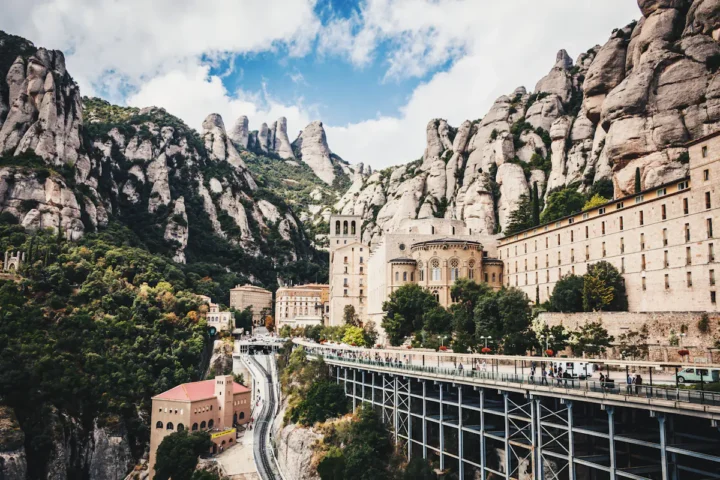
If you can extend your Barcelona itinerary to four or five days, add a day outside the city. Montserrat, a mountain monastery with dramatic rock pinnacles, is about 90 minutes away by the R5 train from Plaça d’Espanya and a rack railway or cable car. Girona, with its colourful riverside houses and medieval walls, is under 40 minutes by high-speed train from Sants.
For a beach day, Sitges is around 40 minutes south on the R2 Sud train, with a return ticket costing around €10. Tarragona, with Roman ruins by the sea, makes a good choice for history lovers. You can compare guided day trips from Barcelona on Klook if you prefer not to organise the trains yourself.
How Do You Get Around Barcelona?
The easiest way to get around Barcelona is by metro and on foot. A single ticket costs €2.90, and the T-casual card gives one person ten journeys for €13. The Hola Barcelona travel card offers unlimited travel for 48 hours at €18.70 or 72 hours at €27.30, and it includes the airport metro. Standard tickets are not valid on the airport metro line, which needs a separate €5.90 ticket. The Aerobús runs from the airport to Plaça de Catalunya in about 35 minutes for around €7 to €8. If you want mobile data from the moment you land, an eSIM such as Yesim is usually simpler than roaming.
Where Should You Stay for Three Days in Barcelona?
For this Barcelona itinerary, the best areas for a short stay are the Gothic Quarter and El Born for atmosphere, and the Eixample for elegant streets and good transport. Gràcia suits travellers who want a quieter, local feel. Barcelona adds a tourist tax of about €6 to €8.40 per person per night in most hotels and €9.50 in apartments, for up to seven nights. Our Travel Budget Calculator helps you add up the total, and the Currency Converter shows it in your own currency.
How Much Do Three Days in Barcelona Cost?
Following this Barcelona itinerary, three days in Barcelona cost about €350 to €500 per person on a budget and €650 to €950 on a mid-range trip, not counting flights. Hotels are the biggest cost, followed by Gaudí tickets, which add up quickly. Save money with the menú del día, a two- or three-course weekday lunch for around €15 to €20, and by enjoying free sights such as the Gothic Quarter, the beach and the views from Montjuïc.
When Is the Best Time to Visit Barcelona?
The best time to visit Barcelona and follow this Barcelona itinerary is from April to June and in September and October, when the weather is warm and the sea is pleasant. July and August are hot and very busy, and many locals leave the city in August. Winters are mild and quieter, which makes museums and Gaudí buildings easier to enjoy, although the beach is too cold for swimming.
Barcelona Travel Tips
- Carry a little cash. Cards work almost everywhere, but small bars and market stalls sometimes prefer cash.
- Dress for churches. Cover your shoulders and knees for the Sagrada Família and the cathedral.
- Drink tap water. It is safe, although many people prefer bottled water for the taste.
- Avoid restaurants with photo menus on La Rambla. Walk a few streets away for better food at fairer prices.
- Learn a few words of Catalan. Bon dia (good morning) and gràcies (thank you) are always appreciated.
Ready to plan your trip? Use our Trip Planner to map out each day of your Barcelona itinerary and the Packing List Generator to pack for the season. Explore more of the country in our Spain travel guide, or continue your trip to Madrid, Seville or Palma de Mallorca.
FAQs
How many days do you need in Barcelona?
Three days is enough for a first visit to see the Gaudí highlights, the Gothic Quarter and the beach. Plan four or five days if you want to add a day trip to Montserrat or Girona.
Do I need to book Sagrada Família tickets in advance?
Yes, you should book online in advance, as tickets use timed entry and often sell out. A basic ticket costs €26 and includes an audio guide.
Is Park Güell free to visit?
No, the Monumental Zone with the famous mosaic terrace costs €18 in 2026. The wooded areas of the park outside this zone are free.
Is the Hola Barcelona card worth it?
It is worth it if you will take the metro to and from the airport and ride several times a day. If you mostly walk, a T-casual card with ten journeys is usually cheaper.
What is the best area to stay in Barcelona for a short trip?
The Gothic Quarter, El Born and the Eixample are the best areas for a short trip. They are central, well connected and within walking distance of many sights.
Is Barcelona safe for tourists?
Barcelona is generally safe, but pickpocketing is common in busy areas. Keep your bag closed and in front of you on La Rambla, the metro and the beach.
This page contains affiliate links. If you book through them, we may earn a small commission at no extra cost to you. See our affiliate disclosure.
Comments